Get the AI Restaurant Quick-Start Guide — Free
The 5 AI tools independent US restaurant owners are using right now to cut labor costs and answer every call.
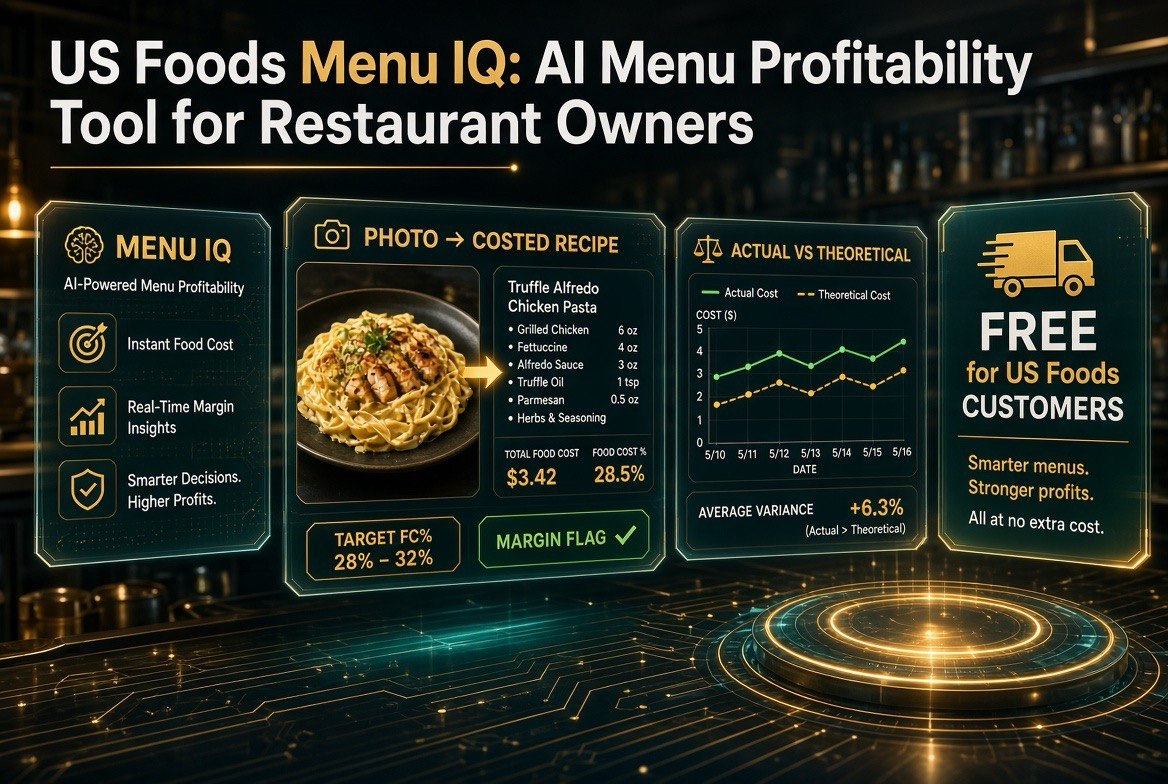
US Foods Menu IQ: AI Menu Profitability Tool for Restaurant Owners
\n\n
Here is the question every independent operator dodges because the math is a headache: which items on my menu actually make money? Most owners can name their best seller, but very few can tell you the true food cost of every dish, plate by plate, with prices that changed last week. US Foods just built the tool that answers it in minutes.
\n\n
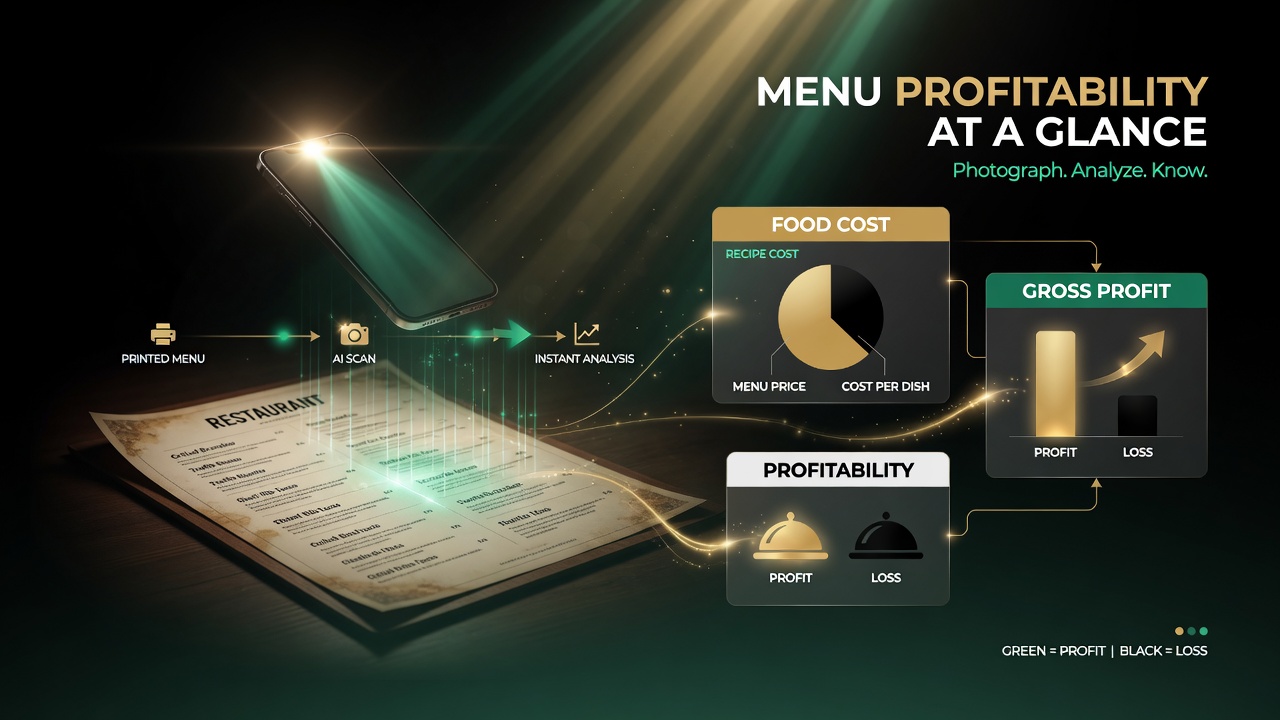
Menu IQ, launched by US Foods in February 2026, is an AI-powered menu profitability tool built into the distributor’s MOXē digital platform. It is free to US Foods customers, and its headline feature is almost unbelievable until you see it: snap a photo of a recipe, and the AI extracts the ingredients, matches them to US Foods products, applies the quantities, and generates a costed recipe on the spot. That is the difference between running a menu on gut feel and running it on real numbers.
\n\n
\n\n
Why Menu Profitability Is the Blind Spot for Independent Restaurants
\n\n
Menu engineering is the classic problem: you know what sells, but not what earns. An item can fly out the door and still be a loser if its ingredient cost crept up while the price stayed flat. Butter, beef, and produce prices move constantly. A dish costed six months ago is rarely accurate today.
\n\n
For chains, this is solved with sophisticated cost systems and dedicated teams. For the independent owner who is also the buyer, the cook, and the manager, it rarely gets done at all. The result: profitable-looking menus that quietly leak margin on a handful of items nobody realized were underwater.
\n\n
Menu IQ attacks that specific gap by making item-level food cost a thing you can check in real time, not a project you tackle once a year.
\n\n
How Menu IQ Works: Photo In, Costed Recipe Out
\n\n
The core workflow is built around the AI-powered Smart Upload:
\n\n
- \n
- Upload a photo of a recipe — a menu item, a recipe card, a handwritten dish spec.
- The AI extracts the ingredients and identifies what is in each dish.
- It matches ingredients to US Foods products and applies measurements and quantities.
- It generates a costed recipe using current pricing, which you can review and adjust.
\n
\n
\n
\n
\n\n
That single flow replaces hours of manual spreadsheet entry. Instead of typing every ingredient into a line item, you snap a picture and adjust from the AI’s first pass. It is the kind of feature that sounds like a demo gimmick until you realize how much dull, error-prone data entry it eliminates from a real operation.
\n\n
\n\n
Real-Time Food Cost Instead of End-of-Month Surprises
\n\n
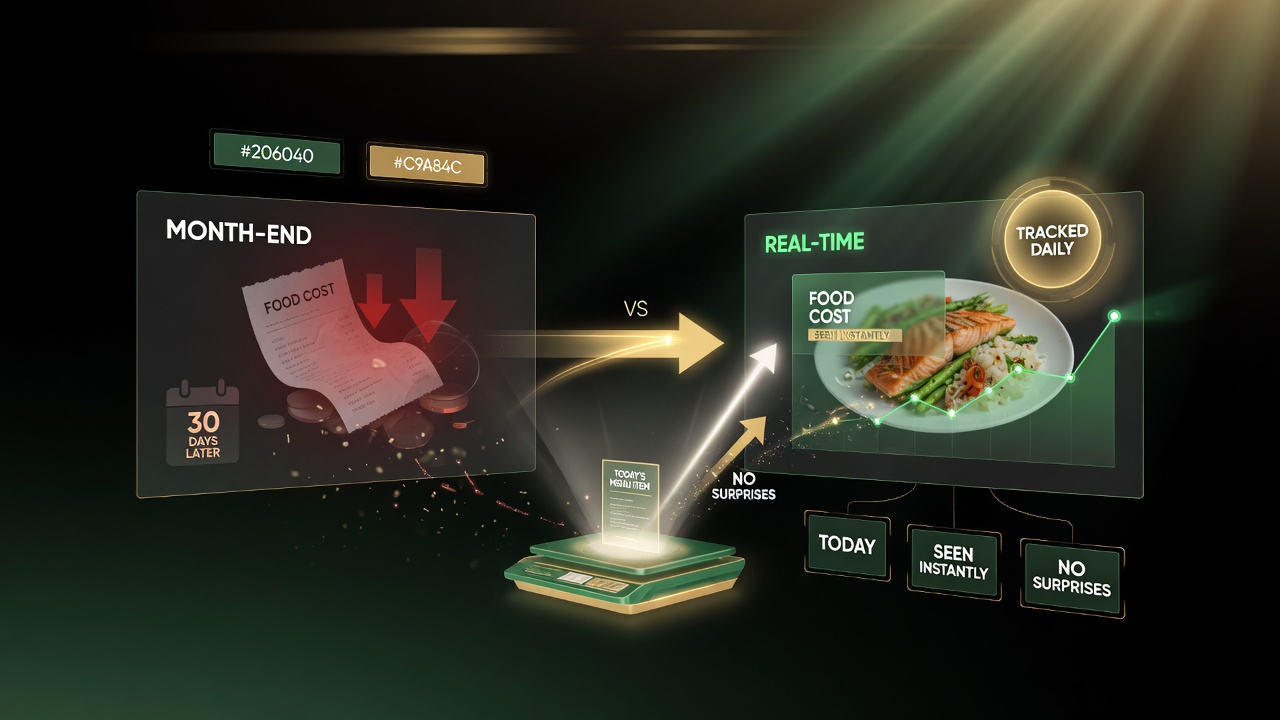
The second pillar is the shift from theoretical cost to actual cost. Menu IQ automatically calculates food costs using current pricing, and it integrates with MOXē Inventory so you see actual costs against theoretical costs — not just what the recipe should cost, but what your operation is really spending.
\n\n
That distinction matters. Theoretical cost says what a dish costs if you follow the recipe exactly. Actual cost reveals what happens with portion drift, waste, and theft. When those two numbers diverge, you have found where the money is leaking. Menu IQ surfaces that gap instead of leaving you to discover it at the end of the month.
\n\n
To make it concrete: imagine a burger costed at $3.20 on paper, but your actual ingredient spend for the line runs $3.90 a burger once every shift hands out a heavier scoop of fries or a second slice of cheese. That $0.70 gap on a few hundred burgers a week is real money walking out the door, and it is invisible until someone compares the recipe to the food order. Menu IQ is built to make exactly that comparison continuous rather than an end-of-quarter exercise.
\n\n
The result is continuous visibility: which dishes are high-margin and worth pushing, which are losing money and need a price change or a reformulation, and where waste is quietly eating your prime cost.
\n\n
\n
Real-time food cost shows each item’s true cost the moment it is computed, not weeks later on a month-end report.
\n
Menu IQ vs. the Old Way of Doing Things
\n\n
The real test of a tool like this is the comparison against how most independents actually manage menu cost today. Here is that comparison, straight:
\n\n
| Factor | US Foods Menu IQ | Manual Spreadsheets / Gut Feel |
|---|---|---|
| Building a costed recipe | Snap a photo, AI extracts and costs it in minutes | Manual entry of every ingredient, prone to errors |
| Keeping prices current | Uses current US Foods pricing automatically | Outdated the moment prices change; rarely updated |
| Actual vs. theoretical cost | Integrates with MOXē Inventory to show real spend | Not tracked; waste and portion drift stay hidden |
| Spotting low-margin items | Flags underperformers automatically | Only discovered after the fact, if at all |
| Time cost | Minutes per item, done in one workflow | Hours of data entry that rarely gets finished |
\n
\n
\n
Menu profitability at a glance: photograph the menu, get cost and profit per dish, and spot the money-makers instantly.
\n\n
That is the honest case. For an owner already buying from US Foods, the tool removes the single biggest barrier to real menu engineering: the time it takes to build and maintain costed recipes. And because it lives inside the ordering platform, the numbers reflect the same product catalog and pricing you actually pay for — not a separate, disconnected cost list that drifts out of sync with your real invoices.
\n\n
Where Your Food Cost Percent Should Be
\n\n
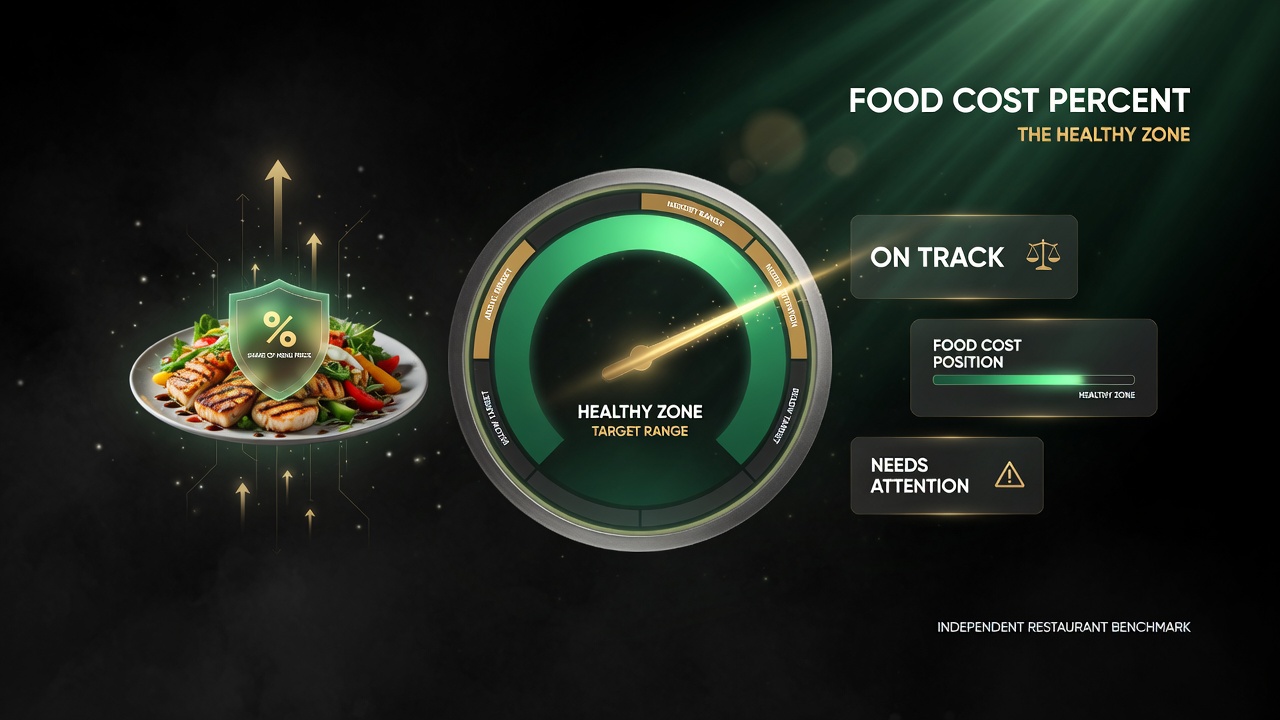
Before you judge every dish, you need a baseline for what counts as a healthy number. The target varies by operation type, but these are the benchmarks restaurant operators typically work against:
\n\n
| Food Cost % | What It Signals | Typical Action |
|---|---|---|
| Under 25% | Strong margin; healthy contribution to profit | Feature and push these items |
| 25–32% | Typical target band for most concepts | Monitor; keep portion control tight |
| 33–38% | Running hot; margin under pressure | Review pricing and ingredient swaps |
| Over 38% | Likely losing money on the item | Re-cost, re-engineer, or cut |
\n
\n
\n
Where your food cost should be: a target range gives owners a healthy zone, with warnings when an item drifts outside it.
\n\n
Menu IQ makes it easy to spot which of your dishes sit in the danger zones, because every item shows its own food cost percent instead of forcing you to compute it by hand. Once you know where each dish lands, the next step is acting on the split between your winners and your leaks.
\n\n
Who Should Care, and What It Costs
\n\n
Menu IQ is aimed squarely at independent operators — the ones without a dedicated cost analyst or a chain’s back-office team. The positioning is practical, not flashy: make menu profitability something you can check on your phone or desktop, anytime.
\n\n
And the price matters as much as the features: Menu IQ is offered at no additional cost to US Foods customers. You are not paying a separate subscription for the tool; it is part of the MOXē platform you already use to order. That changes the math on adoption entirely. There is no ROI hurdle to clear before you try it — the cost is already built into your ordering relationship.
\n\n
The catch is eligibility: the tool is for US Foods customers on the MOXē platform. If you buy from a different distributor, you cannot just sign up for Menu IQ. But if US Foods is your primary broadline supplier, it is effectively a free upgrade to how you run your menu.
\n\n
This also matters for owners who have been burned by expensive menu-engineering consultants or clunky costing software that needs days of setup. Menu IQ is not a separate system to learn and maintain; it lives inside the ordering workflow you already touch. Lower barrier to start, lower barrier to keep using, and the data stays current because the pricing comes from the distributor itself.
\n\n
What to Do With the Numbers Once You Have Them
\n\n
The whole point of Menu IQ is not the dashboard — it is the decisions the dashboard enables. Here is how an operator turns the insight into money:
\n\n
- \n
- Push high-margin items. If a dish costs 22% and sells well, feature it: train staff to recommend it, put it in specials, promote it on the board.
- Fix or cut low-margin items. A best seller at 40% food cost is still losing you money compared to a quieter item at 25%. Raise the price, trim the portion, or re-engineer the plate.
- Attack the actual-vs-theoretical gap. If actual cost runs well above theoretical, portion control and waste are the problem — not the menu.
- Keep the data current. Re-cost items when prices shift so your menu decisions rest on today’s numbers, not last quarter’s.
\n
\n
\n
\n
\n\n
\n\n
The Bottom Line for Independent Operators
\n\n
Menu IQ is not another AI gimmick bolted onto a product so the vendor can say it has AI. It solves a real, boring, expensive problem — knowing what your menu actually earns — and it removes the exact friction that keeps independent operators from ever solving it. Photo-based recipe costing plus real-time food cost visibility, for free, inside the ordering platform you already use.
\n\n
If US Foods is your supplier, this is worth checking out this week, not next month. Log into MOXē, snap a photo of your three most popular dishes, and see what the AI says their real food cost is. The items you are pushing hardest might not be the ones making you the most.
\n\n
Frequently Asked Questions
\n\n
What is US Foods Menu IQ?
\n
Menu IQ is an AI-powered menu profitability and food cost management tool launched by US Foods in February 2026. Built into the MOXē digital platform, it tracks item-level profitability, calculates food costs, and identifies high- and low-margin dishes.
\n\n
Does Menu IQ cost extra?
\n
No. Menu IQ is offered at no additional cost to US Foods customers. It is part of the MOXē ordering and management platform, so there is no separate subscription fee.
\n\n
How does the photo-based recipe costing work?
\n
You upload a photo of a recipe or menu item. The AI extracts the ingredients, matches them to US Foods products, applies measurements and quantities, and generates a costed recipe using current pricing that you can review and adjust.
\n\n
Does Menu IQ track actual food cost or just theoretical?
\n
Both. Menu IQ calculates theoretical costs from recipes and integrates with MOXē Inventory to show actual costs, letting you see the gap between what a dish should cost and what you are really spending.
\n\n
Who can use Menu IQ?
\n
Menu IQ is available to US Foods customers on the MOXē platform. If you buy from a different distributor, you cannot sign up for it directly, though the workflow is a useful model for what menu intelligence tools can do.
\n\n
How does Menu IQ compare to manual menu engineering?
\n
Menu IQ automates the parts that make manual menu engineering impractical for independents: ingredient entry, current pricing, and actual-vs-theoretical tracking. It flags low-margin items automatically and delivers the insight in minutes rather than hours of spreadsheet work.
\n\n\n\n\n
 \n
\n
About Barak Schurr
\n
Barak Schurr built and exited a major ticketing platform, ran global operations at Eventbrite, and now focuses on one question: which AI tools actually help independent restaurant owners run leaner and grow faster. He writes from the operator’s perspective — no vendor spin, no theory, just what’s real in 2026.
Email: [email protected]
\n
\n
\n\n\n
More Restaurant Tech Resources
\n
 \n
\n\n
 \n
\n\n
\n