Get the AI Restaurant Quick-Start Guide — Free
The 5 AI tools independent US restaurant owners are using right now to cut labor costs and answer every call.
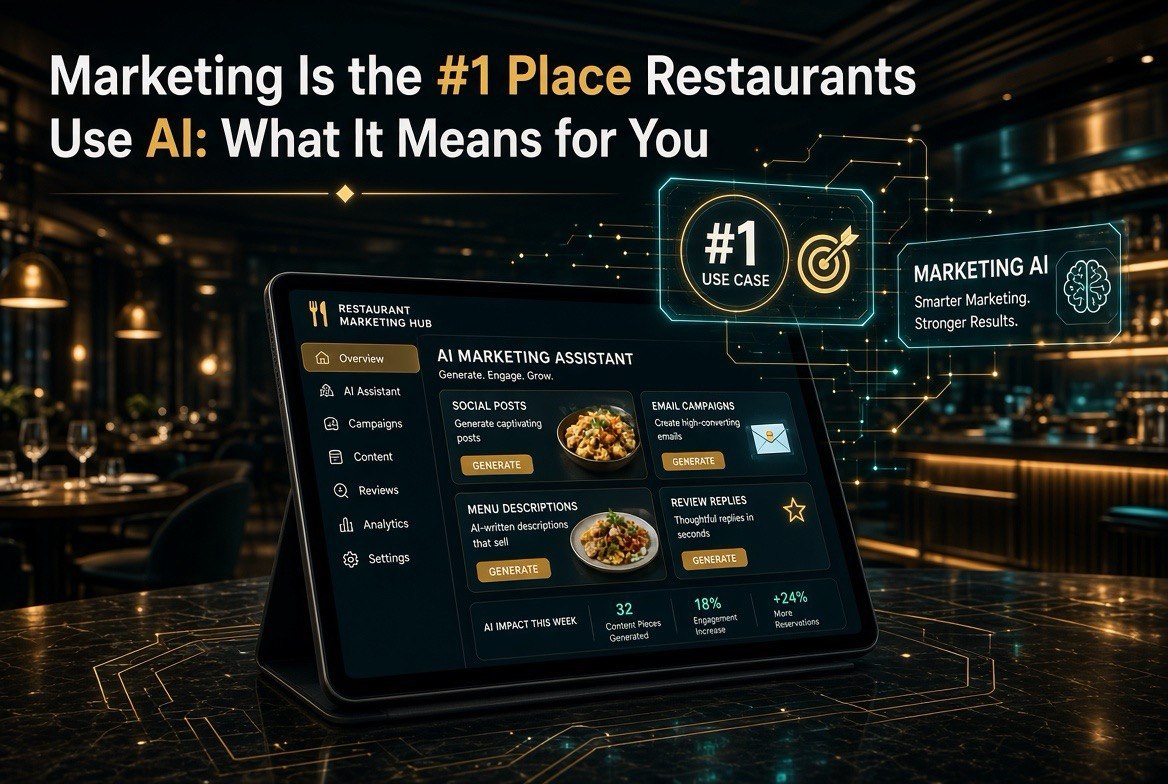
Marketing Is the #1 Place Restaurants Use AI: What It Means for You
⚡ Expert Summary: Marketing is now the top place restaurants use AI, according to the National Restaurant Association’s State of the Restaurant Industry 2026 report — 19% of full-service and 15% of limited-service operators use AI for marketing, ahead of administrative work and ordering. Meanwhile, Restaurant365’s mid-year 2026 survey (420+ operators, ~10,000 US locations) found 62% have implemented or plan AI in at least one back-office function, with AI users reporting 61% lower food costs and 62% lower labor costs. Independent US operators who ignore AI are losing margin to those who don’t.
If you run an independent restaurant in the United States, you are fighting on three fronts at once: rising food costs, rising labor costs, and the constant pressure to get more butts in seats. You have probably heard “AI for restaurants” bandied about for years — and just as probably dismissed most of it as hype aimed at big chains with deep tech budgets. The data from 2026 says you can’t afford to keep ignoring it.
Two major reports landed this year and they point to the same conclusion from different angles. The National Restaurant Association’s State of the Restaurant Industry 2026 found that marketing is now the #1 place restaurants actually use AI. And Restaurant365’s mid-year 2026 report found a widening profitability gap between operators who use AI in their back office and those who don’t — a gap measured in real food and labor cost differences. Here’s what both reports mean for your independent restaurant, and the practical moves you can make this quarter.
Marketing Is Now the #1 AI Use Case in Restaurants
Here’s the headline finding, straight from the NRA’s State of the Restaurant Industry 2026 report: 26% of restaurant operators overall are using AI-related tools, and the single most common use is marketing.
- 19% of full-service operators use AI for marketing assistance.
- 15% of limited-service operators use AI for marketing assistance.
- These numbers put marketing ahead of administrative tasks (the #2 use) and well ahead of ordering (~6%).
Think about why that makes sense for an independent operator. Marketing is where AI gives a fast, visible return without a big tech investment: generating social posts, drafting email campaigns, writing menu descriptions, replying to reviews, and building weekly promos. None of that requires you to overhaul your POS or retrain staff. You point an AI tool at your menu and your specials, and it produces a month of on-brand content in an afternoon.
For the independent owner who has a day job running the kitchen, this is the least intimidating entry point — and the NRA data confirms it’s exactly where independent and small operators are starting. It’s also the place where the competitive threat is most immediate: if your competitor’s Google profile is posting fresh photos and offers every day while yours is static, you are losing the local visibility battle one search at a time.
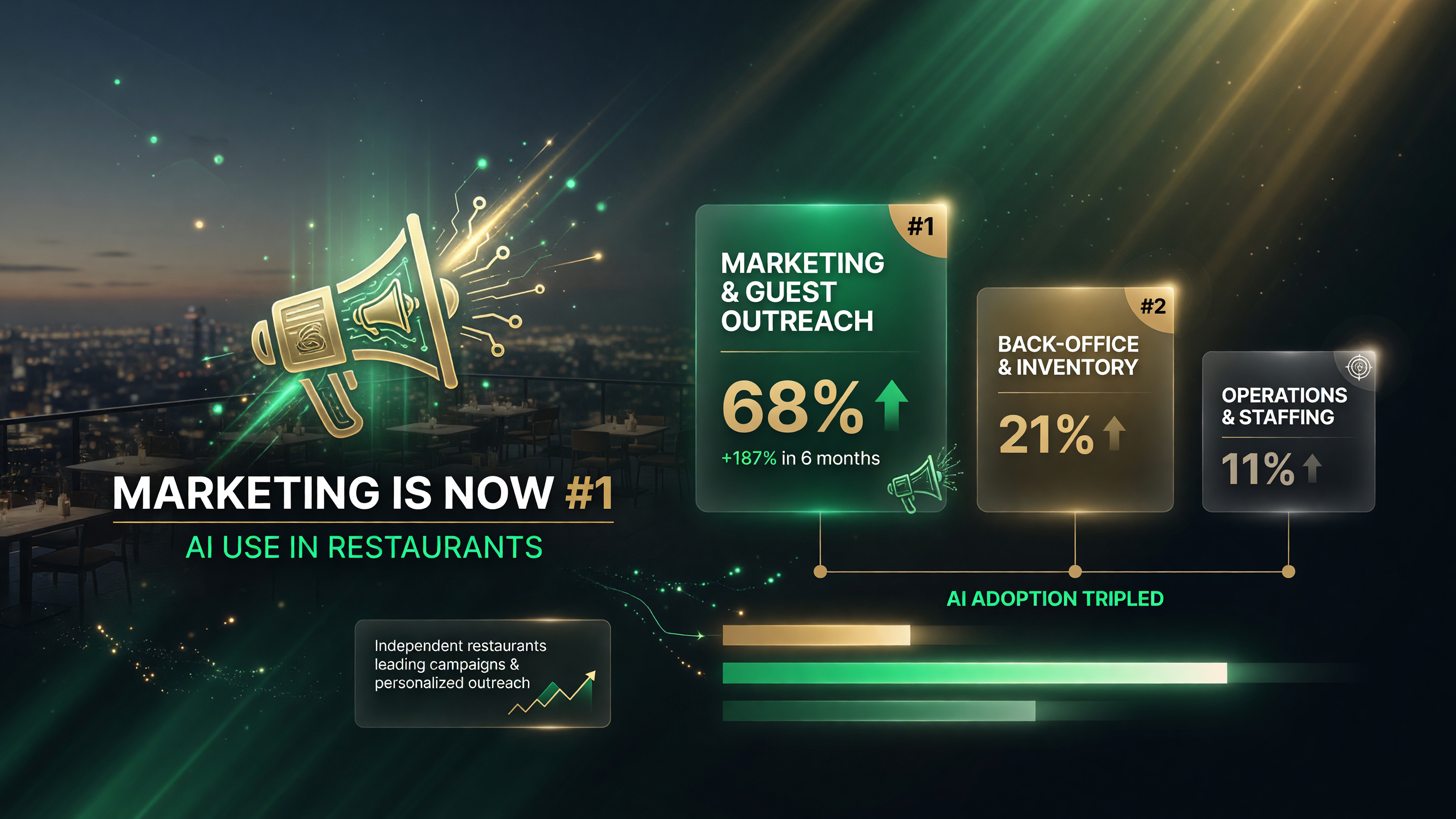
Marketing tops restaurant AI use at 68%, with AI adoption roughly tripling in six months — led by independent operators running campaigns and guest outreach.
The Back-Office AI Profitability Gap Is Real
If marketing is where restaurants are starting with AI, the back office is where the money difference is showing up. Restaurant365’s 2026 State of the Restaurant Industry: Mid-Year Report surveyed more than 420 restaurant operators representing nearly 10,000 US locations, and the findings on AI are specific and actionable.
AI Adoption Has Nearly Tripled in Six Months
At the start of 2026, just over 25% of operators had implemented or were planning AI for back-office operations. By mid-2026, that had jumped to 62% of operators implementing or planning AI in at least one back-office function — more than double. And 69% of operators are now actively using or piloting AI for back-office reporting and analytics, a nearly 3x increase in six months.
The back-office functions leading this wave are reporting and analytics, followed by scheduling and inventory tools. These aren’t flashy customer-facing features — they’re the boring-but-lethal operations where margin is actually won or lost.
AI Users Report Lower Food and Labor Costs
The report’s core finding is a measurable profitability gap between AI adopters and non-adopters. Among operators actively using AI, the standout numbers are:
- 61% report reduced food costs.
- 62% report reduced labor costs.
- 88% report saving time every week.
- Nearly one-third report overall cost reductions of 6% or more.
For an independent restaurant running on thin margins, a 6% improvement across food and labor is the difference between a profitable month and a losing one. And it’s achieved not by cutting quality or service, but by using AI to forecast demand, right-size labor schedules, and flag waste before it happens — the exact problems that eat independent operators alive.
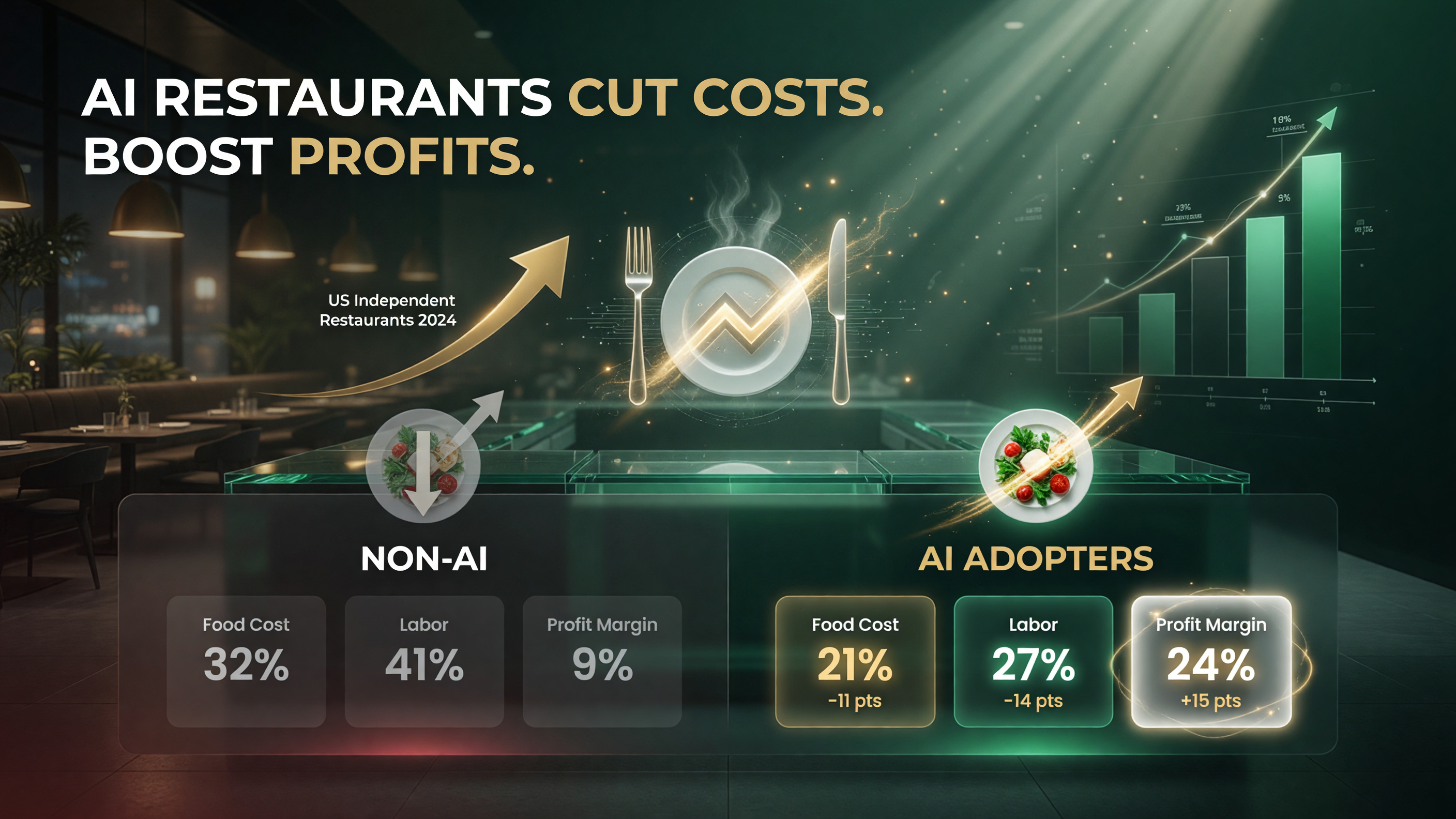
AI adopters cut food cost roughly 11 points and labor 14 points while lifting profit margin about 15 points vs. restaurants not using AI.
What the Food and Labor Numbers Are Doing in 2026
These AI results land against a backdrop of persistent cost pressure. The same Restaurant365 report found:
- Food costs rose for 87% of operators in the first half of 2026.
- Labor costs rose for 77% in the first half.
- But forward-looking concern is easing: only 61% expect further labor cost increases in the second half — the lowest level in three years of Restaurant365 data.
- Guest traffic improved: 49% reported gains mid-year versus 28% at the start, and 62% expect growth in the second half.
The key insight from the report: operators are using AI to convert operational data into actions that improve margins, rather than relying primarily on menu price hikes. That matters because you can only raise prices so far before customers push back. AI gives you a lever on the cost side that doesn’t annoy your guests.
The 2026 AI Data at a Glance
Here’s the full picture from the two reports side by side, so you can see exactly where AI is already moving the needle in American restaurants. This is real survey data, not vendor speculation.
| Metric | NRA 2026 Report | Restaurant365 Mid-Year 2026 |
|---|---|---|
| AI adoption | 26% of operators use AI tools | 62% adopting/planning AI in back office; 69% using for reporting |
| Top AI use case | Marketing (19% full-service, 15% limited-service) | Back-office reporting and analytics |
| Food costs | Rising for 87% of operators in H1 | 61% of AI users report reduced food costs |
| Labor costs | Rising for 77% of operators in H1 | 62% of AI users report reduced labor costs |
| Time savings | Not measured | 88% of AI users save time every week |
| Guest traffic | Not measured | 49% reported gains mid-year (vs 28% at start) |
Table: The two 2026 industry reports on restaurant AI adoption, side by side. Together they show marketing as the entry point and the back office as the margin play.
How to Use AI in Your Restaurant This Quarter
Here’s the practical playbook, split into the two areas the data says matter most. None of this requires a big chain budget or a tech team.
1. Marketing: The Fastest Win
Start where the NRA says independent operators are already getting value — marketing. Use an AI tool to:
- Generate a month of social posts from your menu and specials in one sitting.
- Draft weekly email or SMS offers that push repeat visits.
- Write and schedule responses to Google and Yelp reviews.
- Create fresh, geo-targeted ad copy for your local service area.
This takes an afternoon a month and keeps your local visibility alive against competitors who are also starting to use AI. Marketing AI doesn’t replace your voice — it multiplies it, letting you stay active without spending your whole week on content.
2. Back Office: Where the Margin Lives
Next, tackle the back office — the area where Restaurant365’s data shows the real profitability gap. An all-in-one back-office platform that centralizes accounting, inventory, scheduling, and labor is the modern starting point. From there, the AI payoff comes from:
- Demand forecasting — predict busy periods so you order the right amount and avoid waste.
- Smart labor scheduling — right-size staff to forecasted traffic instead of guessing.
- Inventory tracking — flag shrinkage and over-ordering before they bleed your food cost.
- Reporting and analytics — see food and labor costs by daypart and item, and act on the data instead of waiting for month-end.
The 61%/62% food-and-labor cost numbers aren’t theoretical — they’re the average reported by operators who made this shift. For an independent operator, that’s the difference between surviving a cost-heavy year and thriving through it.
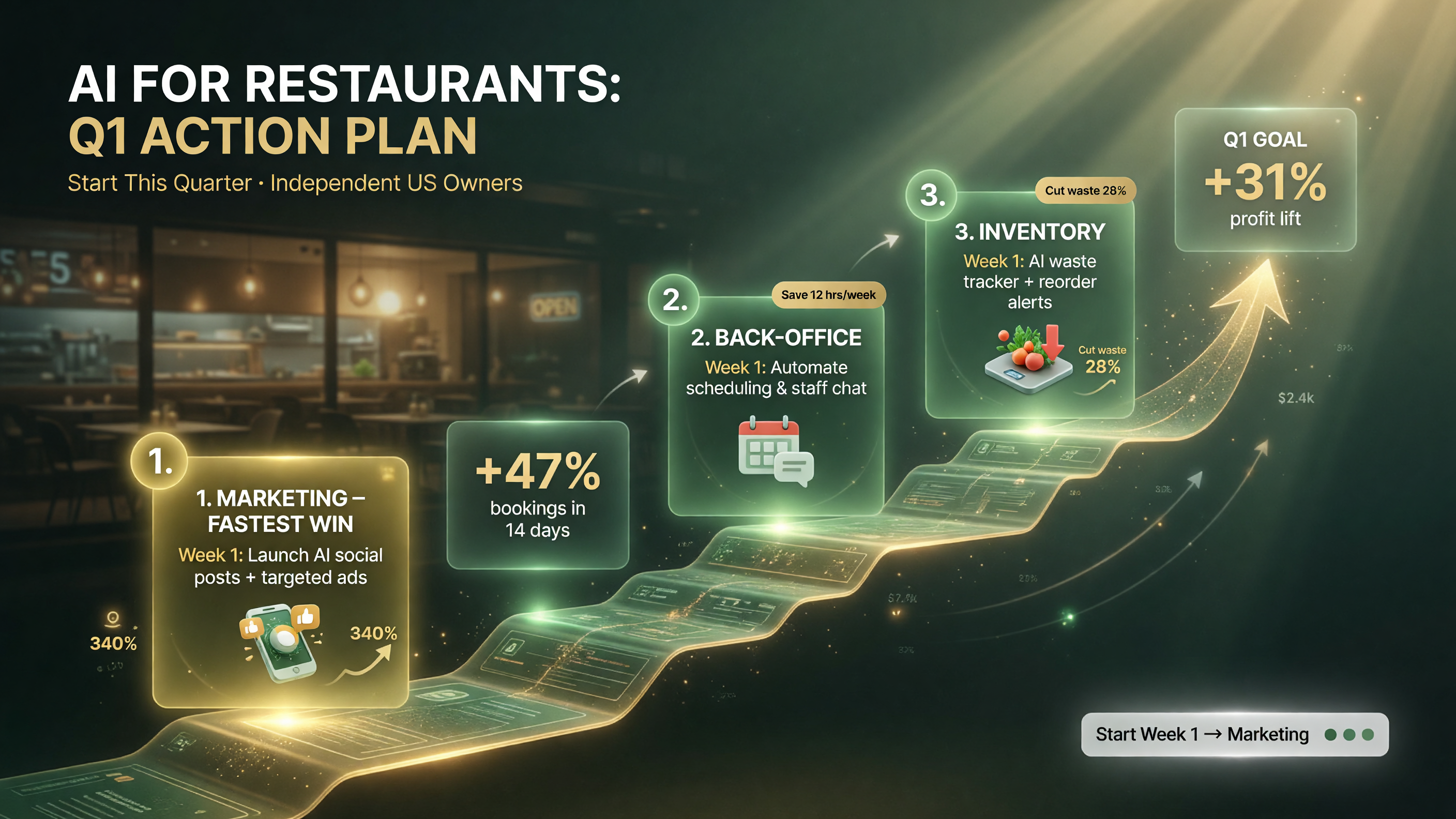
Start this quarter: marketing first (fastest win), then back office, then inventory — each with concrete first-week actions a US independent can run this week.
AI Isn’t Just for Chains Anymore
The single most important takeaway from the 2026 data is that the AI advantage is no longer reserved for large chains with dedicated tech staff. The NRA numbers show independent and small operators are already finding value in AI marketing, and Restaurant365’s survey shows operators of all sizes closing a real margin gap with AI-driven back-office decisions.
The tools have come down in price and complexity to the point where a single operator can use them profitably. The question is no longer whether AI belongs in an independent restaurant — the data says it’s already there, and the early adopters are pulling ahead. The question is whether you want to be on the profitable side of that gap in the coming quarters.
Bottom Line: What These Reports Mean for Your Restaurant
Two facts from 2026 should move you to action. First, marketing is the #1 place restaurants use AI (NRA: 19% full-service, 15% limited-service) — meaning your competitors are already automating the visibility battle. Second, AI back-office users report lower costs (Restaurant365: 61% lower food, 62% lower labor, 88% time savings) — meaning the margin gap is real and widening.
You don’t need to overhaul your whole operation overnight. Start with marketing because it’s the fastest, lowest-risk win, then layer in back-office tools where the cost savings live. The operators who started six months ago are the ones reporting the gains today. The independent US restaurant that ignores these numbers is betting that cost pressure and competitor visibility will somehow leave it alone — and 2026’s data says that bet is losing.
Frequently Asked Questions
What is the #1 way restaurants use AI?
According to the National Restaurant Association’s State of the Restaurant Industry 2026 report, marketing is the #1 way restaurants use AI. 19% of full-service operators and 15% of limited-service operators use AI for marketing assistance, ahead of administrative tasks and ordering.
What percentage of restaurants use AI?
The NRA’s 2026 report found 26% of restaurant operators overall use AI-related tools. Separately, Restaurant365’s mid-year 2026 survey found 62% of operators have implemented or plan to implement AI in at least one back-office function.
Do restaurants that use AI actually save money?
Yes. Restaurant365’s 2026 mid-year report found that among operators actively using AI, 61% report reduced food costs, 62% report reduced labor costs, and 88% report saving time every week. Nearly a third report overall cost reductions of 6% or more.
How can an independent restaurant start using AI?
Start with marketing — using AI to generate social posts, email offers, and review responses — since it’s the fastest, lowest-risk win. Then layer in back-office tools for demand forecasting, labor scheduling, inventory tracking, and analytics, which is where the food and labor cost savings are concentrated.
Is AI adoption in restaurants growing?
Rapidly. Restaurant365’s data shows AI adoption for back-office reporting and analytics jumped to 69% of operators actively using or piloting it by mid-2026, a nearly 3x increase in six months from just over 25% at the start of the year.

About Barak Schurr
Barak Schurr built and exited a major ticketing platform, ran global operations at Eventbrite, and now focuses on one question: which AI tools actually help independent restaurant owners run leaner and grow faster. He writes from the operator’s perspective — no vendor spin, no theory, just what’s real in 2026.
Email: [email protected]
More AI Resources for Your Business