Get the AI Restaurant Quick-Start Guide — Free
The 5 AI tools independent US restaurant owners are using right now to cut labor costs and answer every call.
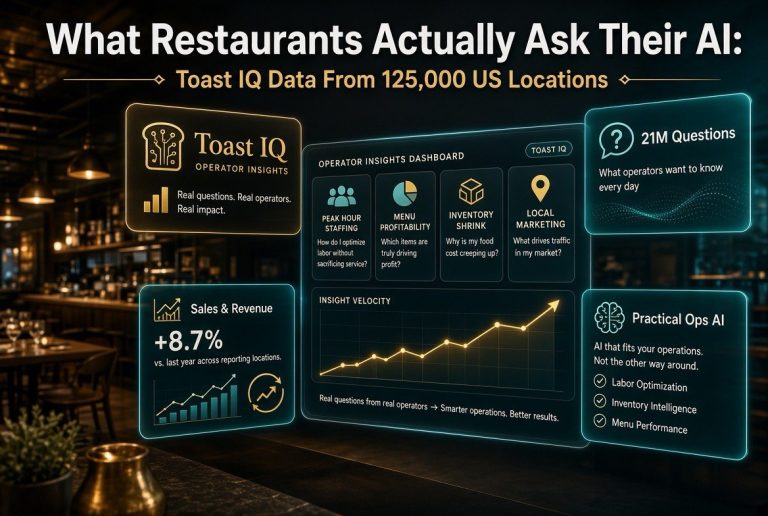
Toast IQ Team: AI Agents That Build Restaurant Labor Schedules in Seconds
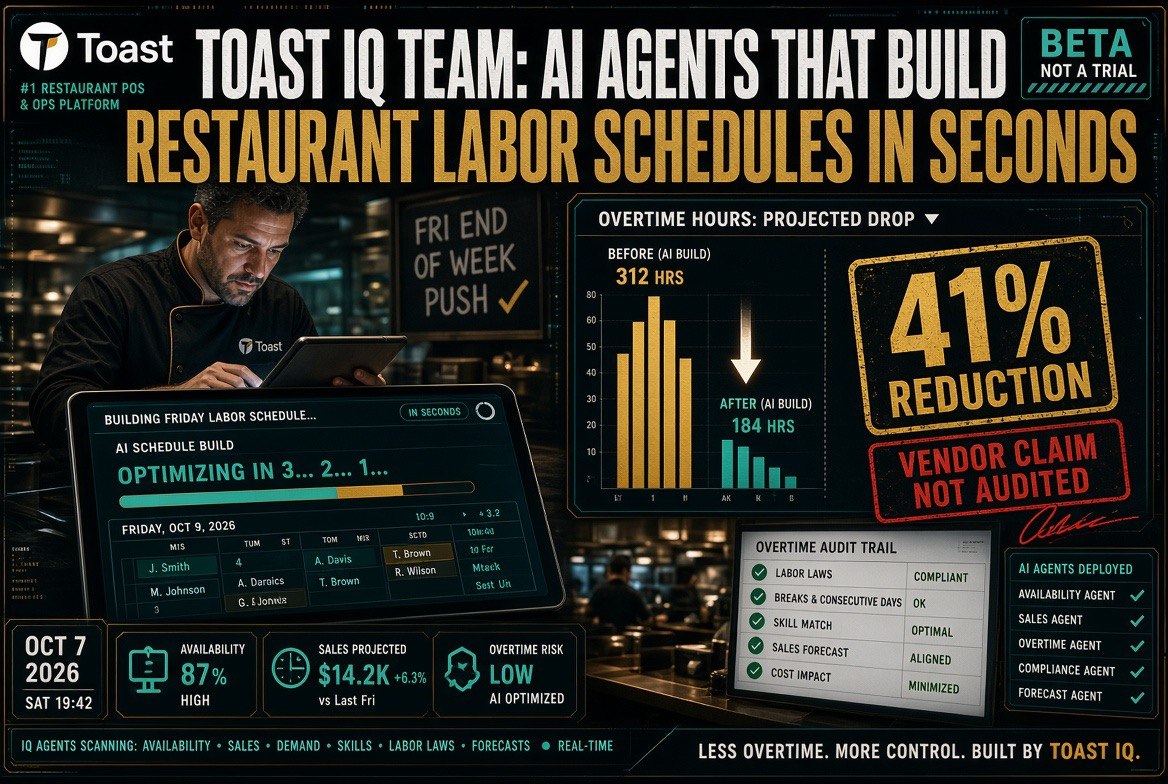
⚡ Expert Summary: Toast launched a new set of AI agents on October 7, 2026 under Toast IQ Team, led by a Scheduling Agent that builds a labor schedule in seconds from employee availability, expected sales, and overtime risk. Toast says beta restaurants averaged 41 percent fewer overtime hours per employee — vendor-reported, not audited. Team pricing starts at $60 per month plus $9 per employee per month, with a menu-pricing agent and two more in early access.
Toast just pointed its AI at the part of your restaurant that quietly eats your margin: the schedule.
On October 7, 2026, the POS company launched a set of new AI agents under Toast IQ Team, a labor-focused counterpart to the marketing-oriented Toast IQ Grow that debuted earlier. The headline feature is a Scheduling Agent that Toast says can build a labor schedule in seconds, working from employee availability, expected sales, and overtime risk. Beta users, according to Toast, averaged 41 percent fewer overtime hours per employee than restaurants not using it.
That 41 percent is the number everyone will quote, and it deserves a hard look before you accept it. But the more interesting story for independent operators is not the percentage. It is that scheduling has quietly become the test case for whether AI agents actually work in a restaurant — and the pricing says Toast thinks it has.
What Toast Actually Launched
Toast IQ Team is the labor half of Toast’s agent strategy. Grow handles marketing; Team handles staffing. The split matters because it tells you where Toast thinks operators will pay first.
Four things shipped or entered testing on October 7:
The Scheduling Agent builds a labor schedule in seconds, factoring employee availability, expected sales, and overtime risk. It is the flagship and the one with a claimed performance number attached.
AI sales forecasts feed the staffing plan, so the schedule is built against expected volume rather than last week’s gut feel.
Team Performance lets operators run contests through the MyToast employee app to push specific menu items, with a live leaderboard. This is the one feature that is more about sales than labor, and it is the one most likely to be quietly ignored by a busy operator.
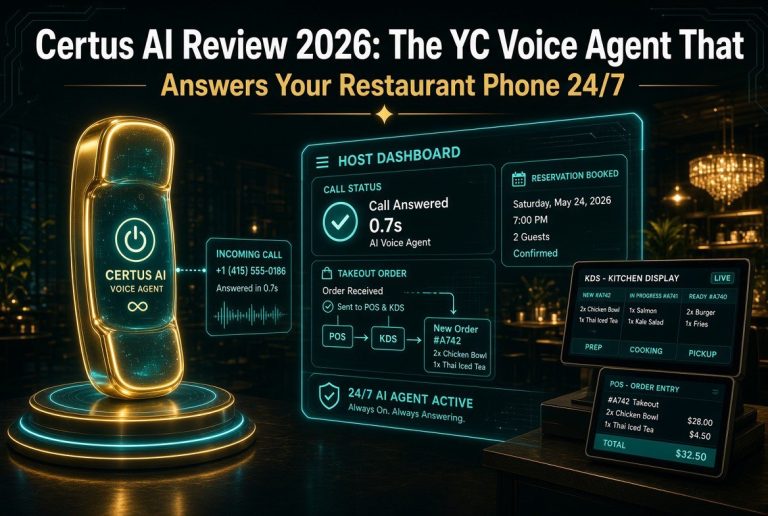
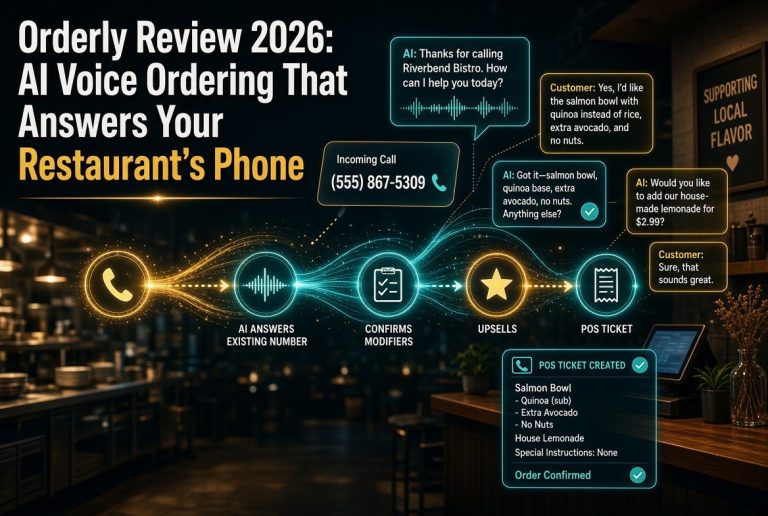
Early access agents — a Menu Agent that improves online menu descriptions and makes pricing recommendations, an Answering Agent that picks up the phone, and Configurable Agents that let a restaurant build custom agents from templates to catch missed clock-outs, flag unusual voids, or forecast prep volume.
Pricing is where the intent shows through. Toast IQ Team starts at $60 per month plus $9 per employee per month. For a 20-person restaurant, that is roughly $240 a month, or about $2,880 a year. Grow starts at $699 per month — a different tier entirely, aimed at operators who consider marketing a revenue function rather than overhead.
The 41 Percent Overtime Claim, Examined
The claim is specific enough to be worth interrogating: restaurants using the beta version of the Scheduling Agent averaged 41 percent fewer overtime hours per employee than restaurants not using it.
Read that sentence twice, because three things are doing quiet work in it. First, it is vendor-reported. Toast commissioned and published this number about its own product, and no independent party has audited it. Second, the comparison is beta participants versus non-participants — not a randomized trial. Restaurants that volunteer for a beta are usually better-run, more engaged with their technology, and more likely to be actively managing labor already. Third, overtime hours per employee can fall for reasons that have nothing to do with scheduling software: a softer sales month, a smaller team, or a manager who simply stopped approving overtime.
None of that makes the number fake. Overtime is one of the genuinely tractable costs in a restaurant, and it is exactly the kind of optimization a scheduling model should be able to make — it is arithmetic against constraints, which is what software is good at. The honest reading is that the direction is credible and the magnitude is unproven.
| Labor Cost Lever | How Fast It Moves the Number | What It Actually Requires |
|---|---|---|
| Overtime reduction | Immediate, next schedule | Accurate availability data and a manager who respects the ceiling |
| Schedule build time | Immediate, every week | Clean sales history for the forecast to work from |
| Labor as % of sales | Weeks to months | Repeated iteration against real sales variance |
| Turnover reduction | Months, hard to attribute | Fair schedules and predictable hours — AI is a means, not the cause |
Notice the pattern. The two levers an AI scheduling agent can genuinely move are the two that are arithmetic: overtime and build time. The two that owners care about most in the long run — labor percentage and turnover — depend on things software can influence but cannot own.
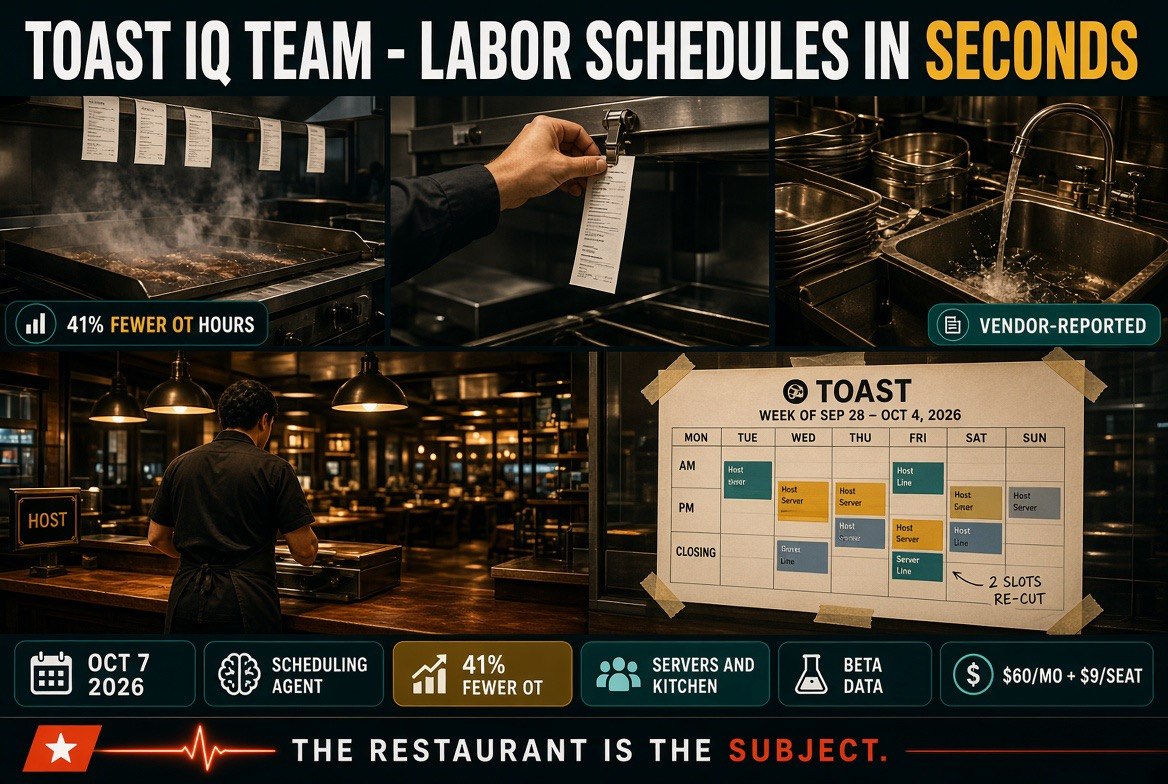
Shift change at an independent restaurant: the same week of labor rebuilt in seconds instead of an afternoon of guessing.
Why Scheduling Is the Right First Agent
Of all the tasks a restaurant could hand to an AI agent, scheduling is the one that makes the most sense as a first move, and it is worth understanding why — because the same logic tells you which agent to try next.
Scheduling has three properties that make it a good automation target. The input data is already in the POS: sales history, transaction timing, and increasingly availability records. The output is binary and checkable — a schedule is either under the overtime threshold or it is not, and the manager can verify it in seconds rather than taking it on faith. And the failure mode is visible and fast: a bad schedule gets caught the same week, not six months later in a tax filing.
Compare that to the other agents Toast just announced. The Answering Agent can take a phone order wrong, and nobody notices until the customer is already annoyed. The Menu Agent makes pricing recommendations, which is a judgment call with real consequences if the model is wrong about elasticity. The Configurable Agents that flag unusual voids are only as good as the baseline they were trained on. Scheduling is the low-risk way to learn whether agentic AI belongs in your operation at all — and that is almost certainly why Toast led with it.
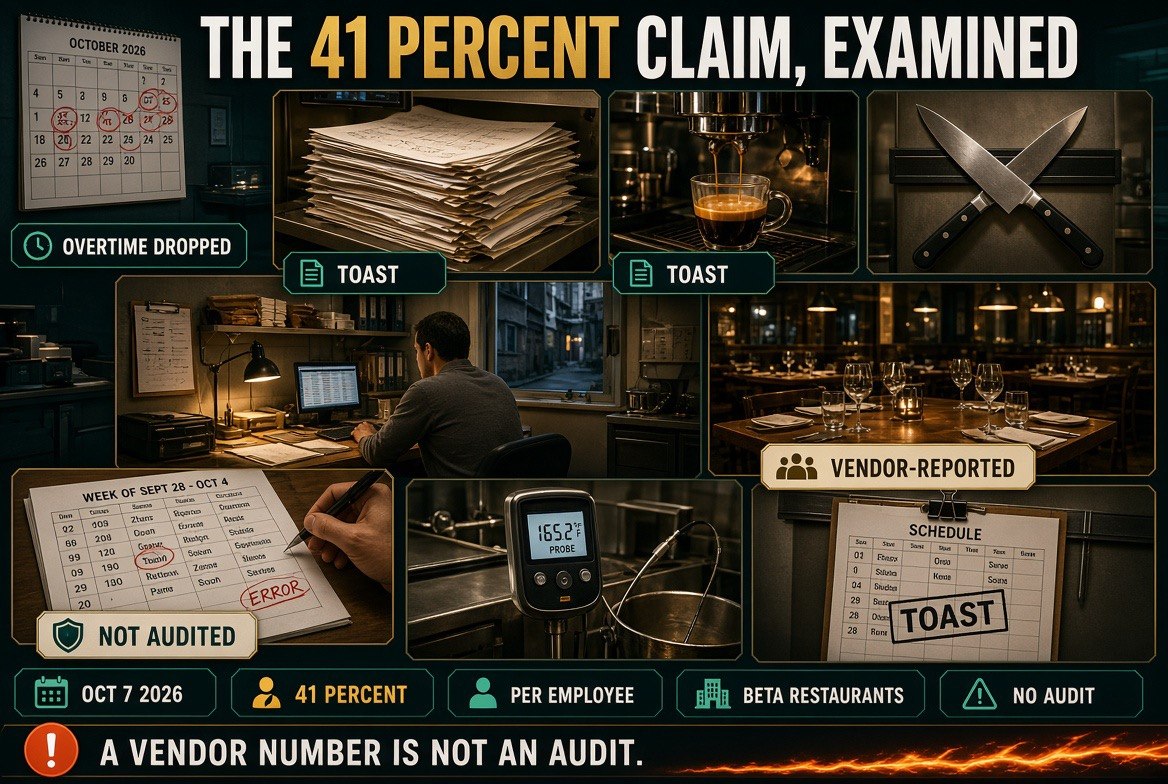
The 41 percent figure is vendor-reported beta data, not an audited number – which is exactly why it deserves a hard look.
What This Costs an Independent Restaurant
The pricing math is straightforward, and it is worth running against a real headcount before you decide anything.
| Team Size | Monthly Cost ($60 + $9/employee) | Annualized | Break-Even Overtime Hours Avoided per Week |
|---|---|---|---|
| 10 employees | $150 | $1,800 | ~3.0 hours |
| 20 employees | $240 | $2,880 | ~4.8 hours |
| 35 employees | $375 | $4,500 | ~7.5 hours |
| 50 employees | $510 | $6,120 | ~10.2 hours |
The break-even column assumes an overtime rate around $22 to $25 an hour, which is realistic for most US markets outside the highest-cost metros. At 20 employees, you need the agent to prevent roughly five overtime hours a week to pay for itself. If Toast’s 41 percent claim held even partially true at your volume, that is a low bar to clear.
But the real cost is not the $240. It is the manager time required to load accurate availability data, review what the agent produces, and build the discipline to stop overriding it manually when a favored employee asks for a shift change. An operator who buys the tool and keeps scheduling by gut feel will pay the subscription and see nothing change.
The Wider Restaurant AI Agent Wave
Toast is not alone in this, and the direction of travel matters more than any single launch. POS vendors including Square and PAR have all been pushing agents aimed at operators, while consumer-facing agents that handle reservations have appeared from other quarters entirely. Restaurant tech is converging on the same pattern: agents that absorb repetitive operational work, sold as a subscription layered on top of software you may already pay for.
For independent operators, that convergence cuts both ways. The upside is real — competition between vendors means better tools at lower prices, and the labor side of the business is genuinely under-served by technology compared to marketing. The risk is subscription creep: a POS, a scheduling agent, a marketing agent, a review agent, and a voice agent can each look cheap in isolation and add up to a meaningful monthly number that nobody audits as a bundle.
The practical discipline is to buy the agent against a measured cost, not a promised one. Overtime is measurable. Schedule build time is measurable. Both can be tracked on a spreadsheet for four weeks before and after. Marketing and review agents are far harder to attribute, which is exactly why they should come later, after the operational ones have proven themselves with numbers you can check.
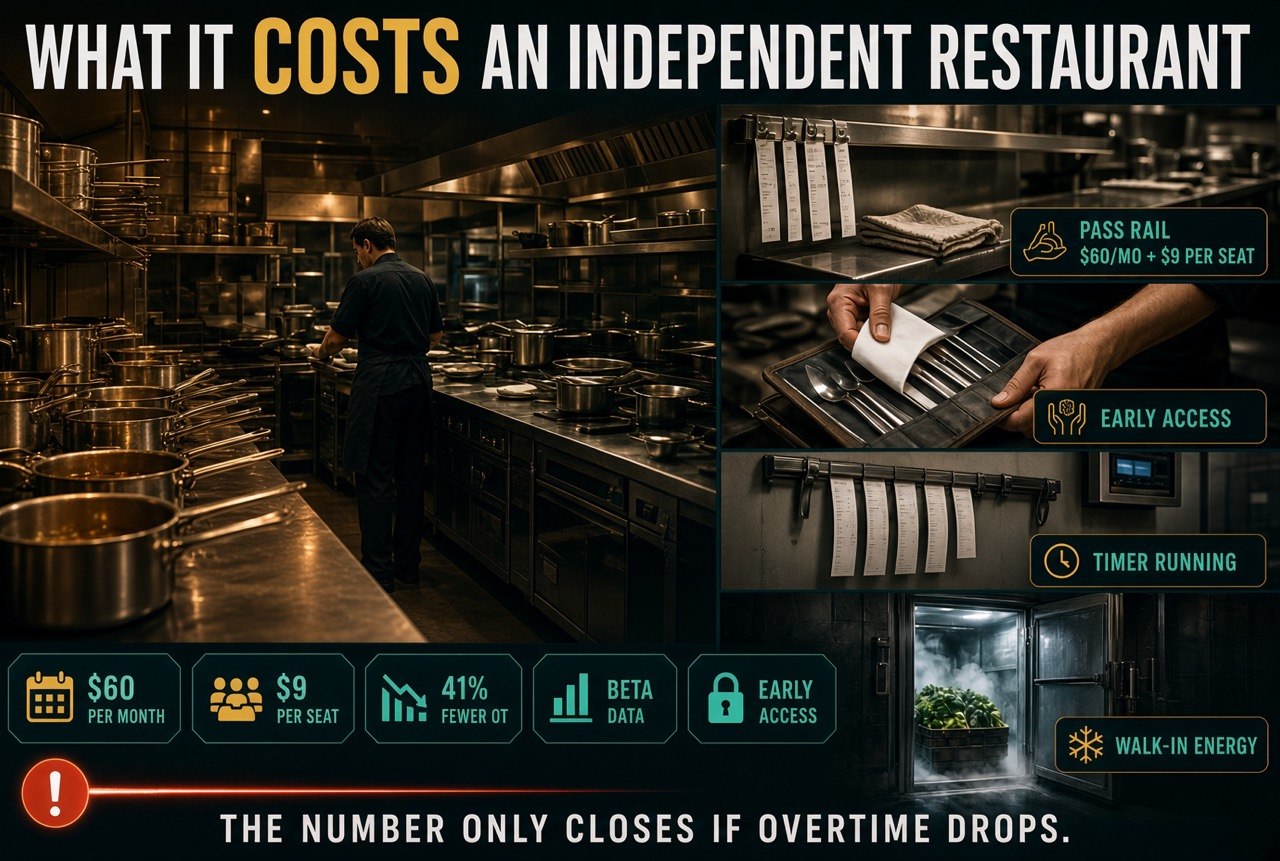
Kitchen at close: the agent’s economics only close if overtime actually drops – $60 a month plus $9 per seat is the tab.
What Independent Operators Should Do
Measure overtime for four weeks before you buy anything. Pull the actual hours from your payroll or POS reporting, not your estimate. Without a baseline, you cannot tell whether the 41 percent is happening in your restaurant or someone else’s.
Check what you already pay for. If you run Toast, the agent may be inside a product you already have. If you run a competitor’s POS, price the switch against the subscription — moving systems costs far more than $240 a month in disruption.
Audit availability data first. The Scheduling Agent is only as good as the availability records it works from. If your team’s availability lives in a text thread, spend two weeks cleaning that up before you turn the agent on.
Give it a full four-week cycle before judging. One schedule is not a test. Run four, compare overtime hours against your baseline, and decide on your own numbers rather than the vendor’s.
Resist adding the marketing tier immediately. Grow starts at $699 a month — a different spending decision entirely, and one that deserves its own measurement plan rather than being bundled into a labor decision.
The Bottom Line for Independent Restaurants
Toast’s Scheduling Agent is the most sensible first AI agent a restaurant can try, because scheduling is arithmetic against constraints, the inputs already live in your POS, and a bad output is caught within a week. The 41 percent overtime reduction is a vendor claim from a beta cohort rather than an audited study, so treat the direction as credible and the magnitude as unproven.
At $60 plus $9 per employee, the break-even is roughly five avoided overtime hours a week for a 20-person restaurant. That is a testable threshold, and testing it is the whole point. Track overtime for a month, run the agent for a month, and compare. If it pays for itself, expand. If it does not, you have learned that in eight weeks for the price of two dinners.
Frequently Asked Questions
What is Toast IQ Team?
Toast IQ Team is Toast’s labor-focused suite of AI agents, launched October 7, 2026. It includes a Scheduling Agent that builds a labor schedule in seconds from employee availability, expected sales and overtime risk, AI sales forecasts, and Team Performance contests in the MyToast app. Team pricing starts at $60 per month plus $9 per employee per month.
Is Toast’s 41 percent overtime reduction claim verified?
No. Toast reports that restaurants using the beta Scheduling Agent averaged 41 percent fewer overtime hours per employee than non-users, but the figure is vendor-reported and the comparison is beta participants versus non-participants rather than a randomized trial. Beta volunteers tend to be better-run operations already. Treat the direction as credible and the magnitude as unproven.
How much does Toast IQ Team cost for a small restaurant?
Team starts at $60 per month plus $9 per employee per month — $150 a month for 10 employees, $240 for 20, $375 for 35, and $510 for 50. At an overtime rate near $22-$25 per hour, a 20-employee restaurant needs to avoid roughly five overtime hours per week to break even.
Why is scheduling a good first AI agent for a restaurant?
Scheduling has checkable outputs, inputs that already exist in the POS, and a fast visible failure mode. A schedule either respects the overtime ceiling or it does not, and a manager can verify it in seconds. A bad result is caught the same week rather than months later, which makes it a low-risk way to test whether agentic AI belongs in your operation.
Should an independent restaurant switch POS systems to get these agents?
Usually not. Switching POS systems costs far more in disruption and retraining than a $240 monthly subscription. If you already run Toast, check what is included before buying more. If you run a competitor, measure your overtime baseline first and evaluate whether the savings justify a migration.
What else did Toast announce alongside the Scheduling Agent?
Toast also added SEO, Reviews and Offers agents to Toast IQ Grow, and opened early access to a Menu Agent, an Answering Agent, and Configurable Agents built from templates. Toast IQ Grow starts at $699 per month.

About Barak Schurr
Barak Schurr built and exited a major ticketing platform, ran global operations at Eventbrite, and now focuses on one question: which AI tools actually help independent restaurant owners run leaner and grow faster. He writes from the operator’s perspective — no vendor spin, no theory, just what’s real in 2026.
Email: [email protected]
More Resources for Restaurant Operators