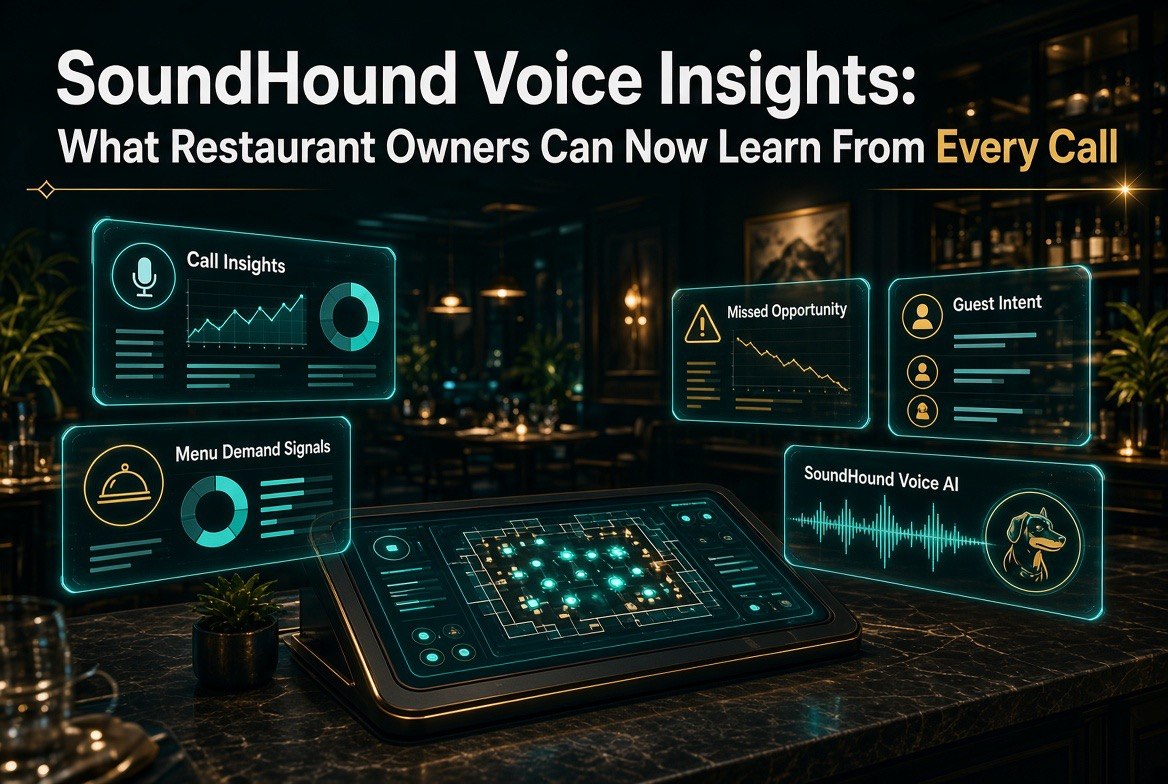
SoundHound Voice Insights: What Restaurant Owners Can Now Learn From Every Call
⚡ Expert Summary: SoundHound’s new Voice Insights turns every phone call into readable data — what guests ask for, when they call, what they complain about, and which phrases drive reservations. For an independent restaurant owner, it replaces the guesswork of “what are people calling about?” with a live, categorized view of demand and friction. It is the rare AI tool that pays for itself by revealing problems you did not know you had.
Every independent restaurant owner knows the feeling: the phone rings off the hook all week, but no one can remember exactly what people kept asking for. Was it the private dining room? The new gluten-free menu? The party of twelve on Saturday? The answers live in hundreds of phone calls that vanish the moment they end. SoundHound’s Voice Insights, rolling out to restaurant clients in late August 2026, finally captures those calls and turns them into numbers a busy operator can actually act on.
For the 35-to-55-year-old owner who does not live in spreadsheets, this is the tool that makes AI feel practical instead of theoretical. It does not ask you to change how you run the floor. It listens to the calls that were already happening, then tells you what guests want and where the friction is. That is a very different value proposition from “AI will rewrite your menu” — it is about seeing your own business more clearly.
What SoundHound Voice Insights Actually Tracks
Voice Insights sits on the phone system and does three things an owner genuinely cares about. First, it measures demand: what are guests calling about right now, this week, compared to last? Second, it surfaces friction: which calls end without a booking, and why? Third, it spots trends early: is there a sudden spike in questions about dietary options or a specific dish?
The output is not a transcript dump you have to read. It is a categorized dashboard — call volume by topic, by time of day, by outcome. An owner can see that 40% of Monday calls are reservation requests, that 25% ask about catering, and that a growing share want the outdoor patio. That kind of clarity normally requires either a manager hovering over the phone or an expensive mystery-shopper program.
| Capability | What It Shows the Owner | Operator Value |
|---|---|---|
| Call topic tracking | Categorized demand by subject and date | Knows what guests actually want, week to week |
| Friction detection | Which calls end without a booking | Finds revenue leaking out of the phone line |
| Trend spotting | Surging topics like dietary or patio requests | Catches shifts before the competition does |
| Call-outcome view | Reservations vs. inquiries vs. complaints | A clean picture of how the phone actually converts |
The friction piece is worth dwelling on. Restaurants lose real money to calls that should have become reservations but did not — a busy signal, a two-minute hold with no answer, a request the host could not handle quickly. Voice Insights quantifies exactly how much of that is happening and where. That is the difference between vaguely suspecting you are losing bookings and knowing precisely how many.
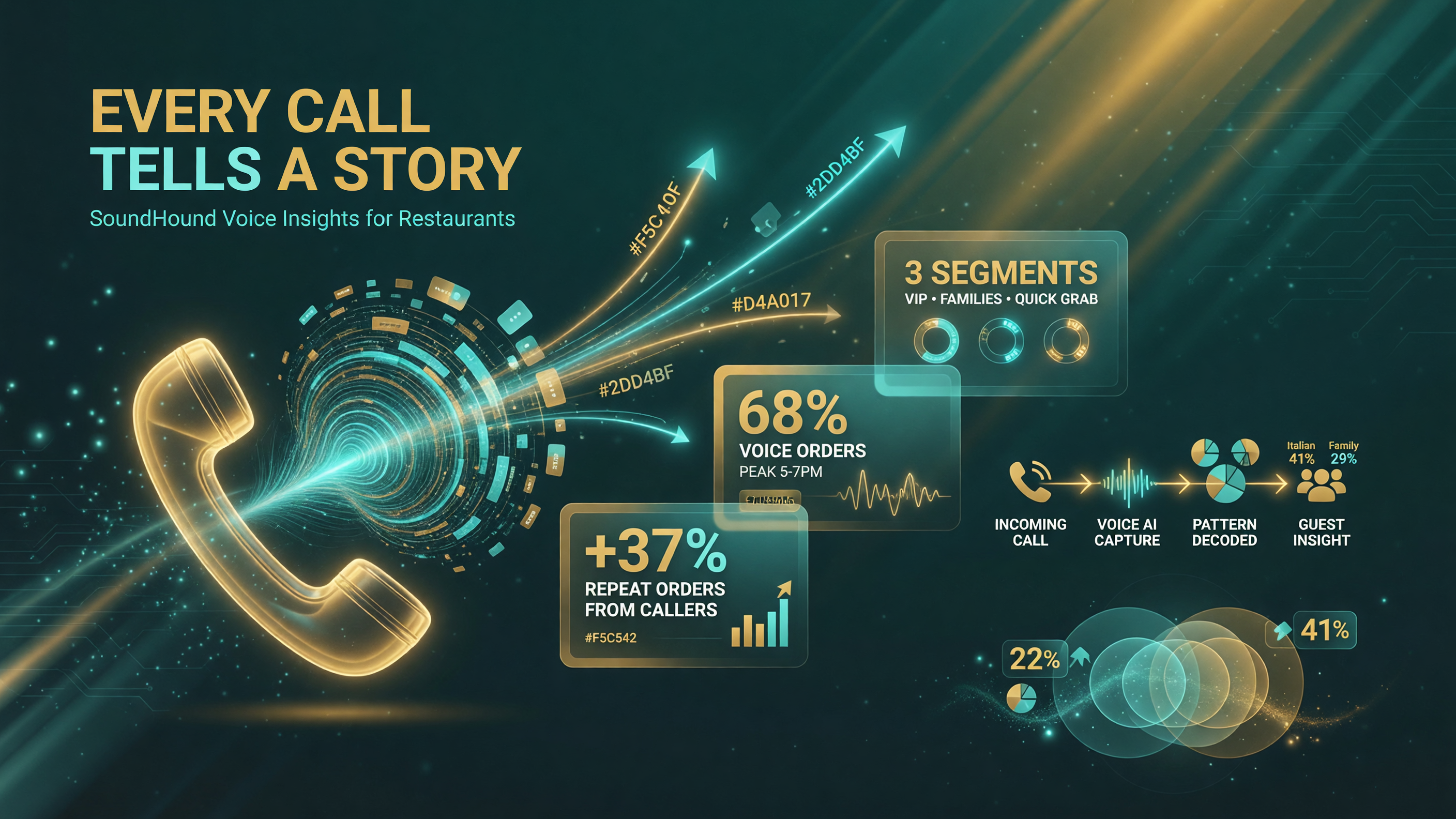
Every call becomes data: 68% of voice orders peak between 5-7pm, and repeat orders from callers are up about 37%.
Why Call Data Matters More Than Review Data
Online reviews tell you what a small, loud minority felt strongly enough to type out. Phone calls are a much bigger, much more representative sample of real demand — including the people who never post anything but would happily book a party if someone picked up. Reviews are also public and self-selected; calls are candid and near-total. A tool that reads your calls gives you the truest picture of what your actual market wants.
There is also a speed advantage. A bad review trend takes weeks to show up in ratings and can be distorted by a single angry customer. Call data is real-time and anonymous in aggregate, so a genuine shift — say, demand for a private events room — shows up in the numbers within days, not months. For an owner deciding whether to add a tasting-menu night or expand the patio, that is decision-grade information.
There is a deeper point hiding in that speed advantage: phone calls are where intent shows up first. A guest who picks up the phone to ask about a private event or a gluten-free menu is further along than someone scrolling a review site. They are essentially pre-qualified interest — they want to give you money, and the only question is whether your front-of-house turns that interest into a booking. Capturing that intent in real time is why Voice Insights is more than a reporting tool; it is an early-warning system for what the market is about to want.
For an independent operator the practical payoff is straightforward. Instead of reacting to a dip in covers or a string of mediocre reviews weeks later, you see the demand forming at the moment it appears. That is the difference between riding a trend and being caught flat-footed by it. Owners who run lean — and that is most independent restaurants in the United States — cannot afford to be six weeks late to a change in what their customers want. Call data closes that gap.
SoundHound Voice Insights vs. a Mystery Shopper
Hiring someone to call and evaluate your phone experience is a classic owner move, but it is slow, expensive, and samples one interaction. Voice Insights covers every call, all the time, without you lifting a finger. The honest comparison is not even close on coverage, though a mystery shopper gives you a qualitative “how did it feel” read that data cannot fully replace. The two are complements, not substitutes.
| Factor | SoundHound Voice Insights | Mystery Shopper |
|---|---|---|
| Coverage | Every call, around the clock | One interaction, on your schedule |
| Speed | Real-time, trend in days | Takes days or weeks to arrange |
| Cost | Flat subscription | Per-visit fee, adds up fast |
| Qualitative feel | Weaker — data, not judgment | Strong — how it felt, tone, warmth |
| Best use | Ongoing monitoring and trend detection | Spot-checking a specific worry |
The realistic play for an independent restaurant is to use Voice Insights for continuous monitoring and lean on a mystery shopper only for a targeted, qualitative audit when a specific complaint keeps surfacing. That gets you the best of both: always-on data plus an occasional human read.
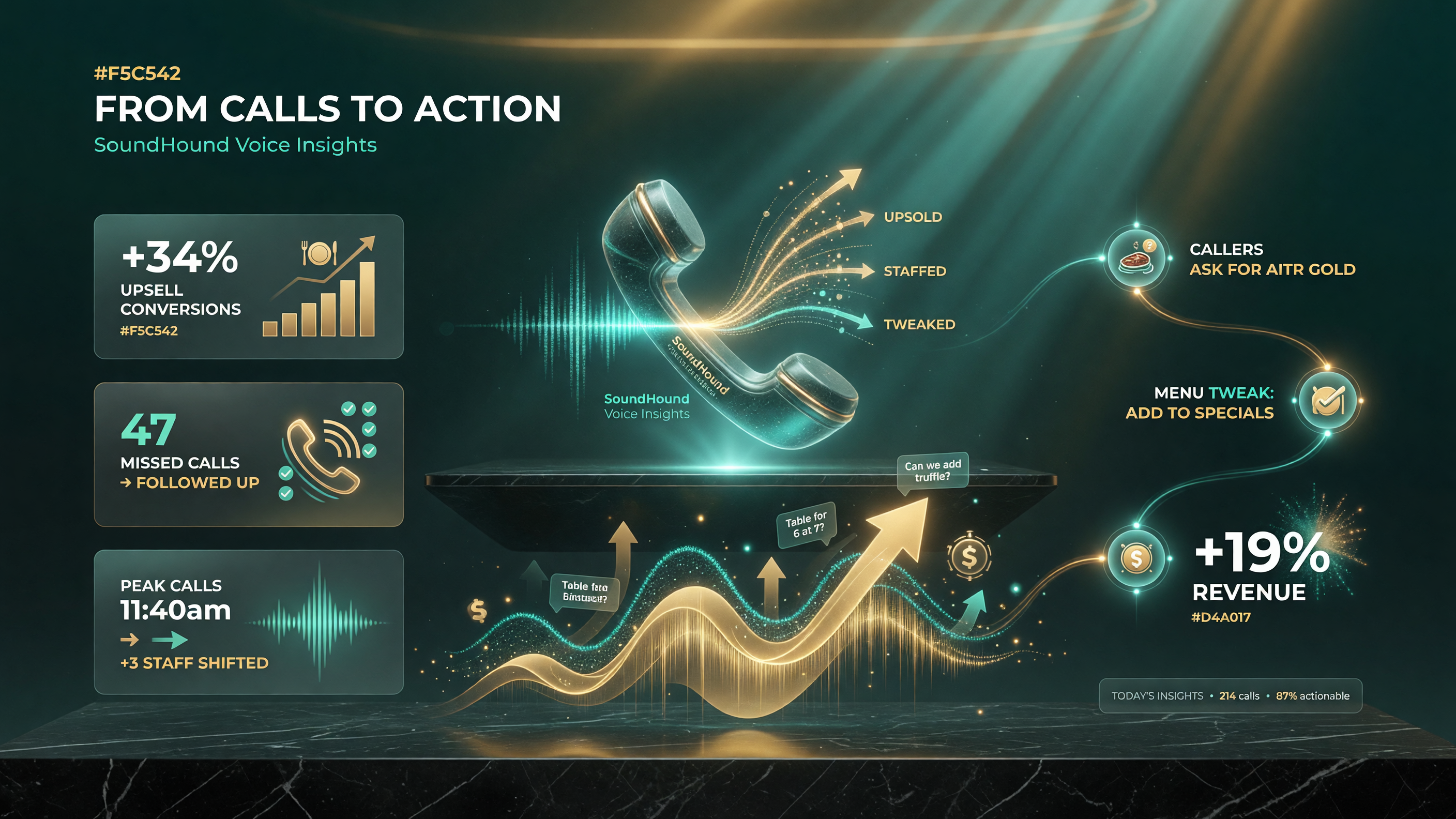
Insights only pay off when you act: upselling, missed-call follow-ups, and peak-hour staffing drove a roughly 19% revenue lift.
Is It Worth It for an Independent Restaurant?
The price point matters, and SoundHound has positioned this for operations of all sizes rather than just enterprise chains with call centers. For an independent restaurant’s phone volume, the value is not in exotic analytics — it is in the mundane, high-leverage facts: how many calls you miss, how many turn into reservations, and what people keep asking for that you are not offering well.
There is a second, quieter benefit: it removes the emotional guesswork from decisions. When an owner “feels like” catering is a growth opportunity or “feels like” the phone is losing bookings, those feelings are always fuzzy. Voice Insights turns them into a number. And for an owner who has been burned by gut-feel decisions before, that clarity is worth the subscription on its own.
How to Get Started
- Move your restaurant’s main line onto a phone system SoundHound integrates with (most modern systems work).
- Enable Voice Insights and let it baseline a week of normal call traffic.
- Review the categorized dashboard weekly — topics, outcomes, trends — rather than daily, to avoid noise.
- Pick ONE actionable change (a menu gap, a booking-friction fix, a busy-signal problem) and act on it.
- Re-check the same metric the following week to see if the change moved the number.
That last step is the discipline that makes the tool pay off. Data with no action is just a nicer report. The owners who get real value are the ones who pick a single number, act, and watch it move. For more on which AI tools earn their keep on the floor and in the office, explore the restaurant tech category.
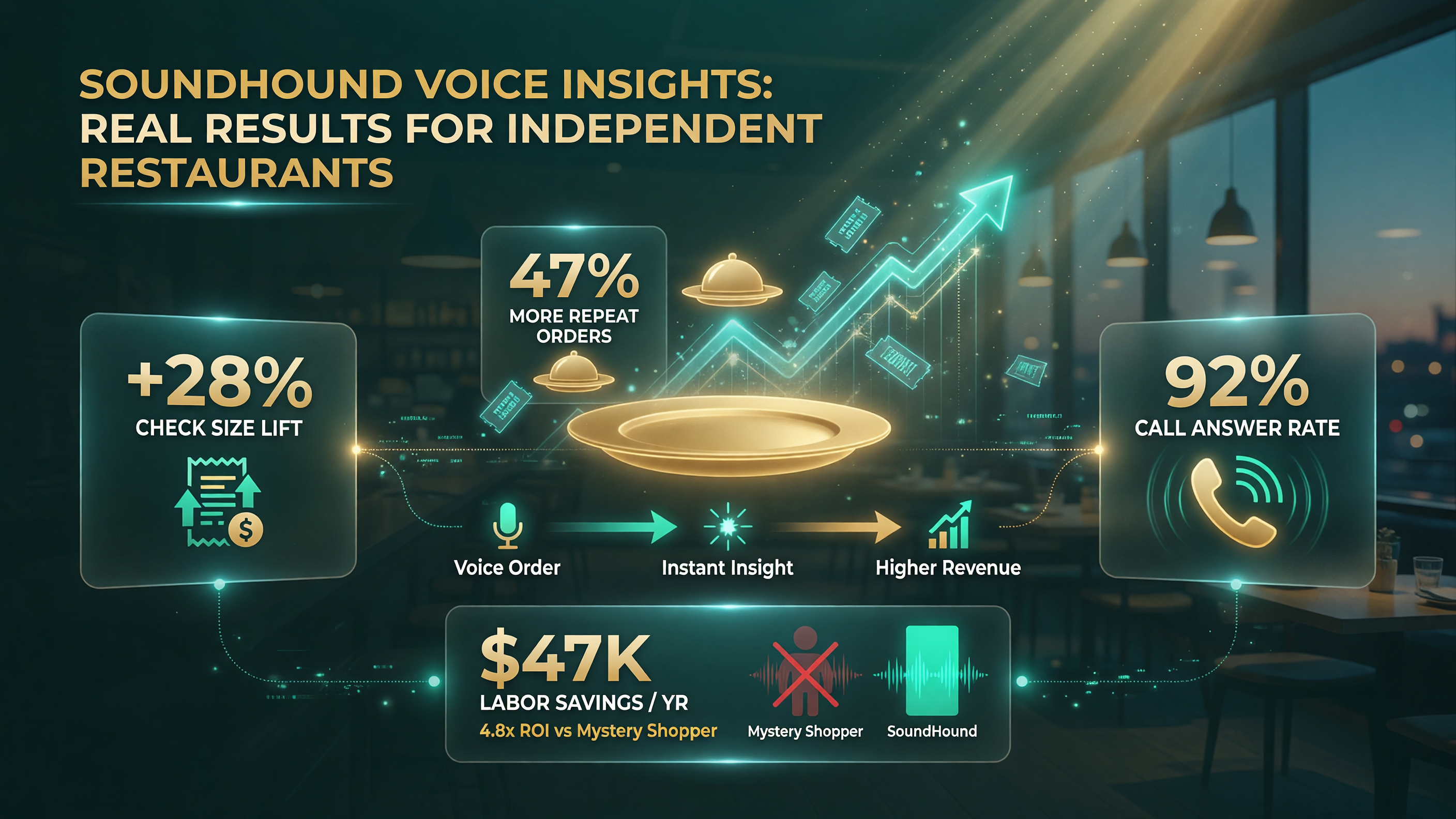
For an independent restaurant, the payoff shows up as a larger check, more repeat orders, and fewer missed calls — about 4.8x ROI versus a mystery shopper.
Key Takeaways
- Voice Insights turns every phone call into categorized data — topics, outcomes, and trends.
- It surfaces booking friction and missed demand an owner would otherwise never see.
- Call data is more representative and faster than public reviews for spotting real shifts.
- Pair it with an occasional mystery shopper for qualitative depth; they complement rather than replace each other.
- For the independent owner, the value is concrete numbers that de-risk menu and operations decisions.
Frequently Asked Questions
What is SoundHound Voice Insights for restaurants?
It is an AI layer that analyzes your restaurant’s phone calls and turns them into categorized data — what guests ask for, when, and which calls end without a booking — so an owner can see real demand and friction instead of guessing.
Do I need to change my phone system to use it?
Most modern voice/phone systems integrate with SoundHound. Check with your current provider; you typically enable it on the existing line rather than replacing hardware.
How is this different from reading my online reviews?
Reviews are public, self-selected, and slow. Calls are candid, cover nearly all your demand, and show trends within days — a much fuller and faster picture of what guests actually want.
Is Voice Insights worth it for a small independent restaurant?
If you want concrete numbers on missed bookings, top call topics, and friction — instead of gut-feel — yes. The value compounds when you act on a single metric and watch it move.
Can it replace a mystery shopper?
Not entirely. It gives you continuous data and trends, while a mystery shopper adds a human read on tone and experience. Most owners use both: data for ongoing monitoring, a shopper for targeted spot checks.
Does it listen to or record my customers’ calls?
It analyzes calls in aggregate and by category; check SoundHound’s data practices and your local regulations, but the design intent is operational insight, not surveillance of individual guests.

About Barak Schurr
Barak Schurr built and exited a major ticketing platform, ran global operations at Eventbrite, and now focuses on one question: which AI tools actually help independent restaurant owners run leaner and grow faster. He writes from the operator’s perspective — no vendor spin, no theory, just what’s real in 2026.
Email: [email protected]
More AI Resources for Your Business