50+ AI Agents Are Now Running Restaurant Kitchens — The Complete Breakdown for Independent Owners
⚡ Expert Summary: Key Takeaways
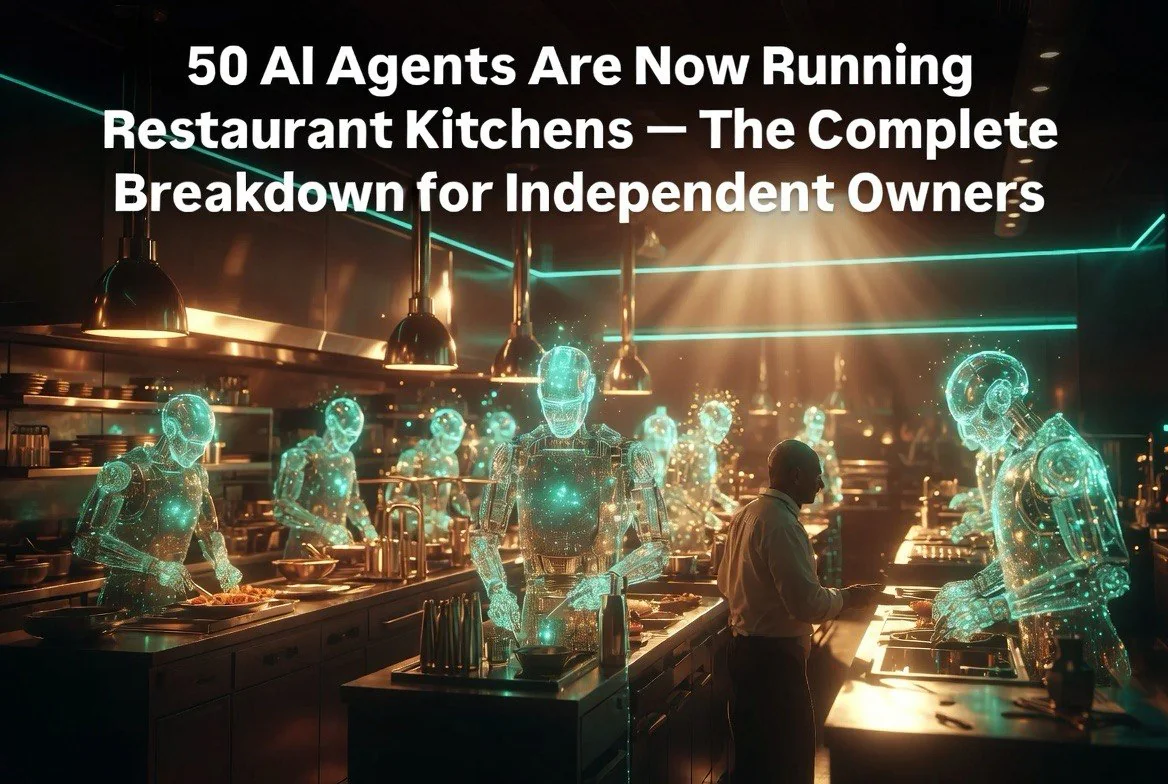
- A Madrid-based startup has built 55+ AI agents specifically for restaurant kitchens — handling recipe generation, food costing, menu optimization, inventory management, and marketing. Enterprise clients are already using them as an emerging “operating system” for restaurants.
- The allO platform raised $14 million to build the first AI-native operating system for restaurants, combining voice AI, inventory management, scheduling, and customer engagement in one platform.
- Pazzi opened the world’s first fully robotic pizzeria in Madrid — no humans in the kitchen, robots handle everything from dough to boxing, pizzas ready in 5 minutes.
- Four Seasons Madrid cut food waste by 30% using Winnow’s AI-powered waste analysis system, proving that even luxury hotels see measurable ROI from kitchen AI.
- The trend is accelerating: 55+ specialized agents for professional kitchens signals a shift from “chatbots” to “kitchen workforce” — and independent owners need to understand what’s coming before their competitors adopt these tools first.
The Kitchen Just Got Smarter
Walk into a commercial kitchen in 2026 and you’ll notice something different. It’s not the equipment — the stoves, fryers, and walk-ins look the same as they did five years ago. It’s the brain of the operation that’s changed.
According to the National Restaurant Association’s 2026 forecast, the US restaurant industry generates over $1.2 trillion in annual revenue and employs more than 15.5 million people. For independent operators in the United States, AI tools are no longer optional for staying competitive.
Behind the line, AI agents are now generating recipes, calculating food costs in real-time, predicting inventory needs, optimizing staff schedules, and even handling marketing copy. In Madrid, a startup called AI Chef Pro has built over 55 specialized AI agents for professional kitchens — and enterprise clients are paying for them. In France and Spain, Pazzi’s fully robotic pizzeria is serving customers with zero kitchen staff. In Bangkok, allO raised $14 million to build the first AI-native operating system for restaurants.
For independent restaurant owners, this sounds like corporate chain territory. But here’s the thing that changes the math: these tools are cheaper and more accessible than ever. The same AI agents that power Michelin-starred kitchens in Madrid and luxury hotels in Bangkok are available to independent owners at subscription prices that cost less than a single hourly employee per month.
This article breaks down exactly what’s happening, which tools actually work, and how independent restaurant owners can adopt kitchen AI without breaking the bank or overhauling their operations.
The 55-Agent Kitchen: What AI Chef Pro Is Actually Doing
AI Chef Pro, founded in Madrid, has quietly become one of the most comprehensive AI platforms for the food service industry. Their claim of 55+ AI agents sounds like marketing hype until you look at what each agent actually does.
The agents are organized into functional categories that mirror a real kitchen’s workflow:
Recipe Development Agents
These agents generate recipes based on ingredient availability, dietary restrictions, cost targets, and cuisine style. A chef types in “I have excess salmon, need a new dinner special under $12 COGS, gluten-free friendly” — and the agent returns three recipe options with full cost breakdowns, prep instructions, and plating suggestions. The recipes aren’t generic — they’re calibrated to the restaurant’s specific ingredient costs and portion sizes.
Food Costing Agents
This is where AI Chef Pro shines for independent owners. The food costing agents calculate detailed cost breakdowns (escandallos in Spanish kitchen terminology) for every recipe. They track ingredient prices in real-time, flag cost increases, and suggest substitutions when an ingredient’s price spikes. For a restaurant running 20 menu items with seasonal variations, this single agent can save hours of manual spreadsheet work per week.
Inventory Optimization Agents
These agents predict ingredient usage based on historical sales data, upcoming reservations, and seasonal trends. They generate order lists, flag overstock risks, and suggest cross-utilization strategies (turning excess produce into tomorrow’s special). The goal is to reduce waste before it happens — not just track it after the fact.
Menu Engineering Agents
These agents analyze sales mix, profit margins, and customer preferences to recommend menu layout changes, pricing adjustments, and item rotations. They identify which dishes are “stars” (high margin, high popularity), which are “plow horses” (low margin, high popularity), and which should be cut. This is data-driven menu design that most independent owners never have time to do.
Marketing and Content Agents
Restaurant marketing is a time suck — and most owners hate doing it. AI Chef Pro’s marketing agents generate social media posts, menu descriptions, email promotions, and even Google Business Profile updates. They pull from menu data, seasonal ingredients, and customer reviews to create content that actually resonates with diners.
Real-World Deployments: Where Kitchen AI Is Already Working
Pazzi Robotic Pizzeria (Madrid): Zero Humans in the Kitchen
In January 2026, Pazzi opened the world’s first fully automated pizzeria at Calle Gaztambide 14 in Madrid’s Chamberí district. The robotic kitchen handles the entire pizza-making process — dough preparation, ingredient application, oven baking, slicing, and boxing. Pizzas are ready in approximately 5 minutes. The location operates 24/7 with no kitchen staff.
For independent owners, Pazzi isn’t necessarily a model to copy — the upfront investment for a fully robotic kitchen is substantial. But it’s a signal of where the technology is heading. The robotic systems that cost millions today will cost hundreds of thousands in five years, then thousands in ten. Understanding the trajectory now lets you plan for it.
Four Seasons Madrid: AI Waste Reduction at Scale
The Four Seasons Hotel Madrid deployed Winnow’s AI-powered waste analysis system across its multiple dining outlets. The system uses cameras and scales to track every item thrown away, identifies patterns, and provides actionable insights to culinary teams. Results: 30% reduction in food waste — translating to significant cost savings for a property of that scale.
While Four Seasons is obviously not an independent restaurant, the Winnow system is available at multiple price tiers. The core technology — AI-powered waste tracking — is becoming accessible to smaller operations through subscription models that replace the upfront hardware investment with monthly fees.
allO: The First AI-Native Restaurant Operating System
allO’s $14 million raise in 2026 signals where the restaurant technology market is heading. The platform combines voice AI (handling reservations, phone orders, and customer inquiries), inventory management (real-time tracking, automated ordering), staff scheduling (AI-optimized shift assignments), and customer engagement (automated marketing, loyalty management) into a single platform.
The key insight from allO’s approach: integration matters more than individual features. Restaurant owners don’t need 55 separate tools. They need one system that handles the whole operation — and AI makes that integration possible in ways that traditional restaurant tech couldn’t.
What This Means for Independent Restaurant Owners
Here’s the practical reality for independent owners reading this right now.
You Don’t Need a Robotic Kitchen
Pazzi makes headlines, but most independent restaurants don’t need fully automated kitchens. What you need is targeted automation in the areas that cost you the most time and money: food costing, inventory management, and staff scheduling. These are the three areas where AI agents deliver measurable ROI without requiring expensive hardware or operational overhauls.
Start with Food Costing
If you’re not tracking food costs accurately on every menu item, that’s your starting point. AI Chef Pro’s costing agents or similar tools can save 5-10 hours per week in manual spreadsheet work and catch cost increases before they eat into your margins. For most independent owners, this single change pays for the entire AI subscription within the first month.
Inventory Management Is the Second Priority
Food waste is the restaurant industry’s biggest controllable cost. Winnow and similar AI waste-tracking systems can reduce waste by 20-30%. For a restaurant spending $10,000 per month on food costs, that’s $2,000-3,000 in monthly savings — or $24,000-36,000 per year. That pays for a lot of technology.
Voice AI Is the Third Layer
Voice AI for reservations, phone orders, and customer inquiries has hit 34% adoption in the restaurant industry. If you’re still answering phones manually during peak hours, you’re spending labor on tasks that AI handles better and cheaper. Voice AI systems now handle natural conversations, manage reservations, and even suggest menu items.
The Cost Breakdown: What Kitchen AI Actually Costs in 2026
Here’s what independent owners can expect to pay for kitchen AI tools in 2026:
- AI Chef Pro or similar kitchen management AI: $50-200/month depending on agent count and features. Most platforms offer tiered plans starting around $50/month for basic recipe and costing agents.
- AI waste tracking (Winnow-style): $100-500/month for smaller operations. Larger systems with hardware can cost more, but subscription-only models are emerging.
- Voice AI for phone/ordering: $100-300/month for an AI receptionist that handles reservations, orders, and inquiries. Some platforms charge per call or per minute.
- All-in-one platforms (allO-type systems): $200-500/month for combined inventory, scheduling, voice AI, and customer engagement. The all-in-one approach is often cheaper than buying separate tools.
For comparison, one part-time hourly employee at $15/hour working 20 hours per week costs approximately $1,200/month in wages alone (plus taxes, benefits, and management overhead). A full kitchen AI stack at $500/month replaces or augments multiple employees’ worth of work in specific, measurable tasks.
The Decision Framework: Which AI Tools Should You Adopt First?
Not every restaurant needs every AI tool. Here’s a priority framework based on your biggest pain point:
If your biggest problem is rising food costs: Start with food costing and menu engineering agents. These directly protect your margins and pay for themselves immediately.
If your biggest problem is waste: Start with AI waste tracking. The 20-30% reduction is real and measurable.
If your biggest problem is labor costs: Start with voice AI for phone handling and scheduling optimization. These reduce the need for front-of-house and back-of-house labor simultaneously.
If your biggest problem is marketing and customer retention: Start with AI content and engagement tools. Automated marketing that actually works is better than no marketing at all.
If your biggest problem is all of the above: Consider an all-in-one platform like allO or similar. The integration savings (one login, one bill, one support contact) often justify the slightly higher monthly cost.
What’s Coming Next: The 2027 Kitchen
The 55-agent kitchen in Madrid is not an outlier — it’s a preview. As AI models improve and costs continue to drop, the number of specialized agents available to restaurant kitchens will grow. By 2027, we’ll likely see:
- 100+ specialized agents covering every kitchen function from ordering to plating guidance
- Real-time menu optimization that adjusts pricing and offerings based on ingredient costs, weather, reservation volume, and competitor pricing
- Predictive maintenance agents that flag equipment issues before they cause downtime
- AI-driven supplier negotiation that automatically compares prices across vendors and suggests optimal order quantities
- Personalized dining experiences where AI remembers regular customers’ preferences and suggests menu modifications in real-time
Independent owners who start adopting kitchen AI now will be in a position to capture the benefits early — lower costs, less waste, better margins — while their competitors are still figuring out where to begin. The tools exist, they’re affordable, and they work. The only question is whether you start today or wait until your margins force you to.
Frequently Asked Questions
Do I need to be technically skilled to use kitchen AI agents?
No. Most kitchen AI platforms are designed for non-technical users. AI Chef Pro and similar tools use natural language interfaces — you type what you need and the AI handles the rest. If you can send a text message, you can use kitchen AI. Most platforms offer onboarding support and training.
How long does it take to see ROI from kitchen AI?
30-60 days for most tools. Food costing and waste tracking tools typically show measurable savings within the first month. Voice AI systems show ROI within 60-90 days as they reduce the need for front-of-house labor during peak hours. The key is picking one tool that addresses your biggest pain point and measuring the impact before adding more.
Will AI agents replace my kitchen staff?
Not in the way you’re imagining. AI agents in 2026 are augmentation tools, not replacement tools. They handle specific tasks (costing, inventory prediction, scheduling, marketing) that currently eat up hours of manual work. The goal is to free up your team to focus on cooking, service, and guest experience — the things that actually differentiate your restaurant.
Can I try AI kitchen tools before committing to a subscription?
Yes — most platforms offer free trials. AI Chef Pro offers a free tier with limited agent access. Winnow and similar waste tracking systems offer demo periods. Voice AI platforms typically offer 14-30 day trials. Start with a free trial of one tool that addresses your biggest pain point before committing to a paid subscription.
What’s the best first AI tool for an independent restaurant?
Food costing software. It’s the highest-ROI AI tool for independent restaurants. Accurate food cost tracking directly protects your margins and pays for itself within weeks. Inventory management is the second-best choice. Start with one, prove the ROI, then expand to other tools as your comfort level grows.

About Barak Schurr
Barak Schurr built and exited a major ticketing platform, ran global operations at Eventbrite, and now focuses on one question: which AI tools actually help independent restaurant owners run leaner and grow faster. He writes from the operator’s perspective — no vendor spin, no theory, just what’s real in 2026.
Email: [email protected]
More AI Resources