Get the AI Restaurant Quick-Start Guide — Free
The 5 AI tools independent US restaurant owners are using right now to cut labor costs and answer every call.
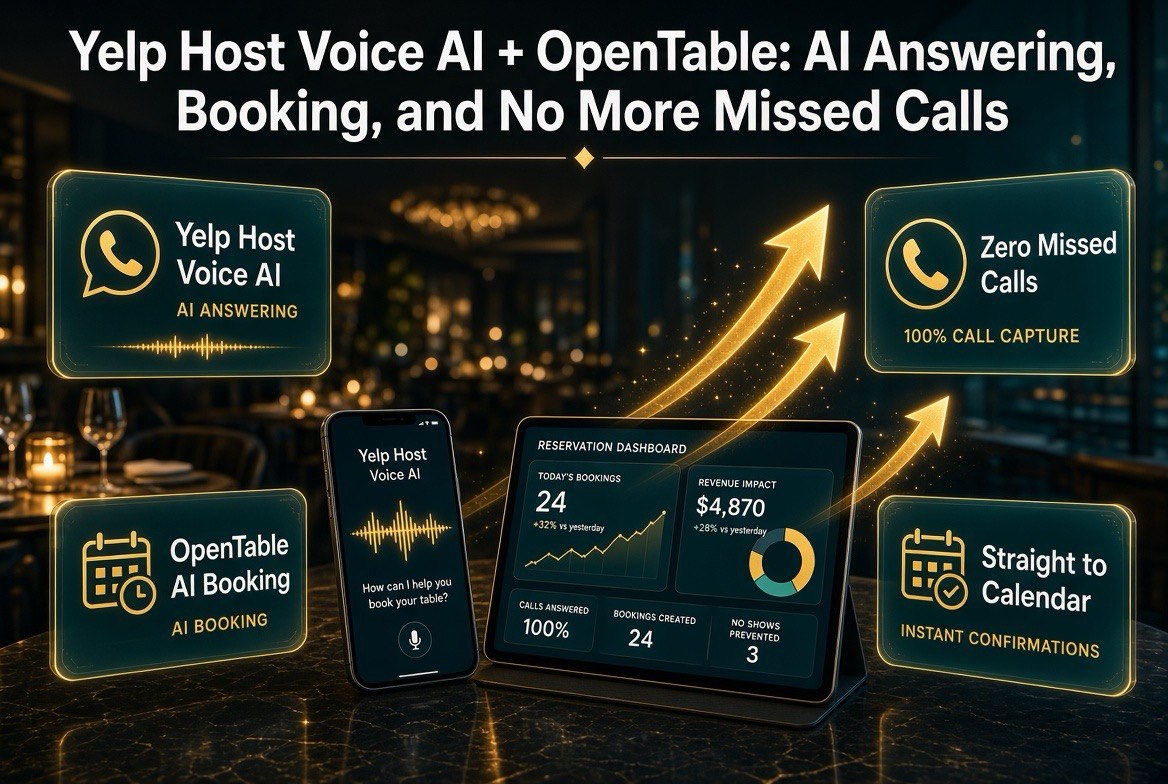
Yelp Host Voice AI + OpenTable: AI Answering, Booking, and No More Missed Calls
⚡ Expert Summary: Yelp and OpenTable are rolling out AI voice tools that answer a restaurant’s phone, field reservations, and book tables automatically — no receptionist required. For an independent US restaurant or bar, this is the fix for the biggest silent revenue leak in hospitality: missed calls and abandoned bookings. The tools pick up after a few rings, handle the back-and-forth of a reservation conversation, and drop confirmed bookings straight into your calendar. You stop losing tables to voicemail and start filling seats while you’re busy cooking.
The Phone Is Still Where Restaurants Lose Money
Here’s a number most operators don’t sit still for: the majority of restaurant phone calls go unanswered during peak service. When you’re in the weeds at 7pm on a Saturday, the phone rings, you can’t grab it, and a party of four looking for a table simply moves on to the next place. That call — that reservation — is gone.
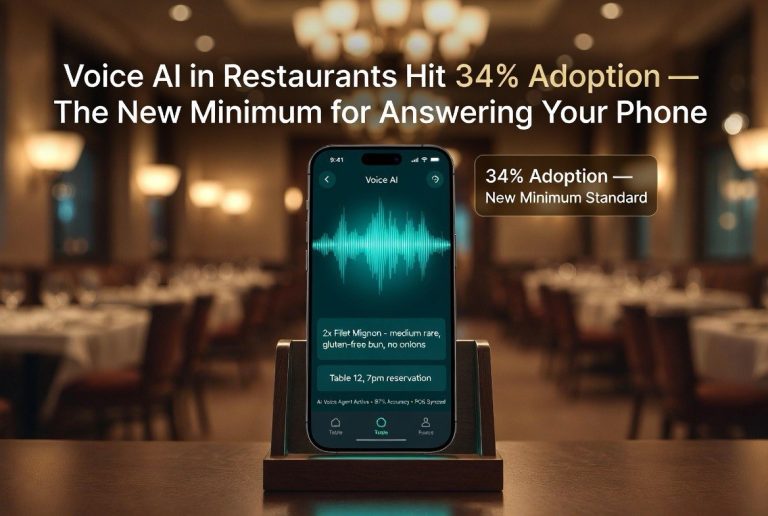
Yelp and OpenTable have both moved to solve this with AI voice agents. They answer in a few rings, speak naturally with the caller, confirm party size and time, and book the table. The result is that your “closed” 7pm window suddenly has a body in it you would have lost to voicemail.
This matters more for independents than chains for one reason: chains have host stands and call centers. Independent owners are the host stand. When you’re the only one on the floor, AI answering the phone is the difference between a booked Saturday and a quiet one.
What Yelp’s Host Voice AI Actually Does
Yelp’s Host voice AI is built to handle the front of house’s most repetitive conversation: the phone call. It picks up, greets the caller like a real host, listens to the request, and acts on booking intent. In practical terms this means:
- Answers every call during service, not just when staff are free.
- Understands reservation requests — party size, date, time, and special requests.
- Books the table directly into your reservation system and calendar.
- Handles simple questions about hours, location, and directions.
- Scales with volume — a hundred calls in a night don’t create a hundred interruptions.
The voice is natural enough that callers don’t feel they’re talking to a machine, which is the whole trick — if it felt robotic, real customers would hang up. Yelp has tuned it specifically for the hospitality conversation, not generic assistant chit-chat.
OpenTable’s Booking-First AI Approach
OpenTable is coming at the same problem from the reservation side. Its AI voice tool is built to turn phone conversations into confirmed bookings with minimal friction. Where Yelp emphasizes the natural phone conversation, OpenTable leans into the booking pipeline: a call comes in, the AI qualifies the reservation, checks availability, and writes the booking into OpenTable’s system where you already manage covers.
The practical advantage for an independent is that it plugs into the same platform your staff already use. When a call converts to a booking, it appears in your OpenTable dashboard alongside your online reservations — no separate inbox to babysit, no manual entry.
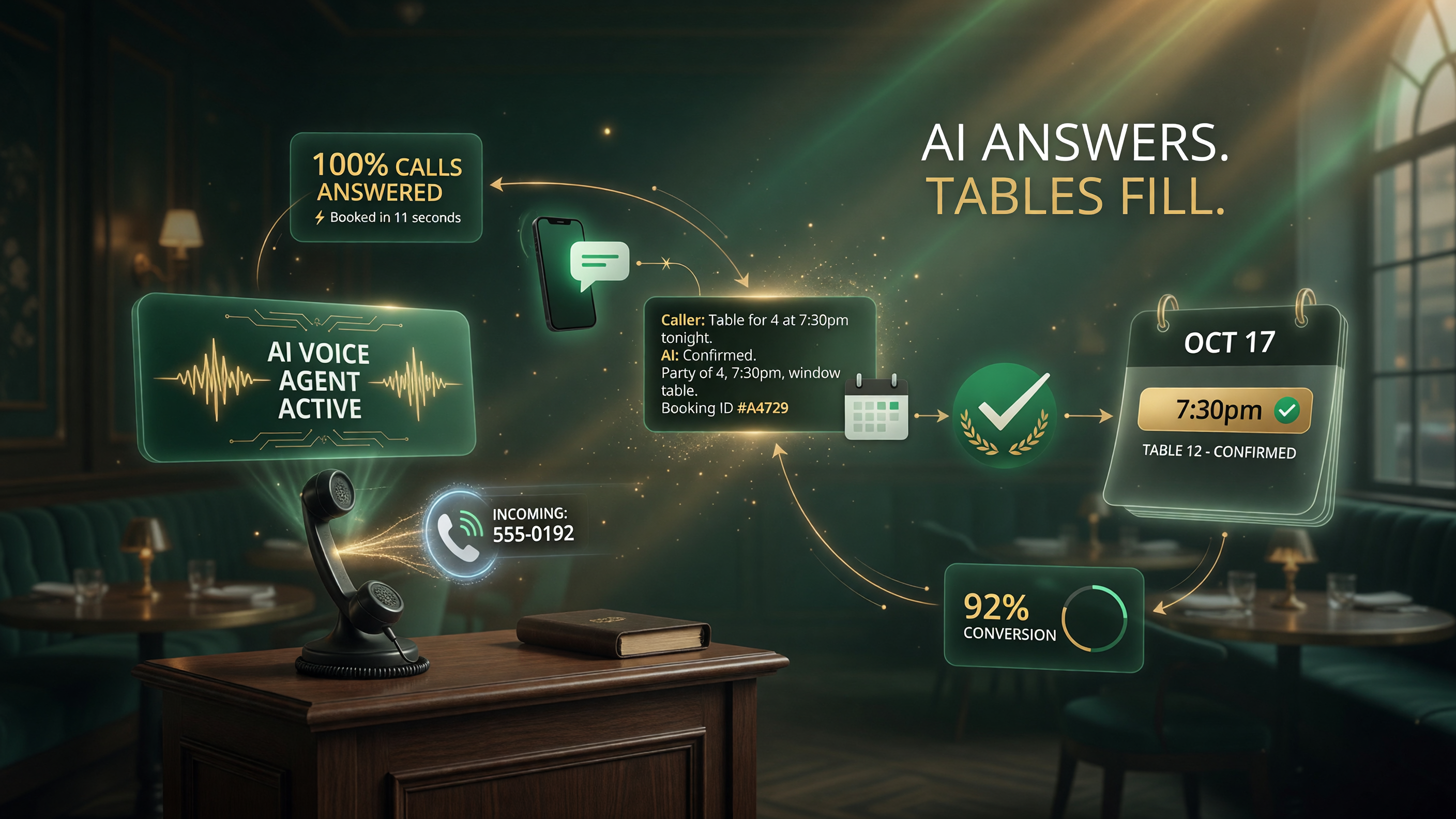
AI voice picks up every call, confirms party size and time, and drops the booking into your calendar.
The Real Cost of a Missed Call (Do the Math)
Let’s make this concrete with numbers an owner understands. Say your average check is $45 and a typical reservation is a party of three — that’s roughly $135 in revenue per seated booking. Now say the phone rings 30 times a week during service and you miss 12 of those calls. If even half of them would have booked, that’s six lost parties a week.
| Scenario | Lost bookings/week | Lost revenue/week | Lost revenue/year |
|---|---|---|---|
| No AI (status quo) | 6 | $810 | $42,120 |
| With AI phone answering | ~0 | ~$0 | ~$0 |
That’s more than $42,000 a year leaking out of a single restaurant from missed calls alone. A small-venue owner can’t spend that kind of money on a full-time host just to answer the phone — but they can switch on an AI voice agent that does it for a fraction of the cost. That framing is why these tools are landing with independents, not just the big groups.
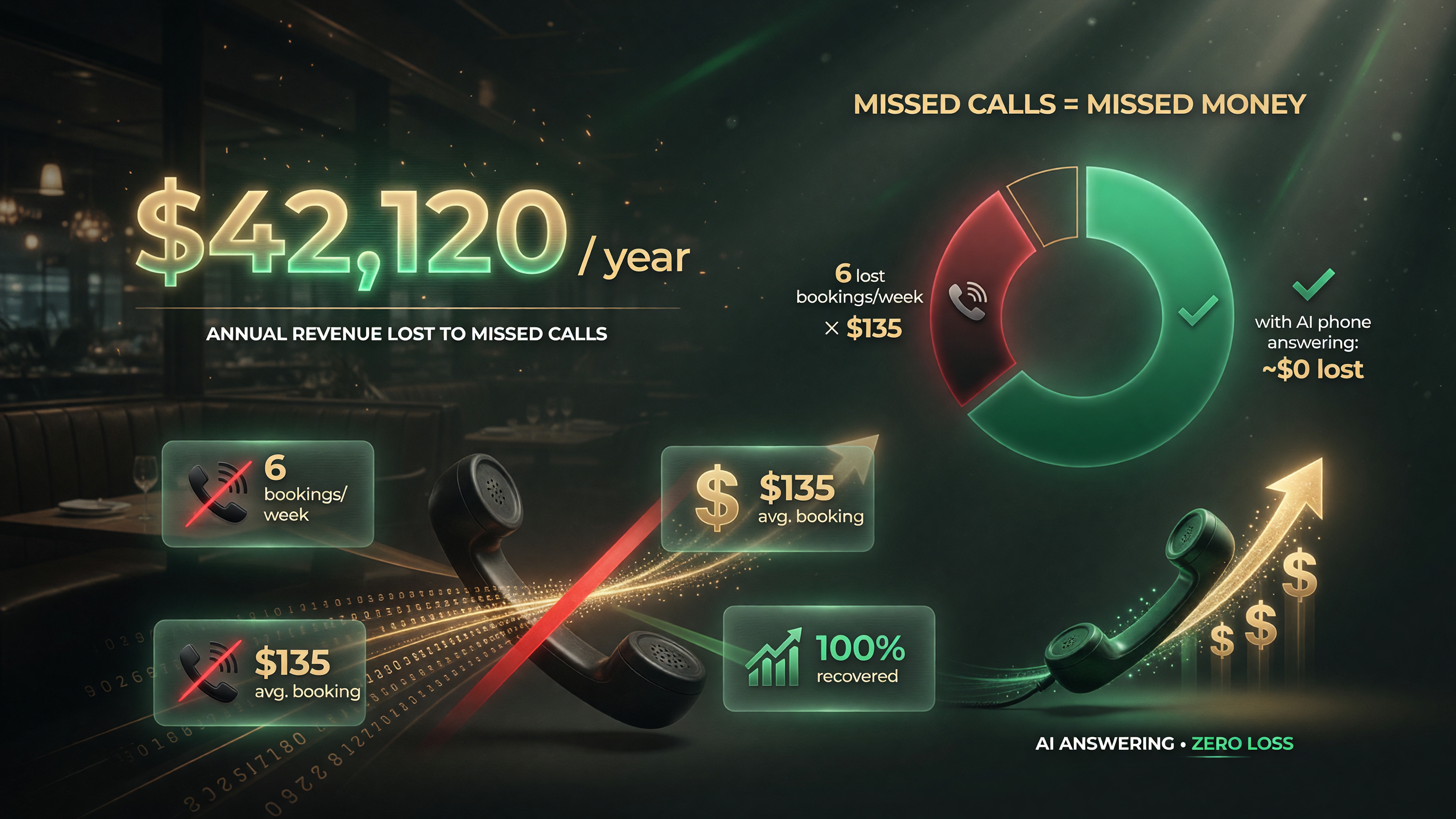
The math: six missed bookings a week at $135 each leaks over $42,000 a year.
Voice AI vs. Human Staff — Where It Fits
Some owners worry this replaces their host. It doesn’t — it covers the gap when the human isn’t free. The realistic deployment is a hybrid:
- AI answers when staff are busy (peak service, single-staffed shifts, off-hours).
- AI handles overflow so a host can focus on the guests already in the room instead of the phone.
- Humans handle the exceptions — large private events, VIP requests, complex special-needs calls — that need judgment.
Position it as a better host stand, not a worse one. The tool buys your people time to do the high-value work AI can’t, which is exactly the operating model that keeps independents competitive against chains with more bodies on shift.
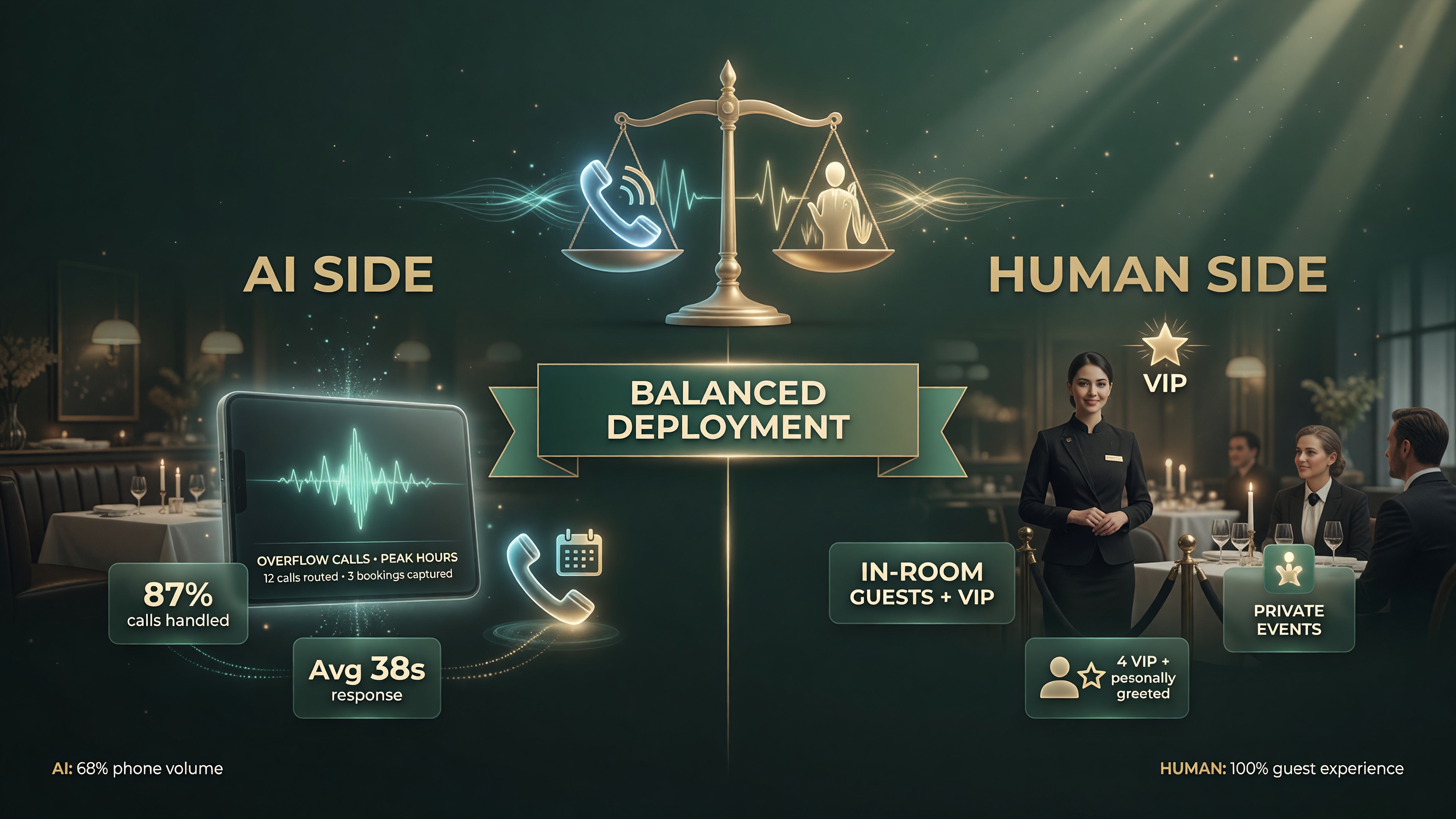
Hybrid model: AI covers the phone when staff are busy; humans handle exceptions and in-person guests.
Managing the Errors (Because AI Isn’t Perfect)
Voice AI on the phone will occasionally misunderstand a name, a time, or a dietary note. The mitigation is the same as with any good reservation workflow:
- Review AI-booked reservations for the first few weeks until you trust the pattern.
- Set clear fallbacks — when the AI isn’t confident, it should offer to take a message or transfer rather than guess.
- Keep your calendar honest — double-booking protection is the feature to check before you switch it on for real.
- Read the call logs — every platform records conversations, and scanning a few each week catches drift early.
Rollout and Cost Reality for US Restaurants
Both tools are being offered through platforms US restaurants already use. Yelp’s Host AI rolls out to business owners on Yelp, and OpenTable’s voice booking is integrated into its reservation platform. For most independents, the practical path is to enable it on whatever booking platform you already pay for, rather than adding a whole new vendor.
Pricing varies by tier and market, and it’s worth getting a direct quote for your venue size and call volume. The key financial point stands regardless of exact pricing: if you’re losing meaningful bookings to unanswered calls, the tool pays for itself fast.
What to Check Before You Switch It On
- Does it book into the same calendar your staff use? (No duplicate-entry nightmare.)
- Can callers opt out to reach a human? (Both platforms support this — make sure it’s on.)
- What does it do with a no-answer or low-confidence call?
- Does it respect your reservation policy (deposits, party-size caps)?
Get those four answers right and you’ve removed the biggest source of friction before the first call.
OpenTable vs. Yelp — Which One Should You Turn On First?
Both tools do the same core job — answer the phone, take the reservation — but they plug into different demand streams, and that should drive your decision.
| Consideration | Yelp Host AI | OpenTable Voice |
|---|---|---|
| Plugs into demand from | Yelp discovery & search | OpenTable reservations & guest network |
| Best if you | Rely on Yelp leads and want a natural phone host | Already manage covers in OpenTable and want bookings in the same dashboard |
| Booking destination | Your reservation calendar via Yelp | OpenTable reservation system |
The pragmatic answer for most independents is: enable whichever platform your guests already use to find and book you. If your phone calls come from people who found you on Yelp, Yelp’s Host AI is the natural fit. If the bulk of your reservations already flow through OpenTable, start there so the bookings land where your team already looks. Many operators will eventually run both — they cover different caller pools.
What This Means for the Front of House
The bigger shift is cultural as much as operational. For decades, “the phone ringing” has been a source of stress for a busy floor — a disruption to an already-frantic service. AI voice answering quietly removes that stress point. The phone still rings, but it gets picked up by something that never gets flustered, never is mid-plate, and never forgets to write the booking down.
For the owner, the payoff is a calmer service and fewer “we lost that table” moments that haunt a closing shift. For the staff, it means they’re not constantly torn between the dining room and the ringing phone. And for the guest, a call that gets answered politely and efficiently is a better first impression than a voicemail you’ll return at 9pm — or never.
Security and Data Considerations
Any AI taking phone calls is recording conversations, which means data handling matters. Confirm that call recordings and transcripts are stored securely and that you can delete a caller’s data on request. Make sure the platform isn’t feeding your call data into third-party advertising without your sign-off.
The good news for operators: reservation conversations typically involve a name, party size, and time — not payment details, in most setups. The moment you let an AI take a payment or a credit card number over the phone, your compliance burden jumps, so keep the AI on booking duty and keep payments on your human, secure channel.
FAQ
Does Yelp Host Voice AI actually book reservations automatically?
Yes — Yelp’s Host voice AI answers incoming calls, understands reservation requests (party size, date, time), and books the table directly into your reservation calendar, without a staff member needing to free up.
Will AI voice answering really work for my small restaurant?
It works best in the exact situations independents hit daily: peak service when no one can grab the phone, single-staffed shifts, and off-hours calls. It’s designed for the hospitality phone conversation, not generic chat.
Is this available to US restaurants now?
Yelp’s Host AI and OpenTable’s AI voice booking are rolling out to US business owners on their respective platforms through 2026. Availability varies by market and plan, so check directly with your platform account.
Does AI replace my host or front-of-house staff?
No — it covers the gap when staff are busy and handles overflow. Your people still handle exceptions, private events, and in-person guests. The tool makes the host stand more effective, not redundant.
How much does missed-call revenue loss actually cost a restaurant?
On a $45 average check with a party of three, a single missed booking is about $135. Miss six of those a week and you’re losing roughly $810 a week — over $42,000 a year — purely from unanswered calls.

About Barak Schurr
Barak Schurr built and exited a major ticketing platform, ran global operations at Eventbrite, and now focuses on one question: which AI tools actually help independent restaurant owners run leaner and grow faster. He writes from the operator’s perspective — no vendor spin, no theory, just what’s real in 2026.
Email: [email protected]
More Resources for Restaurant Operators