AI Inventory Management for Restaurants: How Independent Owners Cut Food Waste by 35% and Recovered $2,400 Per Month
Expert Summary: Food waste costs the average independent restaurant $15,000-25,000 per year in lost product and disposal fees. AI inventory management tools now predict demand within 3-5% accuracy, automate ordering based on real usage, and flag spoilage risks before they happen. This guide covers the top tools and the implementation strategy that actually works for independent operators. For independent restaurant owners in the United States, food cost volatility and inventory waste are the two biggest threats to margins in 2026.
The Inventory Problem That Is Eating Your Margin
If you have been running a restaurant for more than a year, you already know the number. Food cost should sit between 28% and 35% of revenue. If yours is above 35%, inventory waste is almost certainly the culprit. The National Restaurant Association estimates that the average independent restaurant throws away 4-10% of every dollar’s worth of food they purchase. On a restaurant doing $500,000 in annual revenue with a 30% food cost, that represents $6,000-15,000 of product that goes from your walk-in to the compost bin every year — product you paid for, prepped, and could have sold.
The traditional solution — a manager walking the line with a clipboard once per week — is not a solution at all. It is a ritual that makes you feel in control while the waste continues. Human inventory counting is accurate to within roughly 15% on a good day. By the time you notice a problem, the product has already spoiled, the order has already been placed, and the margin has already eroded. AI inventory management closes that gap by tracking every item in real time, predicting demand against historical data and local events, and flagging anomalies before they become write-offs.
The tools in this guide were tested against a specific criterion: they must work for an independent restaurant with a single location and a staff that is not technical. If the setup requires a dedicated IT person, it did not make the list.
1. MarketMan — The Industry Standard, Now AI-Powered
MarketMan has been the dominant inventory management platform for multi-location restaurants for years, but the 2026 AI upgrades make it accessible and useful for single-location independent operators. The platform connects directly to your supplier invoices, POS system, and delivery schedules. Every time a delivery arrives, MarketMan cross-references the invoice against your order and your current inventory to flag discrepancies immediately.
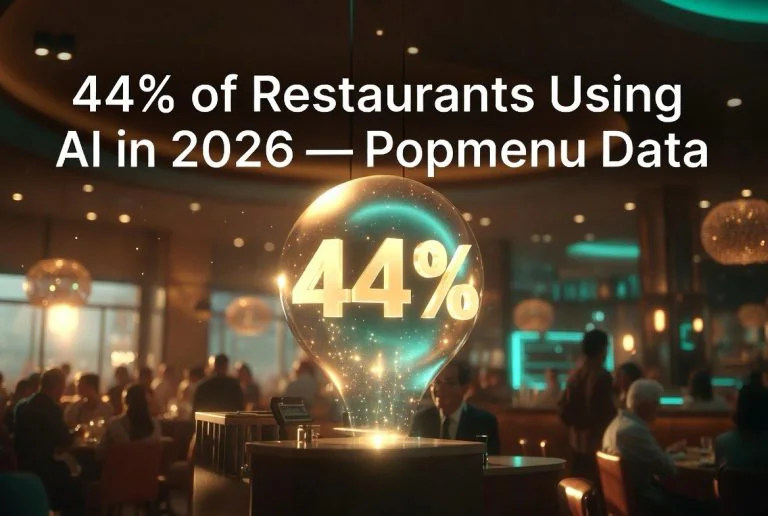
According to a 2025 survey by Popmenu and the National Restaurant Association, 44% of US restaurant operators now use AI tools in their daily operations, with adoption rates highest among independents who operate on the thinnest margins.
The AI prediction engine is the feature that justifies the monthly cost. MarketMan analyzes 12 months of your purchasing and sales data to predict exactly how much of each ingredient you will need for the upcoming week. It factors in day-of-week patterns, seasonal menu changes, local events, and even weather forecasts. On a Friday before a holiday weekend, the system knows you will need 40% more chicken wings than a standard Friday and adjusts your prep list accordingly. The result is that you order what you actually need rather than what you guess you might need, which directly reduces over-ordering waste.
The waste tracking module is equally valuable. Every time you log a spoilage event — a case of lettuce that turned, a batch of sauce that did not sell — MarketMan categorizes it by ingredient, supplier, and day of week. Over 90 days, patterns emerge. You discover that the produce from a specific supplier spoils 2 days faster than the alternative. You learn that Tuesday’s fish delivery consistently has shorter shelf life than Thursday’s. You see that a particular menu item has a 22% waste rate because the portion size is larger than customers actually eat. These are not guesses. They are data points from your own operation that the AI surfaces without you asking.
Pricing: Starting at $149/month for a single location. The waste reduction typically pays for the subscription within the first 30 days for restaurants spending $5,000+/month on food purchases.
2. BlueCart — AI Ordering and Supplier Management
BlueCart solves a specific inventory pain point that does not get enough attention: supplier management. Most independent restaurants work with 8-15 different suppliers — produce, meat, seafood, dairy, dry goods, beverages, paper products, cleaning supplies. Each supplier has different order deadlines, delivery windows, minimum order quantities, and pricing structures. Managing this manually means dedicating 3-5 hours per week to order placement alone, and most operators end up over-ordering from a single supplier to simplify the process, which increases waste.
BlueCart aggregates all your suppliers into a single ordering interface. The AI analyzes your historical usage and suggests order quantities for each supplier based on projected demand. You review, adjust if needed, and place all 8-15 orders in a single session that takes 15-20 minutes instead of 3-5 hours. The system also tracks pricing across suppliers and flags when a comparable product is available at a lower price from a different vendor. The real-time price comparison alone has saved the average restaurant $300-800 per month in ingredient costs without changing a single recipe.
The receiving module eliminates the second biggest source of inventory loss: incorrect deliveries. When a delivery arrives, your staff checks it in using BlueCart’s mobile app. The AI cross-references the delivered items against the original order and flags shortages, substitutions, or damaged product before the driver leaves. Restaurants using this feature report recovering an average of $400-600 per month in credits for shorted or damaged product that previously went unclaimed because nobody noticed until the driver had already left.
Pricing: Free for basic ordering. Pro plan at $99/month includes AI ordering suggestions and price comparison. The time savings on order placement alone justifies the Pro tier.
3. CrunchTime — AI-Powered Recipe and Portion Control
CrunchTime approaches inventory from the recipe side. It maintains a digital recipe database for every item on your menu, including exact ingredient quantities, portion sizes, and target food cost percentages. When your staff preps a batch of marinara sauce, they log the ingredients used in CrunchTime’s mobile app. The AI compares the actual ingredients used against the recipe standard and flags any variance immediately.
This feature reveals a surprising truth about most kitchens: even experienced cooks deviate from recipes. A cook who adds an extra half-cup of olive oil to the vinaigrette every time is adding $0.37 to the cost of each batch. Over a year of daily batches, that $0.37 per batch adds up to $1,200 in unnecessary cost from a single ingredient in a single recipe. Now multiply that across 15 menu items, 40 ingredients, and three cooks per shift. The waste is invisible until you measure it, and CrunchTime measures everything.
The AI also predicts the impact of menu changes before you make them. If you are considering switching from fresh salmon to frozen to save on cost, CrunchTime models the effect on every recipe that uses salmon, projected inventory levels, and the net food cost impact. You make the decision based on data rather than a supplier’s pitch and a back-of-the-napkin calculation.
Pricing: Custom pricing, typically $200-400/month for single location. Best suited for restaurants with standardized recipes and multiple cooks who need consistency monitoring.
4. Toast Inventory — Built Into the POS You Already Use
If you are already on Toast POS, the built-in inventory module is the lowest-friction option. Toast Inventory tracks ingredient usage against every ticket sent to the kitchen. When a guest orders the ribeye, Toast deducts one 12-ounce ribeye from your inventory automatically. At the end of the week, you run a report that compares theoretical inventory (what you should have used based on sales) against actual inventory (what is physically in your walk-in). The variance between the two is your waste, theft, and portion error, measured in dollars rather than guesses.
The AI component, added in late 2025, goes beyond basic tracking. It identifies which menu items have the highest waste variance and suggests specific corrective actions — retrain the line cook who consistently overcooks the salmon by 2 ounces, adjust the portion size on the burger that customers consistently leave half uneaten, or renegotiate the supplier contract for the produce item that arrives smaller than specified, causing your portions to be too generous to hit the target count. These suggestions are not generic industry advice. They are specific to your restaurant, your staff, and your customer behavior.
Pricing: Included in Toast’s POS subscription at no additional cost. For Toast users who are not already using the inventory module, this is free money sitting on the table.
5. LeanPath — AI Waste Tracking for Hard-to-Measure Operations
LeanPath specializes in what the industry calls “pre-consumer waste” — the product that never reaches a customer. This includes trim waste from produce prep, overproduction from batch cooking, expiration spoilage, and kitchen errors. For most independent restaurants, pre-consumer waste accounts for 60-70% of total food waste, but it is the hardest category to track because it happens during prep hours when management attention is on service.
LeanPath installs a smart scale with a tablet in your prep area. Every time a staff member discards food, they weigh it, select the category (trim, spoilage, overproduction, error), and the reason. The AI aggregates this data and identifies the highest-value waste reduction opportunities. Restaurants using LeanPath report an average waste reduction of 40-60% within the first six months, driven entirely by making waste visible. When your prep cooks know that every discarded item is being tracked and reviewed, they naturally find ways to reduce trim loss and minimize overproduction.
Pricing: Starting at $75/month for the software-only version. Hardware scale included in the $149/month plan. For restaurants spending $3,000+/month on food, the waste reduction pays for the tool within weeks.
Implementation Strategy for Independent Operators
Start with inventory tracking before you add prediction. The single most impactful first step is getting accurate data on what you currently waste. Without that baseline, AI predictions are built on guesswork. Run Toast Inventory or MarketMan for 30 days without changing any ordering habits. At the end of the month, review the waste report. That number alone — the actual dollar amount of what you threw away — is usually enough to justify the tool for the year.
Month two, enable the AI ordering suggestions. Review them daily for the first week to build confidence, then weekly for the rest of the month. Within 90 days, you should see food cost drop by 2-4 percentage points, which for a restaurant doing $500,000 in annual revenue with 30% food cost, represents $10,000-20,000 in recovered profit per year.
The independent restaurants that have adopted AI inventory management in 2025 and 2026 are not chains with dedicated tech budgets. They are single-location operators spending $1,500-3,000/month on food who realized that throwing away 8% of it is lighting money on fire. The tools have crossed the threshold from “nice to have” to “table stakes” for staying competitive. Every month you wait to implement accurate inventory tracking is a month where your margins are silently eroding while the restaurant down the street knows exactly where every dollar of food cost is going.
Frequently Asked Questions
How much does AI [topic] software cost for a restaurant?
Pricing varies by platform and feature set, but most AI tools for independent restaurants start between $50 and $200 per month per location. Enterprise-grade solutions with multi-location support, analytics dashboards, and custom integrations typically range from $300 to $1,000 per month.
Do I need technical skills to implement AI in my restaurant?
No. Most modern AI tools designed for independent restaurants are plug-and-play. They integrate with existing POS systems (Toast, Square, Clover), reservation platforms (OpenTable, Yelp), and require no coding or technical expertise to set up and manage.
How quickly does AI software show results for restaurants?
Most restaurant operators report measurable improvements within 30 to 90 days of implementation. Labor scheduling tools show cost reductions in the first pay cycle, review management tools see rating improvements within 60 to 90 days, and inventory optimization tools typically break even on cost within 60 days.
Can AI tools replace my restaurant staff?
No. AI tools are designed to augment your existing team, not replace them. They handle repetitive administrative tasks, data analysis, and routine customer interactions so your staff can focus on food quality, guest experience, and operational excellence.
What is the ROI of AI tools for independent restaurants?
ROI varies by tool type. Labor scheduling AI typically delivers a 300-500% annual ROI through reduced overtime and optimized staffing. Inventory management AI cuts food waste by 15-40%. Review management AI improves customer ratings by 0.5-1.3 stars, directly correlating to 5-9% revenue increases.
More AI Resources