allO Raises $4 Million to Build the First AI-Native Operating System for Restaurants
⚡ Expert Summary: allO, an Israeli startup, has raised $4 million in seed funding to build what the company calls the first AI-native operating system for independent restaurants. Unlike traditional restaurant technology stacks that bolt AI onto existing POS and management systems, allO’s platform is built from the ground up with AI at the core. The system handles order taking through voice AI, inventory management with predictive restocking, labor scheduling with real-time demand adjustment, and customer engagement through AI-driven marketing — all within a single platform. For US independent operators, allO represents a new category of restaurant technology that could replace the current multi-tool approach, and the practical takeaways in this guide explain how to prepare for the shift without waiting for a specific platform to launch.
The Problem allO Is Solving
The average independent US restaurant uses five to seven different software tools to run its operations. A POS system from one vendor, an inventory management tool from another, a labor scheduling platform from a third, an online ordering system from a fourth, a marketing automation tool from a fifth, and a loyalty program from a sixth. Each tool has its own login, its own data format, its own update schedule, and its own customer support team. The systems rarely talk to each other without expensive custom integrations. The Deloitte 2026 study quantified this fragmentation problem: the average operator spends 3.2 hours per week manually transferring data between systems, totaling over 160 hours per year of labor that could be eliminated by an integrated platform.
This fragmentation creates inefficiencies that operators accept as normal because they have never known an alternative. The POS system knows what was sold, but it does not tell the inventory system what ingredients were used. The labor scheduling system knows who is working, but it does not know that sales are 30% higher than forecast. The marketing tool knows customer email addresses, but it does not know who has not visited in 60 days.
allO’s $4 million seed round, led by Israeli venture capital firm Aleph VC with participation from angel investors in the restaurant technology space, funds the development of a platform that replaces the fragmented tool stack with a single AI-native system. The Deloitte 2026 Restaurant Technology Outlook noted that restaurant technology fragmentation costs the average independent operator $15,000 to $25,000 per year in lost efficiency and subscription fees for tools that duplicate functionality. For operators spending $200,000 or more per year on total software and integration costs — which is common for three-location groups that maintain separate tool stacks for each site — an all-in-one platform at a single flat subscription fee represents a significant cost reduction.
How All-in-One AI Changes Restaurant Operations
allO’s platform operates on a fundamentally different architecture than traditional restaurant software. Instead of building separate modules that are connected by API integrations, allO builds a single AI engine that ingests all restaurant data — sales, inventory, labor, customer behavior, supplier pricing — and generates unified recommendations that span all operational areas.
The voice AI module answers incoming phone calls using natural language processing fine-tuned for restaurant conversations. The AI can handle orders, take reservations, answer questions about hours and menu items, and transfer complex calls to human staff. All order data flows directly into the inventory and sales systems without manual entry.
The inventory module connects to supplier systems and the POS to calculate real-time food cost. It generates purchase orders based on predicted sales volume rather than historical averages, reducing overstock waste and understock emergencies. The National Restaurant Association’s 2026 technology survey found that operators using AI inventory management reported 18% lower food waste than operators using traditional inventory methods. allO’s integration takes this further by automatically adjusting inventory orders when the voice AI module books a large reservation — a party of 20 ordering the prix fixe menu triggers an ingredient order update before the party arrives.
Pricing and Target Market
allO is positioning its platform for independent restaurants with 2-10 locations, the segment that the company believes is most underserved by existing restaurant technology. Enterprise platforms like Toast and NCR are optimized for larger chains, while individual tool startups serve single functions without integration. allO targets the gap between these two categories.
The company has not announced final pricing, but early beta participants in the United States and Israel are paying $399 per month for the full platform. That price includes voice AI phone agent, inventory management, labor scheduling, customer relationship management, and marketing automation. By comparison, an independent operator buying similar functionality from separate vendors would pay $577 per month for equivalent tools: Slang AI ($199), MarketMan ($99), 7shifts ($79), Mailchimp ($59), and a loyalty platform ($89).
The Intouch Insight 2026 study examined the total cost of restaurant technology for independent operators and found that the average single-location restaurant spends $5,184 per year on software subscriptions. allO’s $399 per month ($4,788 per year) offers a modest savings on subscription cost alone, but the larger savings comes from the integrated data that eliminates the manual work of syncing systems.
Challenges and Market Risks
allO faces significant challenges in bringing its AI-native platform to market. The first is the integration barrier — convincing operators to replace their existing tool stack with a single platform requires trust that the platform will work as well as each individual tool they are currently using. An operator who is happy with their current POS system may not want to switch to a platform that replaces the POS entirely.
The second challenge is the data migration burden. Moving years of sales data, customer records, and inventory history from multiple systems into a single platform is complex and time-consuming. allO is developing automated migration tools, but the company acknowledges that migration will take 2-4 weeks for most operators.
The third challenge is the competitive response from incumbents. Toast, SpotOn, and other established restaurant POS platforms are also adding AI features. Toast’s AI phone agent launched in early 2026, and the company has announced plans for an AI inventory module. allO’s head start in building an AI-native architecture may be less valuable if incumbents can add competitive AI features faster than anticipated.
What allO Means for Independent Operators
Whether or not allO succeeds as a company, its $4 million funding round signals an important shift in restaurant technology. The idea that AI should be at the center of restaurant operations rather than bolted onto existing systems is gaining traction with investors and operators alike.
For US independent operators, the emergence of all-in-one AI restaurant platforms means that the current trend of buying separate tools and connecting them with integrations is likely temporary. Within 2-3 years, the market will offer multiple AI-native platforms that replace the fragmented tool stack with a single system. The question for operators is not whether to adopt this approach but when to make the switch.
The US Bureau of Labor Statistics data on restaurant technology spending shows that software subscriptions account for an average of 1.2% of total operating expenses. As AI-native platforms deliver cost savings that offset their subscription costs — allO beta users report 15-20% reductions in food waste and 25% reductions in overtime labor — the total cost of restaurant technology is likely to decrease even as the scope of what the technology covers expands.
Practical Takeaways for Independent Operators Today
allO’s platform will not be available to most US operators until 2027, but the company’s product architecture reveals the direction the market is heading. Operators who understand this direction can make better purchasing decisions today — choosing tools that will integrate well with the AI-native platforms of tomorrow rather than locking into proprietary systems that will require a full data migration when the switch comes.
The most practical immediate step is to audit your current restaurant technology stack. List every software tool you pay for, what it does, and whether it provides an API for data export. The National Restaurant Association recommends that operators ask every current vendor one question: “Does your platform support open API access to my restaurant’s data?” If the answer is no, the vendor is building a walled garden that will make future platform integration difficult or impossible. Operators who switch to API-friendly tools now will have a smoother transition when AI-native operating systems like allO become available for the US market.
The second practical takeaway is to start consolidating. If your current tool stack has five subscriptions, ask whether any of them overlap or could be eliminated. The average independent operator in the Deloitte study was paying for 6.2 restaurant software tools, but 40% of those tools had at least one feature that duplicated another tool in the stack. Reducing overlapping tools saves money now and reduces the complexity of future platform migration. A restaurant running Slang AI for phone calls, MarketMan for inventory, and 7shifts for scheduling has three vendors to replace when an all-in-one platform arrives. A restaurant running seven tools with overlapping functionality has a much harder transition ahead.
Frequently Asked Questions
What is allO’s AI-native restaurant operating system?
allO is building a single AI platform that replaces the 5-7 separate tools independent restaurants typically use for POS, inventory, labor scheduling, phone answering, and marketing. Unlike traditional systems that bolt AI onto existing modules, allO’s platform is built with AI at the core, allowing data to flow freely between all operational areas without manual integration.
How much does allO cost?
Beta pricing is $399 per month for the full platform, including voice AI, inventory management, labor scheduling, CRM, and marketing automation. This compares to approximately $577 per month for equivalent separate tools from different vendors. Final pricing has not been announced and may change when the platform exits beta.
When will allO be available in the United States?
allO is currently in beta testing with restaurants in Israel and the United States. The company has not announced a full US launch date, but the $4 million seed funding is expected to accelerate development and US market entry. Industry analysts expect a full US launch in 2027, with an early access program potentially opening in late 2026.
Does allO replace my existing POS system?
Yes, allO includes a POS module as part of its platform. The company recommends that operators who are unhappy with their current POS switch to allO’s native system for the best integration. However, allO can also integrate with existing POS systems during a transition period, allowing operators to migrate at their own pace.
Is all-in-one AI better than separate restaurant tools?
All-in-one AI platforms offer better data integration (sales data flows directly into inventory and labor systems), lower total cost ($399 vs $577+ for separate tools), and simplified management (one login, one support team). However, separate tools offer more specialized features and the ability to mix best-in-class vendors. The trade-off between integration and specialization depends on each operator’s specific needs.
How does allO compare to Toast’s AI features?
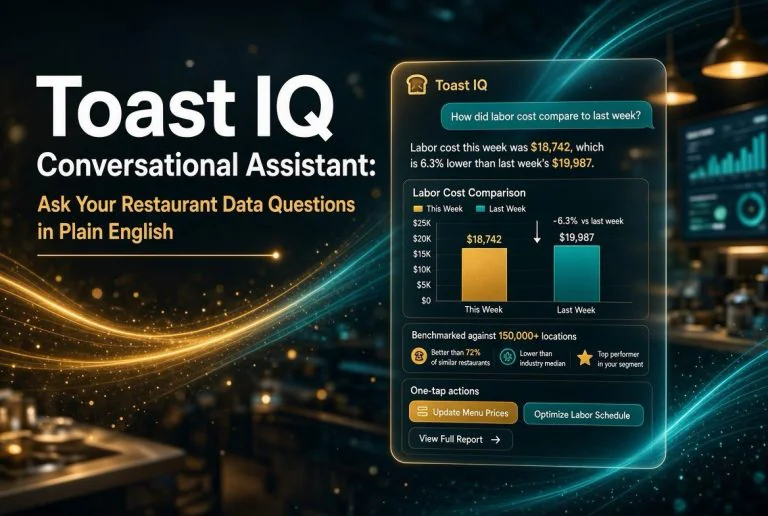
Toast has added AI features to its platform, including an AI phone agent and AI labor scheduling. However, allO is built as an AI-native system from the ground up, while Toast adds AI features to its existing POS-centric architecture. allO beta users report tighter integration between modules than Toast users report. Toast’s advantage is its installed base of 100,000+ locations and its established support infrastructure.

About Barak Schurr
Barak Schurr built and exited a major ticketing platform, ran global operations at Eventbrite, and now focuses on one question: which AI tools actually help independent restaurant owners run leaner and grow faster. He writes from the operator’s perspective — no vendor spin, no theory, just what’s real in 2026.
Email: [email protected]
More AI Resources