Get the AI Restaurant Quick-Start Guide — Free
The 5 AI tools independent US restaurant owners are using right now to cut labor costs and answer every call.
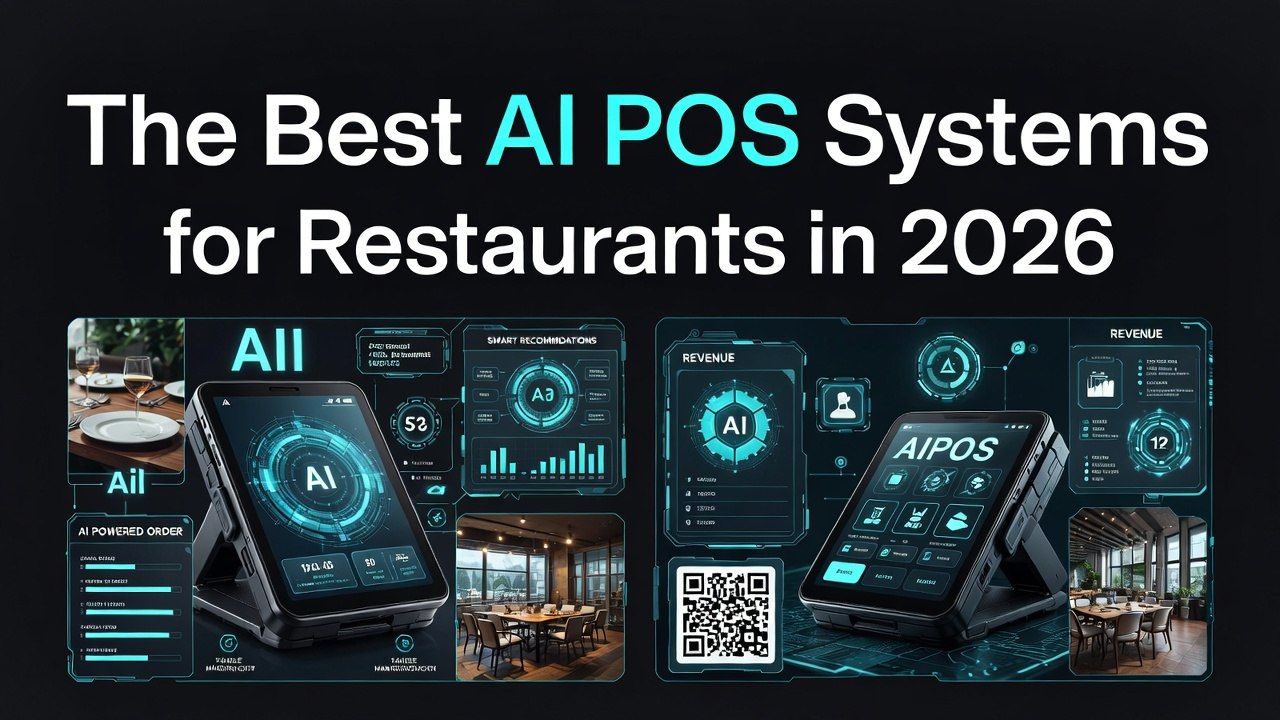
The Best AI POS Systems for Restaurants in 2026
⚡ Expert Summary: Key Takeaways
- AI POS systems automate ordering, inventory, and labor management — reducing front-of-house headcount needs by 15-25% while improving order accuracy to 99.5%+.
- The best AI POS platforms for restaurants — Toast, Square for Restaurants, and SpotOn — offer AI-driven features like predictive ordering, automated inventory, and smart scheduling built into their core platforms.
- AI POS systems reduce checkout time by 40-60% through computer vision, predictive menu suggestions, and automated payment processing that handle orders in seconds.
- Implementation takes 1-3 days for most restaurants with hardware setup included. Monthly costs range from $50-200 for the AI features on top of standard POS processing fees.
- The bottom line: AI POS systems pay for themselves through labor savings, accuracy improvements, and faster turnover — typically achieving positive ROI within 4-6 months.
Modern POS Systems Are No Longer Optional — They’re Mission Critical
Point of sale systems have evolved beyond simple payment processors. In 2026, the best restaurant POS platforms combine real-time analytics, predictive intelligence, and automation to help operators make faster, smarter decisions. The restaurants winning right now aren’t just processing transactions — they are using AI to optimize every operational aspect of their business, from food cost to labour to customer experience.
If you are still using a POS system that only processes payments, you are leaving money on the table. The difference between a 2026 AI POS system and a legacy system is not incremental. It is structural. The data, insights, and automation that modern systems provide change how you run every part of your restaurant, from how many servers you schedule for Tuesday lunch to which menu items you feature on the Friday dinner special.
The Evolution of the POS System
Fifteen years ago, a POS system was a cash register with a touchscreen. It recorded sales, printed receipts, and maybe tracked a few basic counts. That was it. The data sat in the system and nobody looked at it beyond the daily sales total.
Ten years ago, cloud-based POS systems arrived and changed the game. Suddenly your data was accessible from anywhere, not just the terminal in the back office. You could see sales from your phone. You could compare performance across locations. This was a meaningful improvement, but it was still just reporting on what already happened.
Today, AI POS systems do not just report on the past. They predict the future. They tell you what your traffic will be next week, which menu items will run short, and exactly how many staff you need for each shift. They connect your sales data, your inventory, your supplier orders, your labor scheduling, and your customer analytics into a single intelligence layer that makes decisions faster and more accurately than any human manager.
This is not a minor upgrade. It is a fundamental change in how restaurants operate. The operators who adopt it have a structural advantage that compounds over time.
Why AI POS Systems Matter More Than Ever
The restaurant industry is tightening across every dimension. Labor costs keep rising in every market — minimum wage increases are legislated in most states, tip credit changes are under discussion in several more, and the labour pool is shrinking as the hospitality industry competes with other sectors for the same workers. Margins are staying thin at 3-5% for the average independent operator, and many operate at 2% or below after all costs are accounted for. Food waste is unpredictable and costs 4-10% of revenue. Customer expectations are higher than ever because third-party delivery and chain restaurants have trained them to expect speed, accuracy, and personalization.
A modern AI POS system tackles all of these pressures simultaneously from a single integrated platform. Here is what it does in practice:
1. Demand Forecasting
The AI predicts customer volume 7-14 days in advance with 85%+ accuracy. This is not a simple average of last year’s numbers by week. The AI analyses day of week, time of year, local events, weather forecasts, school schedules, convention calendars, competitor activity, and your own historical patterns across 12-24 months of data. It builds a model that is unique to your restaurant. Two restaurants with the same concept on the same block will get different forecasts because their historical data is different.
The output is a prediction of exactly how many covers you will serve on any given day, broken down by hour. This changes everything — scheduling, inventory prep, ordering, and revenue projections all flow from knowing what your traffic will be in advance. Instead of reacting to what happened last night, you plan for what will happen tomorrow.
2. Automatic Inventory Management
Real-time tracking of food costs, waste, and usage patterns. The system knows what you ordered from your suppliers, what you sold through your POS, and what you threw away. It compares these three data streams and identifies gaps. It suggests reorders based on actual usage rates, not par levels that were set two years ago and never updated. It flags items approaching expiration and adjusts ordering accordingly.
One operator in Chicago reported that their AI POS system caught a 25% overorder on chicken tenders that had been running for 18 months. The par level was set for a volume that the restaurant had never actually achieved on a consistent basis. The owner had been ordering based on what the previous manager set up, and nobody questioned it because the inventory process was automated. The AI flagged the gap between orders and sales in the first week. The fix was trivial. The savings were $800 per month on chicken alone.
3. Labor Scheduling Optimization
AI builds schedules that match forecasted demand to the half-hour. It accounts for day of week, daypart, weather, events, and historical patterns. It knows that a rainy Tuesday in February produces 22% fewer covers than a sunny Tuesday in May, and it schedules accordingly. It knows that the Saturday before Mother’s Day generates 40% more covers than a normal Saturday, and it plans for that too.
The output is a schedule that minimizes labour while maintaining service quality and complies with all labor laws. Managers who use this feature report saving 3-4 hours per week on schedule creation — time that goes back to managing the floor, training staff, and handling customer issues.
4. Customer Preference Tracking
Every order is analyzed. The system learns what sells, when, and to whom. It identifies which menu items are most popular by daypart, which customers are most valuable and most frequent, and which combinations of items generate the highest check sizes. Upselling recommendations integrated directly into the POS — the server sees a prompt when a customer orders a dish that pairs well with a specific appetizer or drink — increase average check size by 8-12% in the first three months.
5. Profitability by Item and Table
Know exactly which menu items make money and which are margin killers. The dashboard shows real-time profit per dish, per server, per hour. You can see that your signature appetizer generates 10% of revenue but consumes 18% of ingredient cost after waste because of how it is prepped. You adjust the portion size or prep method, and margin improves two points across the category.
This level of granularity was previously impossible because nobody had the time to track profitability down to the individual dish level. The AI does it automatically in the background.
6. Kitchen Efficiency Metrics
Order-to-delivery times, error rates, prep efficiency, and bottleneck identification are all tracked automatically. Which station consistently falls behind during the dinner rush? Which menu item takes too long to plate? Which server has the highest error rate on mods? The data is in your POS and the AI surfaces it without requiring anyone to track it manually.
The Business Case: What the ROI Looks Like
Restaurants implementing AI POS systems in 2025-2026 are reporting consistent returns. These are not projections from vendors. They are actual results reported by operators who have tracked their numbers before and after implementation.
Food waste drops 15-20% within the first 90 days. Better forecasting plus inventory tracking equals less spoilage. A 100-seat restaurant saves $15,000-25,000 annually. One operator in Portland reported that their AI system flagged an 18% overorder on produce every Monday — the automated order was based on Saturday sales, but Mondays were consistently 30% lighter. Simple fix. $400 per week in savings.
Labor efficiency improves 25%. Smart scheduling plus automation removes 2-3 hours of manual admin per week per manager. That time goes back to revenue-generating activity.
Check size increases 10-15%. AI upsell suggestions boost average transaction value. On $50,000 per month in sales, that is $5,000-7,500 in additional monthly revenue with almost no incremental cost.
Food costs drop 8-12% from precise portioning, waste elimination, and smart ordering. These are not theoretical numbers — they are the averages reported by operators who have tracked results over 6-12 months.
New staff onboarding accelerates by 30%. Built-in training modules reduce ramp-up time by two weeks per new hire. In an industry with 75% annual turnover, this compounds quickly.
Best Systems in 2026
Toast POS is the market leader for independent and small-chain restaurants. Their AI module covers demand forecasting, labor optimization, and inventory management in a single platform. Pricing runs $150-250 per month plus transaction fees. Most independent operators find this is the right balance of capability and cost.
Square for Restaurants is best for cash-conscious operators with smaller locations. The analytics are decent and the upfront cost is low at $0-99 per month. The AI capabilities are less developed than Toast, but for a single-location operation with modest volume, Square works well.
Lightspeed is strong for multi-location operators who need better inventory integration across sites. The platform scales well and the reporting is more sophisticated. Pricing runs $99-299 per month.
MarginEdge is not a POS but integrates with your existing system to add profitability intelligence. For operators happy with their current POS but missing AI-driven analytics, this is the best add-on. Pricing runs $200-500 per month depending on revenue volume.
Implementation Path
Week 1-2: Choose your system and install hardware. This is the most disruptive part but it is a one-time cost. Do not rush this phase.
Week 3: Train staff on core functions — order entry, payment processing, basic reporting. Go live with these functions first. Do not try to launch everything at once.
Week 4-8: Activate advanced features — forecasting, labor optimization, inventory tracking. Let the AI learn your patterns before you rely on its recommendations.
Month 3+: Refine based on the data accumulating in your system. By month three, the AI has enough data to produce reliable forecasts. Start using those forecasts to make real decisions — scheduling, ordering, menu features.
Common Mistakes
Choosing based on price alone is the most expensive decision you can make. Cheap POS systems cost more in lost insight over time.
Not training staff properly. A good system with bad training produces worse results than a mediocre system with good training.
Ignoring the data. Most restaurants buy these systems and never look at the dashboards. Assign one manager to review AI recommendations weekly.
Trying to do everything at once. Start with core functions, add advanced features gradually. Phased implementation produces higher adoption.
Bottom Line
A good AI POS system pays for itself in 4-6 months through waste reduction, labor efficiency, and upselling alone. The longer-term benefit is operational control — you stop guessing and start knowing. For most restaurants, upgrading to an AI-powered POS system is the single best investment you can make in 2026.
One Final Consideration
The most successful restaurant operators we work with share one trait when it comes to technology adoption: they do not wait for the perfect system. They pick the best option available today, implement it methodically, and improve over time. The operators who wait for the next version, the better feature set, or the lower price never make the move. Their competitors do.
Every month you delay upgrading your POS system is a month your competitors are accumulating data, optimizing schedules, reducing waste, and increasing check sizes with AI tools that you do not have. The gap compounds. By this time next year, the restaurant down the street will know more about their business than you know about yours, because their system is learning and yours is just processing payments.
The technology is proven. The implementation is straightforward. The payback is measurable. The only question is when you decide to act.
Your POS system is the central nervous system of your restaurant. In 2026, it should be doing more than processing transactions. It should be telling you what your business will look like tomorrow, next week, and next month — and giving you the tools to act on that information. That is what an AI POS system delivers, and that is what the best operators are already using to pull ahead of their competition.
For independent restaurant owners across the United States, choosing the right POS system is one of the most consequential technology decisions you will make. American restaurants are increasingly selecting AI-powered POS platforms that automate inventory, predict labor needs, and optimize menu pricing — all from a single system.
FAQ
What is the best AI POS system for restaurants in 2026?
The best AI POS system depends on your restaurant type and budget. Toast offers the most comprehensive AI features for full-service restaurants starting at $0/month for basic POS. Square provides excellent AI inventory and sales forecasting for quick-service at competitive pricing. SpotOn leads in AI-powered marketing and loyalty at $50/month for the POS base.
How does AI in POS systems help restaurants reduce costs?
AI POS systems reduce costs through automated inventory management (15-22% waste reduction), predictive labor scheduling (8-12% labor cost savings), dynamic menu pricing to protect margins without raising prices, and automated vendor reordering that prevents both overstock and stockouts.
Does AI POS work with my existing payment processor?
Most AI POS platforms support integration with major payment processors. Toast uses its own payment processing. Square integrates with its payment ecosystem. SpotOn supports multiple processors. SkyTab works with most major processors. Always confirm compatibility with your current processor before signing a contract.
How much does an AI POS system cost for a small restaurant?
AI POS pricing ranges from $0-199 per month for the software tier plus payment processing fees of 2.3-3.5% per transaction. Square offers a free tier with limited AI features. Toast starts at $0-69 per month. SpotON starts at $50 per month. Hardware costs $500-2,000 for terminals, tablets, and peripherals.
Can AI POS systems handle online ordering and delivery integration?
Yes. All major AI POS platforms include online ordering capabilities with native website integration. They integrate with DoorDash, Uber Eats, and Grubhub for delivery commission management. Some platforms automatically adjust menu pricing for delivery orders to offset platform commissions.
More AI Resources


Similar Posts
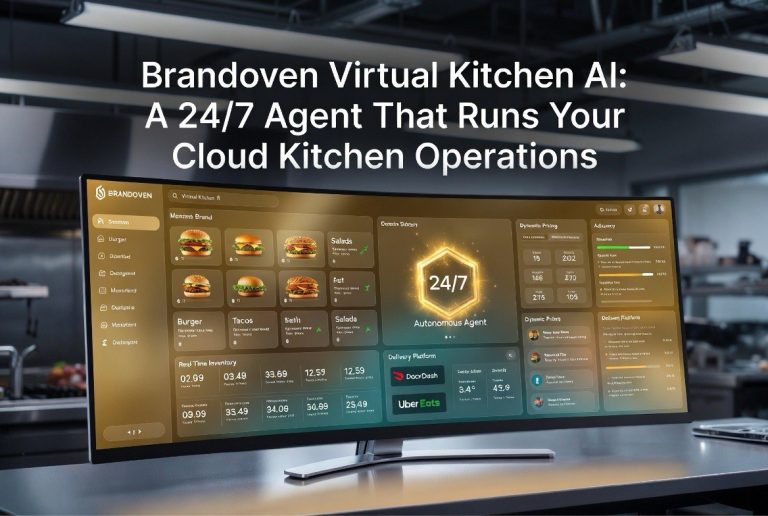
Brandoven Virtual Kitchen AI: An Agent That Runs Your Cloud Kitchen 24/7
Get the AI Restaurant Quick-Start Guide — Free The 5 AI tools independent US restaurant owners are using right now to cut labor costs and answer every call. Brandoven Virtual Kitchen AI: A 24/7 Agent That Runs Your Cloud Kitchen Operations ⚡ Expert Summary: Brandoven is an AI-agent system purpose-built for virtual and cloud kitchens…
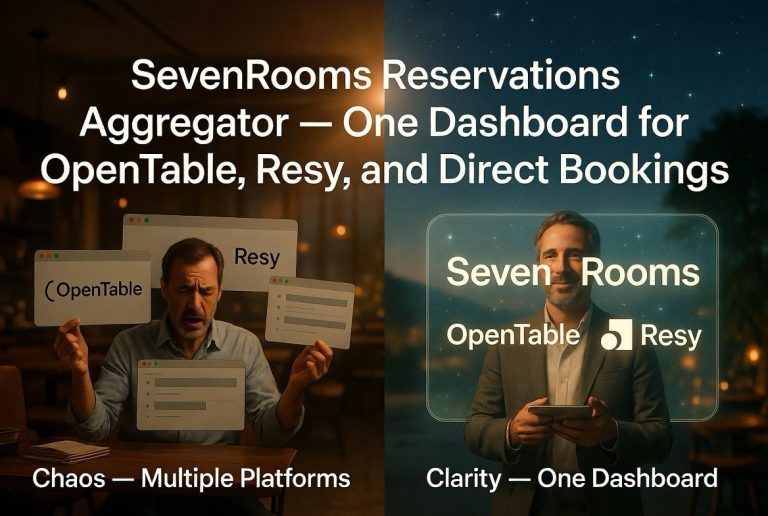
SevenRooms Reservations Aggregator: One Dashboard for OpenTable, Resy, and Direct Bookings
Get the AI Restaurant Quick-Start Guide — Free The 5 AI tools independent US restaurant owners are using right now to cut labor costs and answer every call. SevenRooms Reservations Aggregator: One Dashboard for OpenTable, Resy, and Direct Bookings ⚡ Expert Summary: SevenRooms launched a reservations aggregator in June 2026 that pulls bookings from OpenTable,…
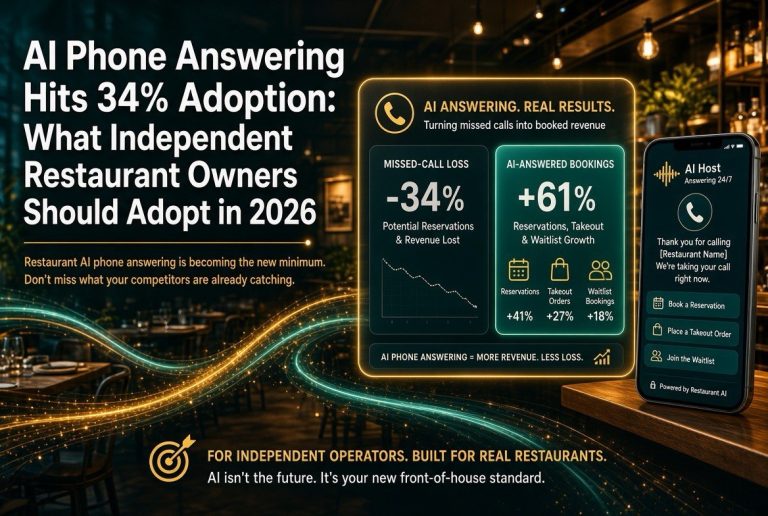
AI Phone Answering Hits 34% Adoption: What Independent Restaurant Owners Should Adopt in 2026
Get the AI Restaurant Quick-Start Guide — Free The 5 AI tools independent US restaurant owners are using right now to cut labor costs and answer every call. AI Phone Answering Hits 34% Adoption: What Independent Restaurant Owners Should Adopt in 2026 ⚡ Expert Summary: Around one in three US restaurants now uses some form…
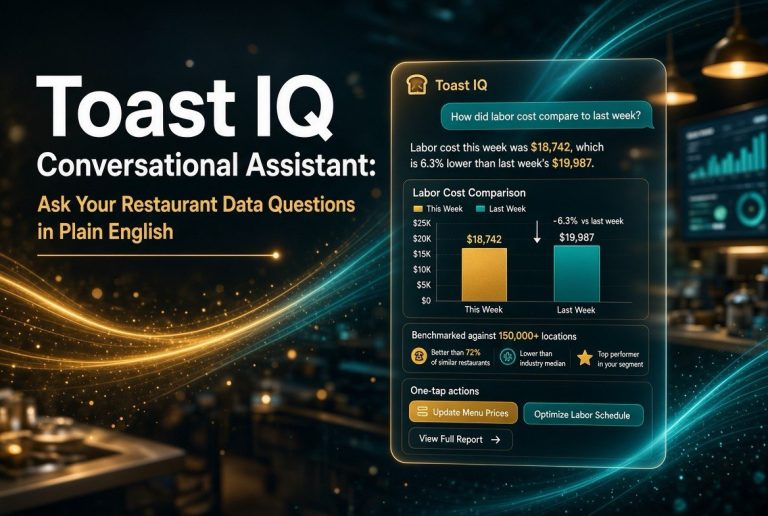
Toast IQ Conversational Assistant: Ask Your Restaurant Data Questions in Plain English
Get the AI Restaurant Quick-Start Guide — Free The 5 AI tools independent US restaurant owners are using right now to cut labor costs and answer every call. Toast IQ Conversational Assistant: Ask Your Restaurant Data Questions in Plain English ⚡ Expert Summary: Toast IQ is Toast’s built-in conversational AI assistant that lets restaurant operators…
Zaxbys Just Hit 1,000 Units — What Independent Operators Can Learn from Chain Expansion in 2026
Get the AI Restaurant Quick-Start Guide — Free The 5 AI tools independent US restaurant owners are using right now to cut labor costs and answer every call. Zaxbys Just Hit 1,000 Units — What Independent Operators Can Learn from Chain Expansion in 2026 ⚡ Expert Summary: Zaxbys passed 1,000 locations and hired Waffle House…
Bojangles Goes All-AI Drive-Thru, Presto Raises 0M — Voice AI for Restaurants Just Got Real
Get the AI Restaurant Quick-Start Guide — Free The 5 AI tools independent US restaurant owners are using right now to cut labor costs and answer every call. Bojangles Goes All-AI Drive-Thru, Presto Raises $10M — Voice AI for Restaurants Just Got Real ⚡ Expert Summary: Two July 2026 stories mark a tipping point for…