Get the AI Restaurant Quick-Start Guide — Free
The 5 AI tools independent US restaurant owners are using right now to cut labor costs and answer every call.
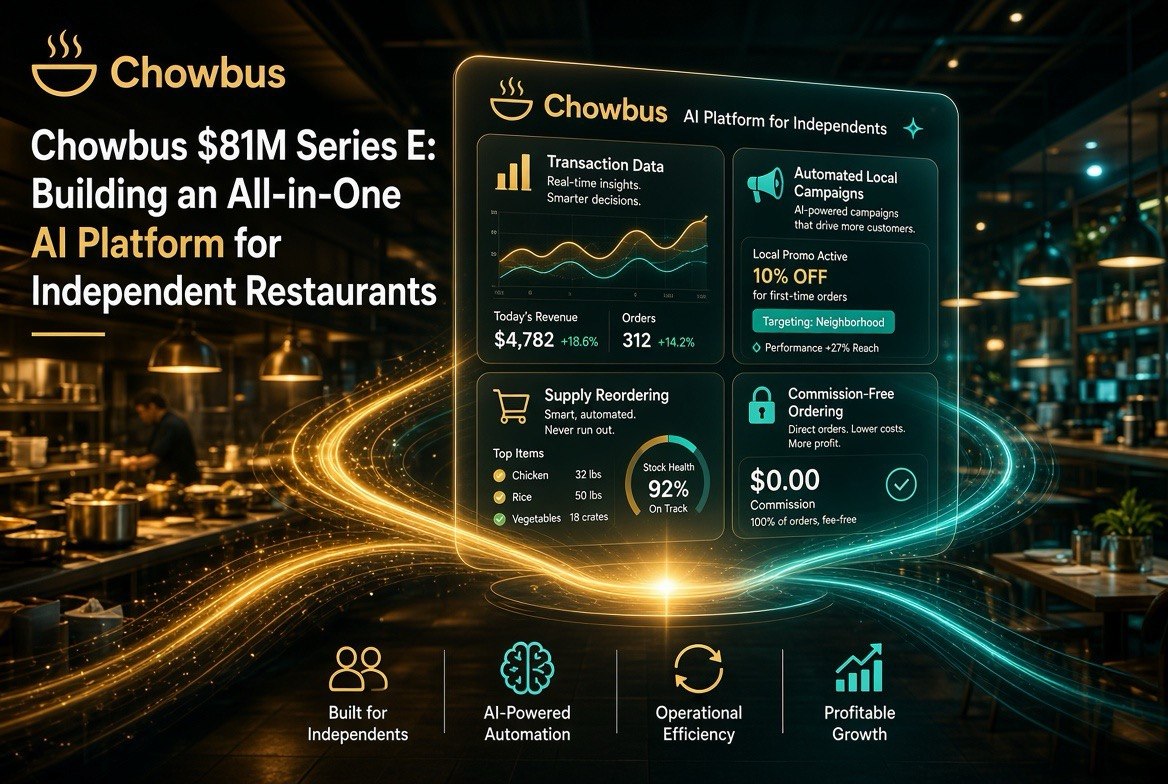
Chowbus $81M Series E: Building an All-in-One AI Platform for Independent Restaurants
Here’s the uncomfortable truth every independent restaurant owner has to face: the chains are out-teching you, and the gap is widening month over month. A multi-location group can afford a data team, a marketing machine, and software that predicts demand down to the half-hour. You have a POS, a phone, and a back office that’s probably still running on spreadsheets.
That’s the exact problem Chowbus is now attacking with real money. The Chicago-based company just closed an $81 million Series E round led by Prysm Capital and Left Lane Capital, pushing its total funding near $209 million and its annual recurring revenue past $120 million. It already processes about $4 billion in annualized transaction volume across restaurants in all 50 US states and Canada — a scale that, until recently, was the exclusive territory of enterprise tech built for big chains.
The story isn’t the round, though. It’s what the money is for. Chowbus is pivoting from a POS and online-ordering provider into what it calls a “next-generation AI restaurant platform” — and the tools it’s building are aimed squarely at independents who are sick of doing marketing, accounting, and purchasing by hand.
To be clear about who this is for: not the big chains. Chowbus’s sweet spot has always been the independent, culturally rooted operator — the family-run spot that does great food, works brutal hours, and has zero staff left over for marketing or spreadsheets. That’s a huge and underserved slice of the American market, and it’s exactly the group these tools are designed for.
Here’s what actually matters for you, unpacked with the numbers.
Why the chain gap is an AI gap
Step back for a second and look at what separates a chain from a successful independent beyond the name on the door. It’s not talent — plenty of independent kitchens out-cook chains every night. It’s data and repetition. A chain knows its numbers down to the decimal: which items drive margin, which guests come back, what a campaign returns per dollar. It repeats winning plays across dozens of locations because it has a system.
An independent has the same underlying data — your POS records every order, your loyalty program knows your regulars, your order history shows what sells. But most owners never turn that raw data into decisions, because assembling it into something usable means hours of manual spreadsheet work nobody has time for. AI changes that specific equation: it takes data you already own and turns it into marketing, purchasing, and accounting actions automatically. That’s the real promise here — not magic, just the gap between data and decision finally being bridged without you becoming a data analyst.
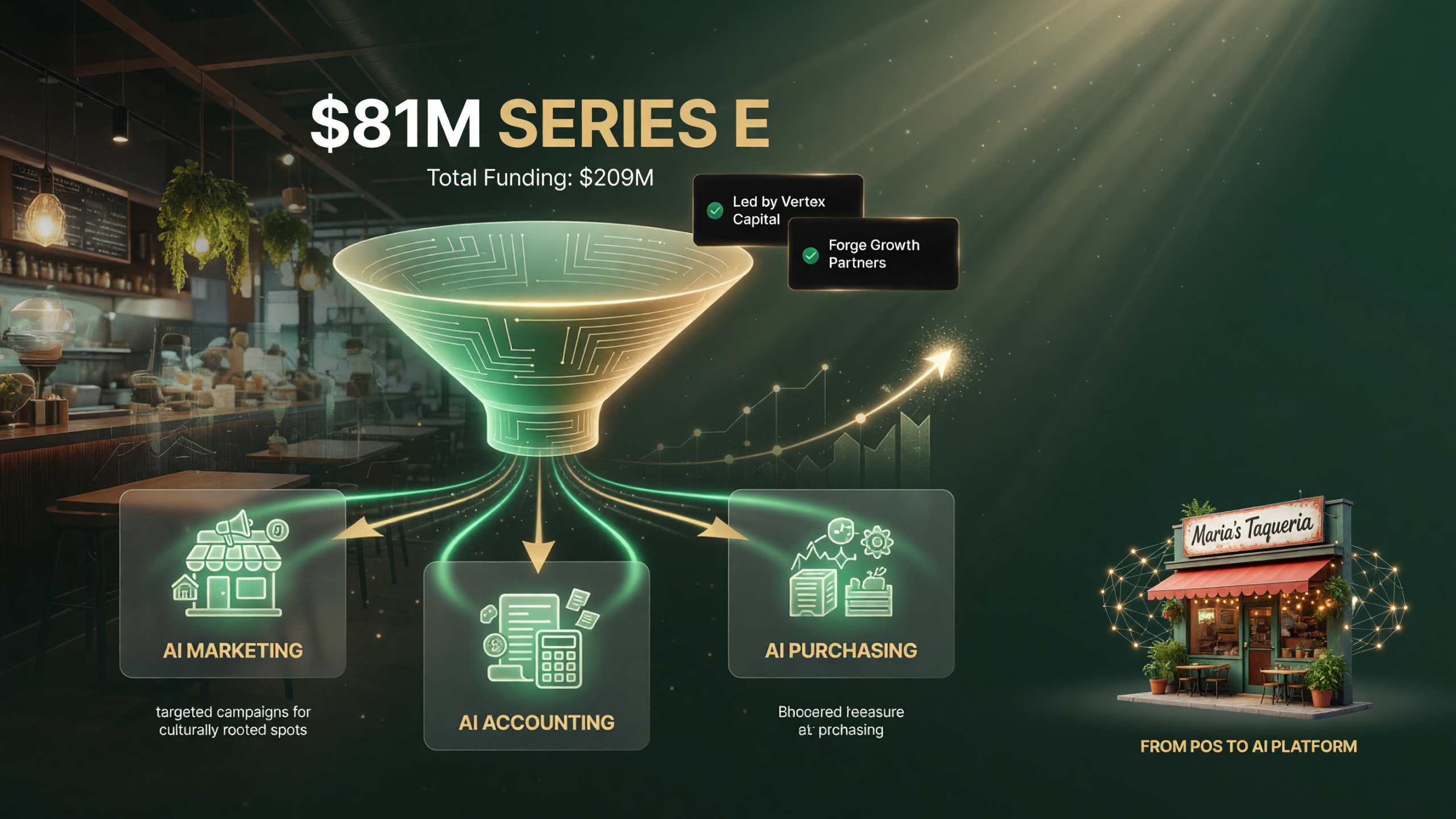
Chowbus is spending the $81M Series E round on a pivot from POS and online ordering into a next-generation AI restaurant platform — targeting the marketing, accounting, and purchasing work independent owners do by hand, not the big chains.
Chowbus has a running start on this. It already processes the transaction data, runs the ordering channel, and holds the customer relationships for thousands of independent restaurants. It’s not asking you to hand over data to a stranger — it already sits inside your operation. That’s the structural advantage that makes an AI pivot credible rather than another “AI-powered” pitch deck.
The marketing problem that eats independents alive
Marketing is where independent owners lose the most ground to chains. A chain has a corporate team running national campaigns, A/B testing offers, and pouring budget into local ads. You’re doing your own social posts at 1 AM after close, hoping something sticks.
The single most concrete AI tool Chowbus has already shipped is AI Digital Marketing. It uses your own transaction and customer data to build and run automated local campaigns — so your regulars get targeted offers and your best items get promoted to the people most likely to order them. This is the equalizer: what used to require a marketing hire or an agency retainer now gets assembled from data you already own.
Here’s why this is more than a gimmick for an independent. National restaurant research across US operators consistently finds AI marketing is one of the highest-ROI uses — with reported revenue gains in the 5-12% range per location from optimization work. That number is an industry average, not a Chowbus claim, but it frames the opportunity: a modest, consistent lift on your top-selling items, your regular customers, and your slow hours can move real margin on a small operation’s P&L. The key is that the campaigns are built from your customers and your sales — not generic national templates that don’t match a single plate you serve.
For a single-location or small-group operator, that’s the difference between “I should post something” and a machine running targeted campaigns while you run the floor. It’s the difference between hoping your email list matters and actually using it.
Beyond marketing: the back office nobody sees
Marketing gets the headlines, but the quiet win for independents is back-office automation. Chowbus’s expansion targets the exact tasks that eat your week: accounting workflows, supply ordering, and operational services.
| Back-office task | How you probably do it now | With AI platform support |
|---|---|---|
| Accounting | Spreadsheets + a bookkeeper catching up monthly | Automated, live financial workflows from your sales data |
| Supply purchasing | Manual reordering, price-checking invoices by hand | AI-driven ordering that learns your usage patterns |
| Marketing | Inconsistent social posts, no clear returns | Automated local campaigns built on your own customer data |
| Loyalty & ordering | Third-party platforms taking 20-30% commission | Owned online ordering with loyalty tied to your menu |
That last row is worth dwelling on. Third-party delivery apps routinely take 20-30% of each order. Chowbus built its core business around direct online ordering — meaning when a customer orders through your own channel powered by the platform, that commission goes to you, not to a marketplace. That margin difference alone can be the difference between profit and loss for many independents.
Run the math on your own spot. If you do $10,000 a month through delivery apps at a 25% effective commission, that’s $2,500 a month — $30,000 a year — heading out the door to third parties. Shift even half that volume to your own channel with a loyalty loop, and you’ve found meaningful money without touching your menu or your prices. That’s the kind of number a platform like this exists to chase, and it’s why the funding round is being spent on tools that pull customers into your owned channel instead of a marketplace’s.
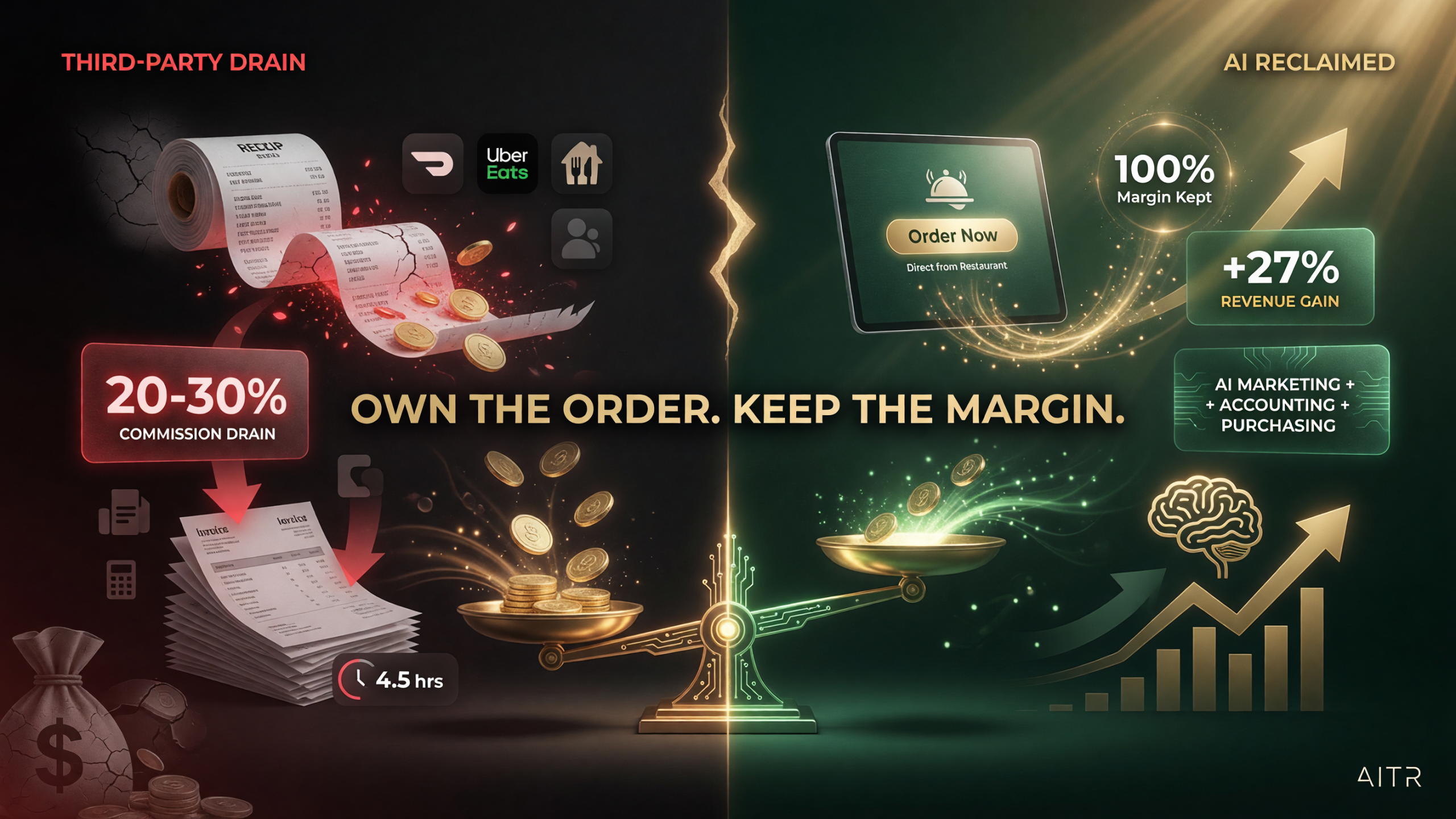
Third-party apps routinely take 20-30% of every order. The quiet win for an independent is shifting volume to its own direct-ordering channel and letting AI handle the marketing, accounting, and purchasing — the commission stays with the restaurant instead of feeding a marketplace.
Why this is being built for independents, not chains
The important distinction here is who Chowbus targets. Its sweet spot is culturally rooted independent operators — especially Asian cuisines, which represent roughly a 16% slice of the US restaurant market and are heavily independent-owned. But the platform approach generalizes well beyond any single cuisine.
Think about what it would actually take to match a chain’s stack on your own: a marketing system, an accounting engine, a supply-ordering tool, and a loyalty program — integrated together. For a single operator, buying four separate tools and wiring them to your POS is a project you’ll never finish. A platform that bundles them under one roof, using the sales data it already processes, is a fundamentally different (and more realistic) proposition.
The realistic comparison: platform vs. patchwork
Let me give you an honest cost-and-effort comparison for an independent trying to close the same gap.
| Factor | Piece-together 4+ separate tools | Single AI restaurant platform |
|---|---|---|
| Setup time | Weeks of integrations and data migration | One provider, data already connected |
| Data sharing | Manual or fragile, tools don’t always talk | Sales data feeds marketing, accounting, purchasing |
| Cost control | Four subscriptions, four support lines | Bundled pricing, one relationship |
| Maintenance | You’re the integrator | Vendor keeps it updated |
The honest caveat: a platform is only as good as the restaurant data feeding it, and you still have to actually review and act on what it surfaces. No tool runs your restaurant for you. But the operational leverage — one connected brain instead of four isolated subscriptions — is real.
What to look for before you sign anything
If this direction interests you, here’s how to evaluate any all-in-one AI restaurant platform without getting sold:
- Does it sit on your real sales data? A tool that only does generic templates or disconnected modules isn’t leveraging anything. The value comes from your transaction and customer data feeding the decisions.
- How much setup is real vs. on the vendor? Ask pointedly what you have to wire together yourself. If it feels like four products in a trench coat, it’s a patchwork, not a platform.
- What’s the commission math? If the platform routes orders to third-party delivery, the 20-30% drain is still there. The win is when it pulls volume to your owned channel.
- Can you trial it on one location? A confident vendor lets you pilot on a single store before you commit a whole group. Walk away from anything that demands a big annual commitment up front.
These four questions separate a genuine single brain from marketing that wraps four separate subscriptions in one logo.
What the funding signals for the wider market
This $81 million round isn’t just about one company. It’s a market signal that investors believe independent restaurants are a serious AI software opportunity. When a 2026 round of this size is explicitly earmarked for AI tools for independents — not chains — it tells you where the smart money thinks the pain and the returns are.
It also signals the direction of the whole category. The winners won’t be single-purpose gadget tools. They’ll be platforms that sit on top of your existing operations — your POS data, your ordering, your customers — and turn that into marketing, accounting, and purchasing you’d otherwise have to staff for.
What you should do this week (no purchase required)
You don’t need to adopt Chowbus or any specific platform today. But there are three free moves that put you ahead:
- Audit your commission drain. Add up what you paid third-party delivery platforms last month. If it’s meaningful, direct-ordering and loyalty tools like these start to pay for themselves fast.
- Count your back-office hours. Track one week of accounting, purchasing, and manual marketing time. That number is your real cost of doing it by hand — and it’s way bigger than you think.
- Ask your POS provider about AI tools. The market is consolidating toward platforms that bundle marketing, accounting, and ordering with your sales data. Find out what your current provider offers or is building.
For the full library of AI tools built for restaurant owners, our AI in restaurants hub collects them all in one place.
Is an all-in-one AI restaurant platform worth it for an independent?
Yes — if you’re bleeding margin to third-party commissions, spending hours a week on back-office paperwork, or losing guests to chains with better-marketed offers. A platform that turns your own sales data into marketing, accounting, and purchasing decisions is the most realistic way an independent closes the technology gap without hiring a team. The caveat: you still have to review what it surfaces and act on it.
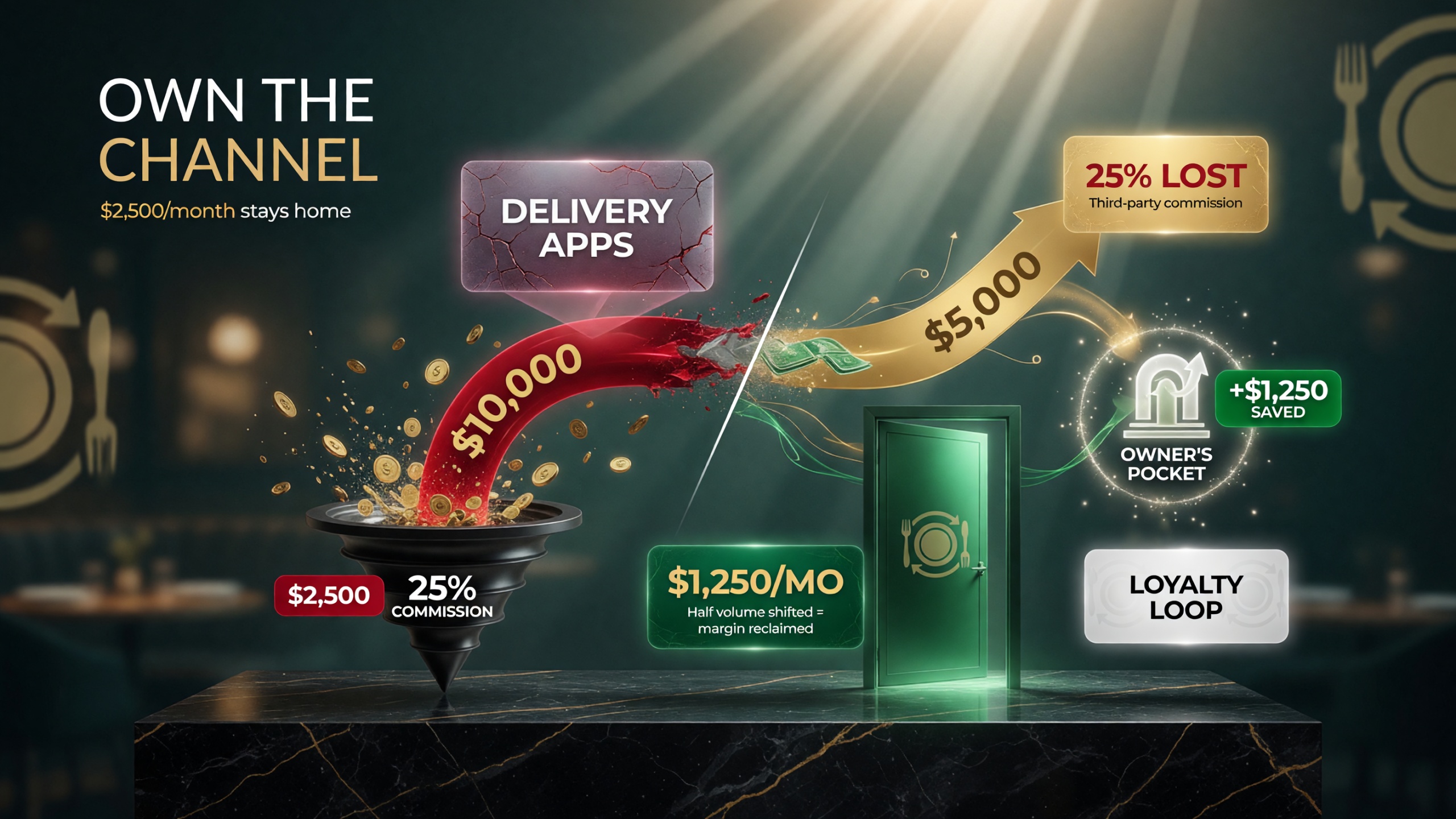
Run the math: $10,000 a month through delivery apps at a 25% commission drains $2,500 out the door. Shift even half of that volume to your own ordering channel with a loyalty loop and you recover meaningful margin — without touching your menu or your prices.
Frequently asked questions
| Question | Quick answer |
|---|---|
| How much did Chowbus raise? | $81 million in a Series E round led by Prysm Capital and Left Lane Capital, bringing total funding to about $209 million. |
| What is Chowbus building with the funding? | A next-generation AI restaurant platform covering marketing automation, accounting workflows, supply ordering, and direct online ordering. |
| Who is Chowbus for? | Independent restaurant owners, especially culturally rooted and Asian-cuisine operators, though the platform generalizes across concepts. |
| Is an all-in-one AI restaurant platform worth it? | Yes if you’re losing margin to delivery commissions or hours to back-office work; you still need to review and act on the data it surfaces. |

About Barak Schurr
Barak Schurr built and exited a major ticketing platform, ran global operations at Eventbrite, and now focuses on one question: which AI tools actually help independent restaurant owners run leaner and grow faster. He writes from the operator’s perspective — no vendor spin, no theory, just what’s real in 2026.
Email: [email protected]
More AI Resources for Your Business