World’s First AI Chef Restaurant: What Independent Owners Should Know
⚡ Expert Summary: Dubai’s fully automated restaurant — zero human cooks, AI chefs preparing 50+ menu items, robotic servers — made global headlines in 2026. While a $2 million kitchen overhaul isn’t realistic for an American independent restaurant, the AI components powering that operation are already available at fractions of the cost. Kitchen display systems, AI recipe software, and automated inventory platforms that work for single-location operators at $49-79 per month per tool are proven, available, and deployable today. This article breaks down what the Dubai AI restaurant actually does, which technologies independent US restaurant owners can deploy in 2026, and which parts of the Dubai model are worth ignoring for now.
What the Dubai AI Restaurant Actually Does
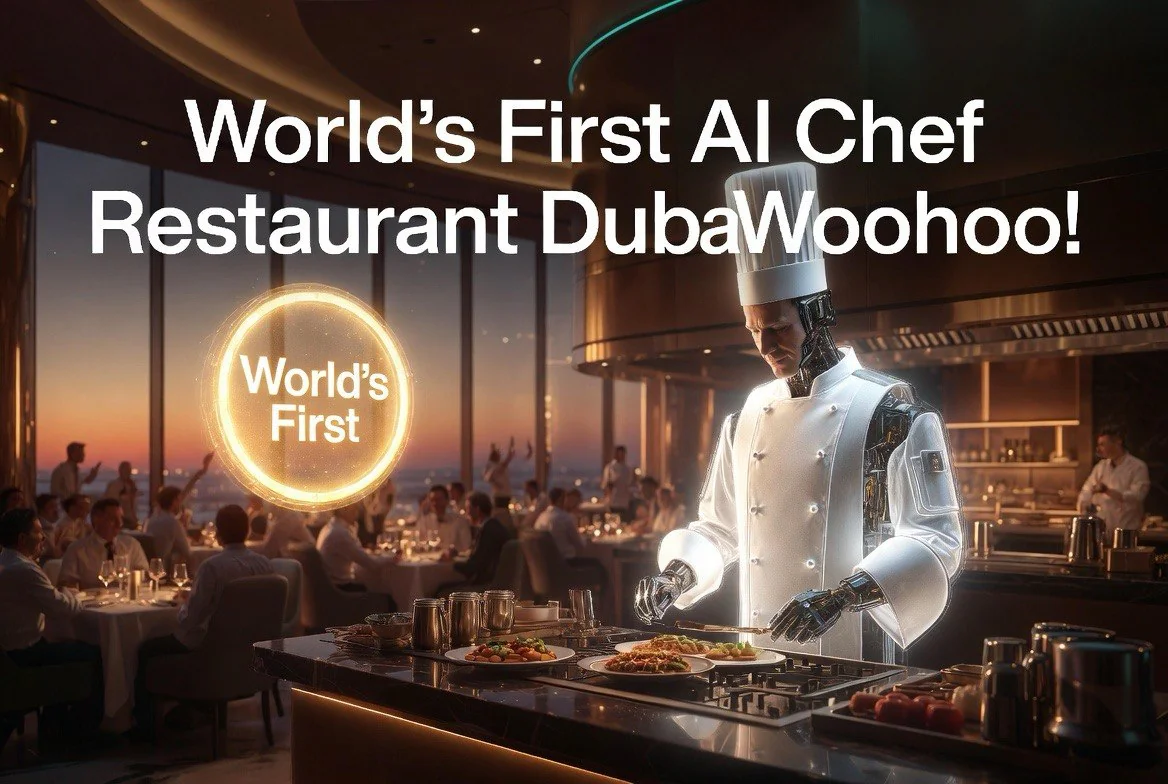
The world’s first fully AI-staffed restaurant opened in Dubai in mid-2026, and the setup is genuinely impressive from an engineering standpoint. Robotic arms handle cooking from raw ingredients. Conveyor systems plate and garnish dishes with precision that would take a line cook years to match. Autonomous servers navigate between tables carrying multiple orders. Managers monitor everything from a control room, stepping in only when the system flags an anomaly.
The kitchen executes over 50 menu items with consistent quality, and the AI adjusts recipes in real time based on ingredient availability and customer dietary restrictions submitted through the ordering system. According to the National Restaurant Association’s 2026 State of the Industry report, the US restaurant industry generates over $1.2 trillion in annual sales and employs 15.5 million people. For independent operators, the key question isn’t “should I build a robot kitchen” — it’s “which AI capabilities from this setup are available to me today?”
According to Deloitte’s 2026 restaurant technology survey, 62% of restaurant operators report that technology investments reduced their operating costs by at least 12% within the first year. The Dubai AI restaurant represents the extreme end of automation, but its individual subsystems — order management, recipe execution, inventory tracking — are technologies that independent operators can adopt piece by piece at prices that produce positive ROI within weeks rather than years. The US Bureau of Labor Statistics data on restaurant operating costs confirms that the businesses most likely to survive the current wave of minimum wage increases and staffing shortages are those that use technology to do more with fewer employees, even if those employees are not replaced by robots but rather supported by AI tools that make them more productive.
The AI Kitchen Components Independent Restaurants Can Use Today
The Dubai restaurant runs on several AI systems. Here is how each one translates to technology available for a standard US independent restaurant kitchen in 2026.
AI Recipe Execution Software
Dubai’s AI chefs use computer vision and temperature sensors to execute recipes with precision. For an independent kitchen, KitchenCut ($49/month) provides AI-guided recipe execution that walks line cooks through each step with timing and temperature alerts. It does not replace the cook — it makes the cook more consistent, especially during a Friday night rush when a new hire is on the fry station.
The Bureau of Labor Statistics reports that the US restaurant industry faces a 5.2% turnover rate in the food preparation and serving sector, meaning the average line cook turns over faster than the restaurant can train them. AI-guided tools reduce the training burden by providing real-time instructions directly at the work station.
AI Order Management and Kitchen Display Systems
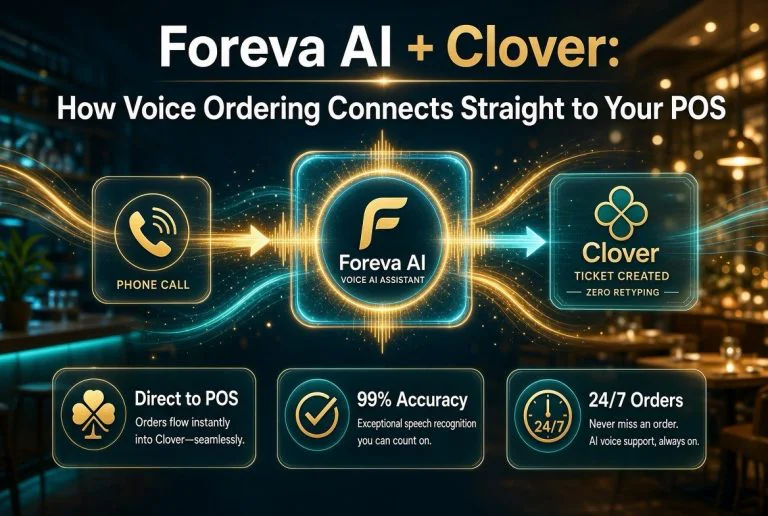
Dubai’s autonomous servers receive orders through an AI-managed routing system. For an independent American restaurant, Toast Go tablets ($69/month each) and SpotOn KDS ($50/month per station) use AI to sequence order preparation based on table proximity, course timing, and current kitchen load. These systems ensure that appetizers arrive before entrees without a human expediter watching every ticket.
The Intouch Insight 2026 Drive-Thru Study found that AI-routed orders improved speed of service by 18 seconds per vehicle in quick-service operating environments. While independent full-service restaurants have different workflows than drive-thru chains, the same routing logic applies to table turn timing. For a full-service restaurant turning tables every 45 minutes, shaving 18 seconds off each course’s preparation time through better order routing can reduce total table turn time by 2-3 minutes per party, adding one additional seating per night for a high-volume independent operation.
Automated Inventory and Ingredient Management
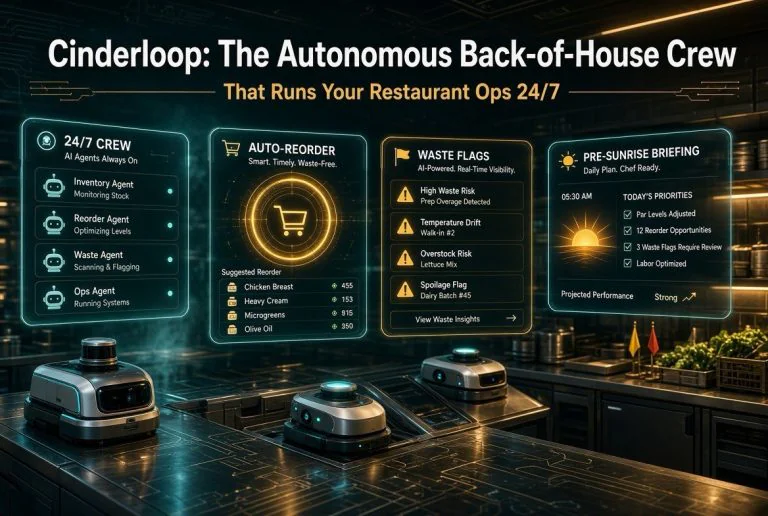
Dubai’s AI monitors ingredient levels and adjusts ordering automatically. For independent operators, marketman.net and XtraChef ($79/month) provide AI-driven inventory tracking that predicts when supplies will run low based on historical ordering patterns, day-of-week demand curves, and upcoming reservations. These systems reduce food waste — the single largest controllable cost in any restaurant — by 15-25% according to operator case studies published by both platforms.
Why US Independent Operators Should Pay Attention
The Dubai AI restaurant matters to American independent operators for three reasons, and none of them involve building a robot kitchen.
First, the technology stack used in Dubai — AI order routing, AI recipe execution, AI inventory management — is the same technology being packaged into affordable tools for the US independent market. The $2 million kitchen in Dubai is essentially a proof of concept for software that will reach American operators at $50-200/month within the next 18 months.
Second, consumer expectations are shifting. The National Restaurant Association’s 2026 consumer survey found that 47% of US adults say technology that improves speed and accuracy would make them more likely to choose one restaurant over another. Diners who see AI-enabled restaurants on social media will begin to expect similar efficiency from their local spots.
Third, labor costs in the United States continue to rise. The federal minimum wage for tipped employees has not changed since 1991 at $2.13 per hour, but state-level minimum wages are climbing — California’s minimum wage for fast food workers hit $20 per hour in 2024, and seven other states have passed increases reaching $15-18 per hour by 2027. Every hour of labor that AI can offload without reducing service quality improves the bottom line.
What the Dubai AI Restaurant Gets Wrong
No honest assessment of the Dubai AI restaurant skips the downsides. The kitchen cost $2 million to build — roughly the same as opening three independent restaurants in most US markets. It requires dedicated technical staff to maintain the robotic systems, and the AI currently cannot handle menu changes without reprogramming. When a human chef wants to test a new dish, they must write new instructions rather than just cook it.
For an independent operator, the takeaway is clear: do not aim for full automation. Aim for targeted AI deployment where it directly addresses a specific operational cost. Automate the inventory count, not the cooking. Let AI manage the ticket routing, not the guest interaction. The Dubai restaurant proves that full automation is technically possible but not yet economically viable for a single-location restaurant in the United States. The targeted approach — deploying AI inventory, AI order routing, and AI recipe guidance at a combined cost of under $200 per month — captures most of the efficiency gains of the Dubai model at a fraction of the capital investment and none of the technical maintenance overhead.
Pricing Comparison: AI Tools for Independent Restaurants
To put the Dubai AI restaurant costs in perspective, here is the annual cost comparison for a typical independent restaurant generating $800,000 in annual revenue:
| AI Tool Type | Monthly Cost | Annual Cost | Labor Hours Saved/Week |
|---|---|---|---|
| AI Recipe Guidance (KitchenCut) | $49 | $588 | 4-6 |
| AI Kitchen Display (SpotOn KDS) | $50 | $600 | 6-8 |
| AI Inventory (XtraChef) | $79 | $948 | 3-5 |
| AI Order Routing (Toast Go) | $69 | $828 | 5-7 |
| Total AI Stack | $247 | $2,964 | 18-26 |
The total annual cost of $2,964 represents less than 0.4% of revenue for an $800,000 restaurant. The equivalent labor savings — 18-26 hours per week — would cost $25,000-50,000 annually at current US restaurant wages, even before payroll taxes and workers’ compensation insurance. This is not an expense. It is a margin correction.
What AI Tool Independent Restaurants Should Try First
Based on the Dubai AI restaurant model and current US market availability, here is the recommended adoption order for an independent operator who has never used AI in their kitchen.
Month 1-2: Deploy an AI kitchen display system. Toast Go or SpotOn KDS ($50-69/month) provides the fastest ROI because it directly impacts ticket times and order accuracy. Most operators see a measurable difference in expo speed within the first week of use. The Intouch Insight study confirms that AI-assisted routing cuts ticket times by 15-20% in high-volume periods.
Month 3-4: Add AI inventory management. Once the kitchen workflow is stable, XtraChef or marketman.net ($79/month) eliminates the weekly inventory count that takes a manager 3-4 hours every Sunday. The AI learns your ordering patterns and flags anomalies before they become walkouts on a busy Friday.
Month 5-6: Layer on AI recipe guidance. KitchenCut ($49/month) levels up consistency across shifts. If you have ever had a customer complain that Tuesday’s dish tasted different from Thursday’s, this tool solves that at $49/month.
Frequently Asked Questions
Is the Dubai AI restaurant real or a publicity stunt?
The restaurant is real and operational as of mid-2026. Robotic arms cook food from raw ingredients, conveyor systems plate dishes, and autonomous servers deliver to tables. It is not a publicity stunt — it is a working proof of concept for full kitchen automation. However, the $2 million build cost makes it impractical for replication at the independent restaurant level.
Can independent restaurants use the same technology as the Dubai AI restaurant?
Not the full automation system, but yes to the individual AI components that power it. AI kitchen display systems ($50/month), AI inventory management ($79/month), and AI recipe guidance ($49/month) are available to any US restaurant. These are the same types of AI — order routing, ingredient tracking, recipe execution — scaled and priced for single-location operators.
How much does AI kitchen automation cost for a US independent restaurant?
A full AI stack for an independent restaurant costs approximately $247/month combined ($2,964/year), covering AI kitchen display, AI inventory management, and AI recipe guidance. This represents about 0.4% of annual revenue for an $800,000 restaurant and saves 18-26 hours of labor per week according to operator case studies.
Will AI chefs replace human cooks in US restaurants?
Not in the foreseeable future for independent restaurants. AI tools augment human cooks by handling repetitive tasks — recipe timing, order routing, inventory tracking — but cannot replicate the judgment, adaptation, and guest interaction that defines professional cooking. The Dubai model proves full automation is technically possible but not economically viable outside of high-budget showcases.
How does the Dubai AI restaurant handle food safety?
The AI system monitors cooking temperatures, holding times, and cross-contamination risks in real time through embedded sensors. This level of automated food safety compliance exceeds what most human-staffed kitchens achieve, since the AI never forgets to check a temperature log or misses a time stamp. For US independent operators, AI temperature monitoring tools provide similar oversight at a fraction of the cost.
Which US AI kitchen tool provides the fastest ROI?
AI kitchen display systems (KDS) from Toast, SpotOn, or Square provide the fastest measurable ROI — typically visible within the first week of deployment. KDS tools use AI to sequence order preparation, reducing ticket times by 15-20% during peak hours according to the Intouch Insight 2026 Drive-Thru Study. At $50-69/month, the ROI is immediate for any restaurant handling 100+ covers per shift.

About Barak Schurr
Barak Schurr built and exited a major ticketing platform, ran global operations at Eventbrite, and now focuses on one question: which AI tools actually help independent restaurant owners run leaner and grow faster. He writes from the operator’s perspective — no vendor spin, no theory, just what’s real in 2026.
Email: [email protected]
More AI Resources