Get the AI Restaurant Quick-Start Guide — Free
The 5 AI tools independent US restaurant owners are using right now to cut labor costs and answer every call.
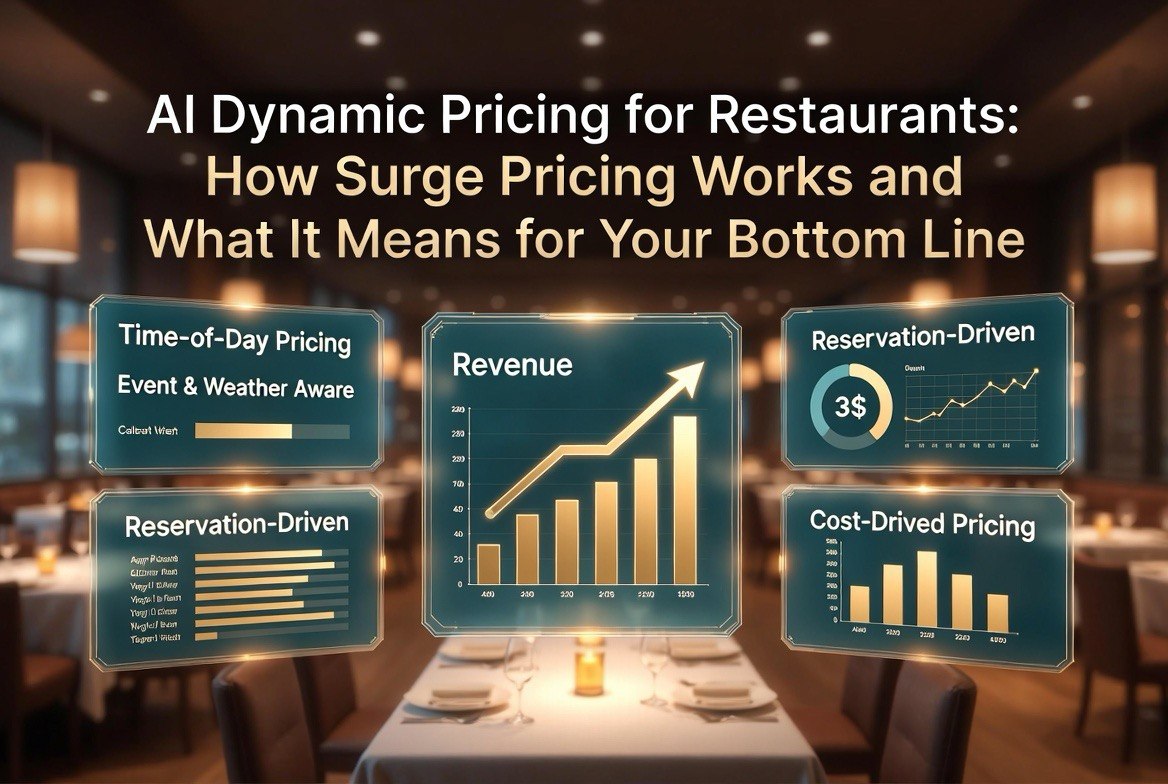
AI Dynamic Pricing for Restaurants: How Surge Pricing Works and What It Means for Your Bottom Line
⚡ Expert Summary: Dynamic pricing — adjusting menu prices in real time based on demand, time of day, weather, and events — is moving from airline strategy into independent restaurants. Early adopters use AI pricing engines to lift revenue per seat during peak hours and protect margins during slow ones. Done right, it’s a few points of revenue you’re currently leaving on the table. Done wrong, it angers regulars. Here’s how the technology actually works, where it works best in a restaurant, and how independent operators can test it without wrecking guest trust.
Why Everyone in Your Industry Is Suddenly Talking About Surge Pricing
If you’ve read a restaurant trade headline in the last year, you’ve seen the debate. Major chains and ghost-kitchen operators are testing prices that shift with demand, and the foodservice press has been quick to call it “surge pricing — for burgers.” The controversy makes it sound like a gimmick. The quiet reality is far more practical: AI-driven pricing is a margin tool, and it’s the same logic airlines, hotels, and ride-share apps have used for decades.
For an independent operator, the appeal is obvious. Your costs — labor, food, energy — swing constantly, while your menu prices stay frozen until you print new ones. Dynamic pricing lets your prices respond to the same signals that drive your costs and your demand: the clock, the calendar, the weather, the reservation book, even a local event that fills your street. That responsiveness is exactly what an AI pricing engine automates, and it’s why the concept is moving from headlines into real back-of-house tools.
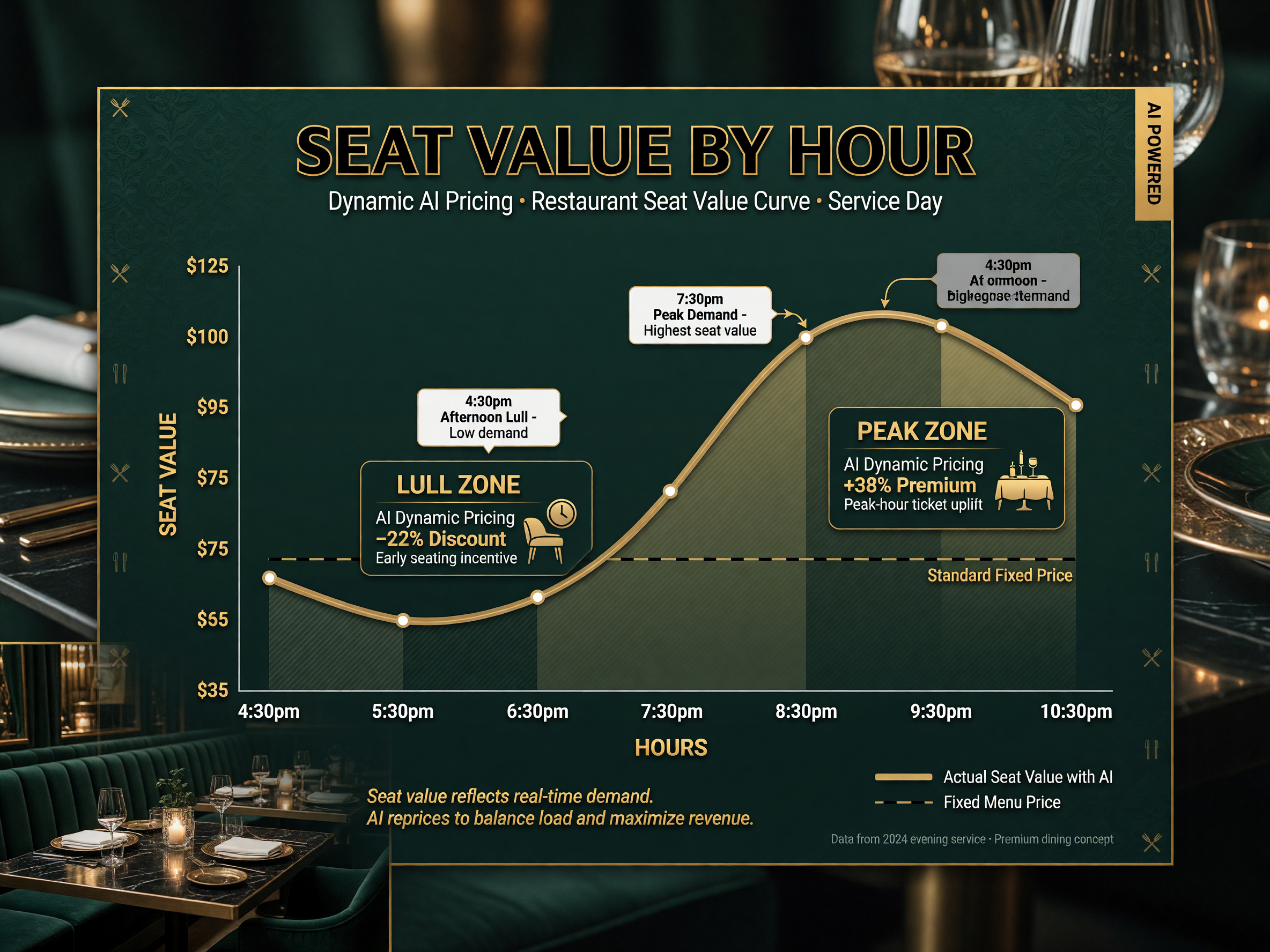
Seat value swings across a service day: the afternoon lull is where targeted discounts fill waste, and the peak is where seats earn what demand says they’re worth.
What AI Dynamic Pricing Actually Means in a Restaurant
Dynamic pricing in food service isn’t one thing. It ranges from gentle tweaks to aggressive real-time shifting. Understanding the range matters because the version that works for a neighborhood bistro is different from the version a hotel rooftop bar uses during a convention weekend. The common thread is that prices are no longer fixed; they move in response to data.
- Time-of-day pricing. Happy-hour discounts are the most familiar version — you’ve been doing dynamic pricing for years, you just call it “happy hour.” AI extends that logic across every hour of service, nudging weekend dinner prices up and weekday lunch prices down based on where demand is thin or thick.
- Event and weather-aware pricing. A rainstorm that empties your patio or a sold-out concert across the street changes what your seats are worth. AI pricing engines pull in local event calendars and weather forecast data to anticipate these swings before they hit your reservation book.
- Reservation and waitlist-driven pricing. When your books are full on a Friday at 7:30, an AI engine knows those seats are at peak value and prices accordingly — while it discounts the 4:30 lull to fill it.
- Cost-driven pricing. On the back end, sharp ingredient price spikes can trigger menu price adjustments that protect your margin on high-cost dishes, instead of eating the loss until the next menu reprint.
The most honest way to think about it: dynamic pricing is menu engineering on a shorter clock. You already decide which items carry margin and which drive traffic. Dynamic pricing just lets those decisions update continuously instead of once a season.
Real Numbers: What’s Actually Happening in the Industry
The adoption data paints a picture of a technology that has tipped past early adopters into the mainstream conversation. The National Restaurant Association’s 2026 State of the Restaurant Industry report found roughly a quarter of operators already using some form of AI in their businesses, with the share climbing every year as the tools get cheaper and easier to deploy.
Meanwhile, the consumer side is more divided. Survey work from Restaurant Dive and other trade sources consistently shows that diners accept price variation when they understand it — happy hours, early-bird specials, and weekday lunch deals have long conditioned US guests to the idea that the same seat costs different amounts at different times. What guests reject is feeling like they’re being charged more for no visible reason, or being surprised at the table.
The practical takeaway for independents isn’t that surge pricing is a binary yes-or-no. It’s that the underlying data layer — knowing what each seat is worth at each hour — is valuable even if you never shift a single price. That’s the part most owners haven’t borrowed from the airlines yet.
The Problem With Blind Discounting (and How AI Fixes It)
Most independent restaurants discount in the dark. They run a happy hour at a fixed discount, or a Tuesday special, without knowing whether that discount actually filled seats or just squeezed margin out of guests who would have come anyway. That’s money leaking in both directions — revenue lost on discounts that don’t drive incremental traffic, and revenue lost on peak hours where you didn’t charge what the demand justified.
An AI pricing engine attacks both leaks at once. On the discount side, it ties each price change to a measurable goal — fill the 4:30 lull, shift traffic out of the 7:30 rush — and stops discounting once the goal is met. On the revenue side, it prices peak seats at what demand says they’re worth instead of leaving that upside on the table. The result is the same menu, the same guests, and a better split between occupancy and margin per seat.
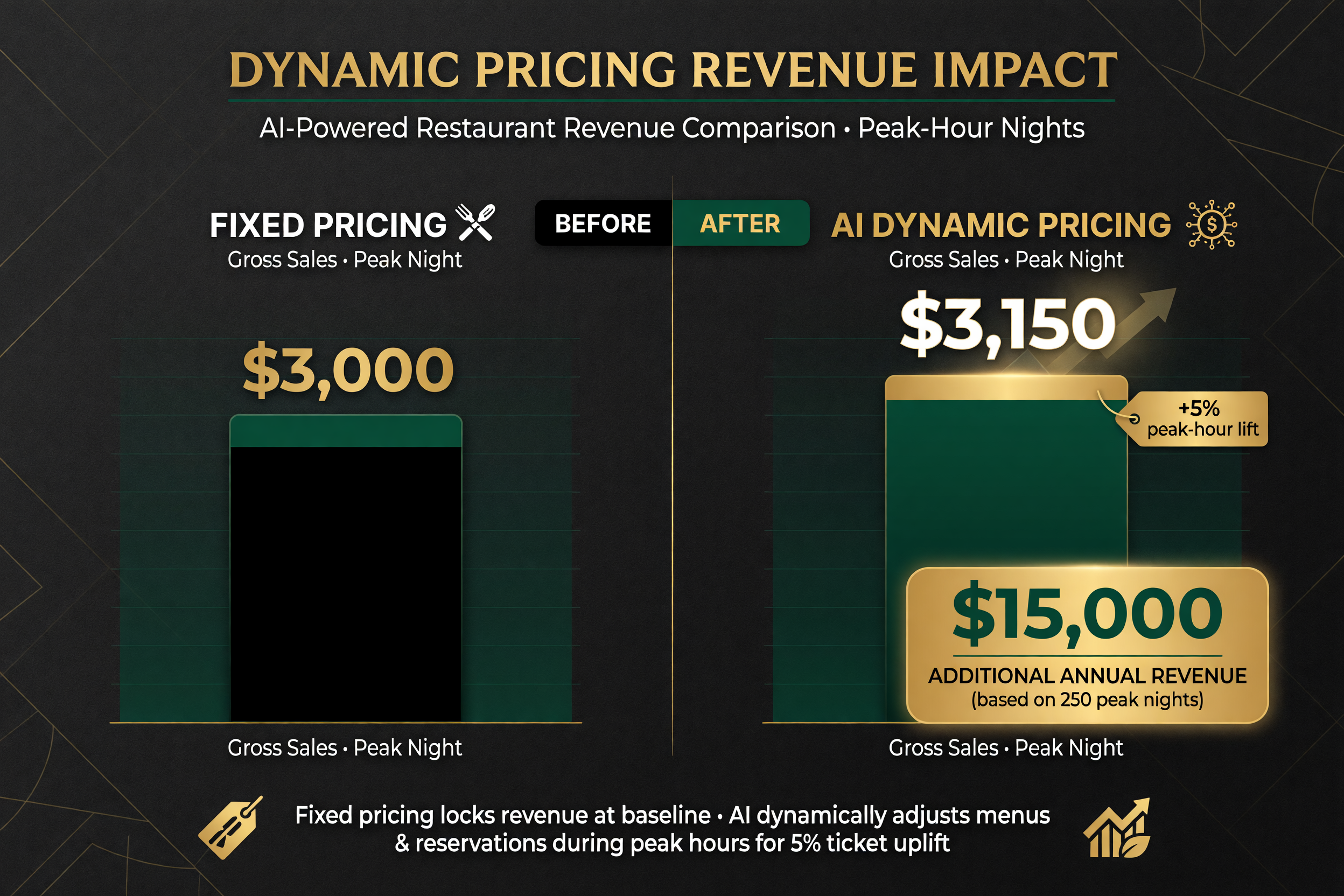
A 5% lift on peak-hour tickets across the two busiest nights is worth roughly $15,000 a year to a 40-seat restaurant — with no new guests and no new tables.
Real Numbers: What the Time and Margin Math Looks Like
Put some concrete numbers on it. A 40-seat restaurant doing an average ticket of $30 at 2.5 turns on a busy night is moving roughly $3,000 in gross sales that evening. If AI pricing lifts peak-hour ticket revenue by just 5% on the two busiest nights a week, that’s an extra $300 a week — roughly $15,000 a year at the top line, with no new guests and no new tables. Meanwhile, closing even part of the afternoon lull with a targeted, data-driven discount can fill seats that were pure waste before.
That’s the economic logic that’s pulling the technology into independents: you’re not inventing new demand, you’re repricing the seats you already have so they earn what they’re worth. The key is doing it transparently and testing it in a way that doesn’t erode the trust your regulars give you.
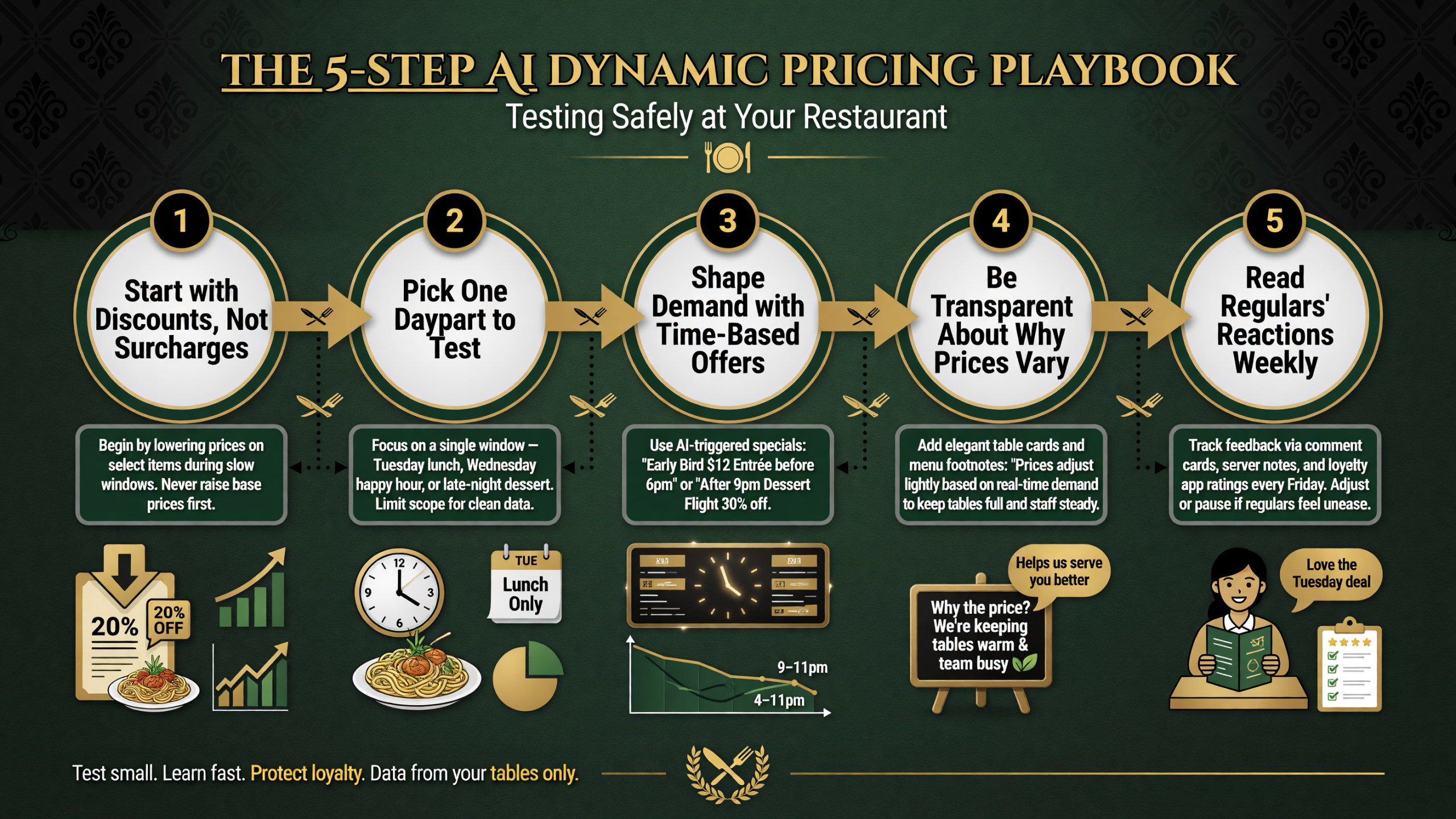
The low-risk playbook: lead with discounts on slow hours, test one daypart, and protect your regulars — dynamic pricing optimizes margin, it never justifies gouging.
How Independent Operators Should Test Dynamic Pricing (Without Angering Regulars)
The owners who make dynamic pricing work don’t flip the whole menu to variable prices overnight. The successful playbook is incremental, transparent, and kind to regulars:
- Start with discounts, not peak surcharges. If guests object to a $2 dinner increase, they’ll notice a “surge” immediately. Start by pricing the slow hours more attractively — happy hours, early-bird menus, weekday lunch packs — where lower prices read as a deal, not a penalty.
- Pick one daypart to test. Don’t touch 20 items. Choose a single service — Sunday brunch or Tuesday lunch — and run the AI pricing there for a month. Measure covers and ticket before you widen the test.
- Shape demand with time-based offers, not real-time surges. The least risky version of dynamic pricing is tiering by time: an early-bird price posted in advance, a late-night menu after 9:00. Guests accept tiered pricing they can see ahead of time.
- Be transparent about why prices differ. Label the reason in the ordering flow or the menu footer: “Prices vary by time of day to fill seats and keep costs down.” Understanding is the antidote to backlash.
- Read your regulars’ reaction weekly. If repeat guests start balking, pull back. The tool is a margin optimizer, not a license to gouge — and a lost regular costs you far more than a small peak-hour gain.
What to Look For in a Restaurant AI Pricing Tool
Not every “AI pricing” product is worth your time. When you evaluate a tool, demand four things before you hand over a single daypart of your menu:
- Clear guardrails. You set the floor and ceiling for every price, so the AI can’t do anything you haven’t approved. The tool proposes; you decide.
- Transparent reasoning. You should be able to see why a price moved — was it the reservation book, the weather, a local event? A black box you can’t audit is a liability in the making.
- POS integration. It has to talk to the system you already run — Square, Toast, TouchBistro, or whatever’s on your counter — without a rebuild.
- Slow, reversible changes. The best implementations nudge prices by small increments and let you roll back instantly if a service night goes sideways.
Treat the first tool you try as a test, not a commitment. Most platforms offer a trial long enough to run a single-daypart experiment and judge the numbers for yourself.
Common Mistakes to Avoid When You Start
Owners who try dynamic pricing and quietly abandon it usually make one of a few predictable errors. Skip these and the experiment has a real chance:
- Starting with peak-hour surcharges. Leading with “surge pricing” on your busiest nights is the fastest way to generate a backlash that poisons the whole idea. Lead with discounts on slow hours instead.
- Ignoring your regulars’ psychology. A regular who’s charged $2 more for the same Wednesday burger will feel the shift even if the market justifies it. Protect your repeat base — it pays the rent.
- Failing to label the reason. Unexplained price variation reads as greed; explained variation reads as logic. Transparency is your cheapest insurance against a bad Yelp review.
- Letting the AI outrun your judgment. The tool is a proposal engine. If you stop auditing its moves, small pricing drift becomes a trust problem with guests before you notice.
- Measuring only revenue, not covers. A higher ticket on fewer tables isn’t a win. Watch covers, repeat rate, and guest sentiment alongside revenue so you know you’re optimizing the business, not just the check.
Where Dynamic Pricing Fits in Your Revenue Strategy
Dynamic pricing is one tool in a larger revenue toolkit, not a replacement for menu engineering, portion control, or great service. Used well, it complements the strategies you already run: your menu design still decides which items carry margin, and AI pricing decides when those items are worth more or less per seat.
The owners who get the most out of it treat it as a continuous version of the pricing judgment they already apply at a slower pace. You already know a rainy Tuesday needs a nudge and a sold-out Friday doesn’t. Dynamic pricing just lets that instinct run on data, every day, without you having to babysit it.
If you want the tools to be a sharper operator — not a gimmick-follower — dynamic pricing tested on one daypart, transparently with your regulars, is a low-risk way to find out whether your seats are earning what they’re worth.
FAQ
Is dynamic pricing the same as surge pricing in restaurants?
They’re related but not identical. Surge pricing is the dramatic, real-time version — prices jumping when demand spikes, like ride-share apps. Dynamic pricing is the broader category that includes gentler, pre-planned shifts: happy-hour discounts, early-bird menus, and event-aware pricing. Independent restaurants get the best results starting with the gentle, transparent end of dynamic pricing, not aggressive surges.
Will AI dynamic pricing anger my regular customers?
It can, if done badly — especially if you lead with peak-hour surcharges or change prices without explanation. The version that protects trust starts with discounts on slow hours (which read as a deal, not a penalty), labels why prices vary, and pulls back if repeat guests react badly. Understanding and transparency are the antidote to backlash.
How much can AI pricing actually increase restaurant revenue?
Starting from a concrete example: a 40-seat restaurant doing $3,000 in gross sales on a busy night can add roughly 5% on peak-hour tickets across its two busiest nights — about $300 a week, or $15,000 a year at the top line, without new guests or tables. Results vary by concept, but the logic is repricing existing seats to earn what demand says they’re worth.
Do I need a new POS to use restaurant AI pricing?
No. Quality dynamic-pricing tools integrate with the POS you already run — Square, Toast, TouchBistro, and similar systems — without a rebuild. When evaluating a tool, confirm POS integration, clear price guardrails you control, transparent reasoning, and the ability to make slow, reversible changes.

About Barak Schurr
Barak Schurr built and exited a major ticketing platform, ran global operations at Eventbrite, and now focuses on one question: which AI tools actually help independent restaurant owners run leaner and grow faster. He writes from the operator’s perspective — no vendor spin, no theory, just what’s real in 2026.
Email: [email protected]
More Restaurant Tech Resources