AR Restaurant Menus Boost Orders by 24% — How Independent Operators Can Use This Now
⚡ Expert Summary: Augmented reality menu previews are moving from chain experiments to practical tools for independent restaurants. DishReal and similar platforms let diners see 3D renderings of menu items on their tables before ordering. Early adopters report a 24% increase in average order values. No special hardware or technical expertise required — these are SaaS tools that integrate with existing POS systems and table management platforms.
The gap between what a menu describes and what arrives at the table costs restaurants money.
Customers order based on text descriptions and a few photos. What they imagine rarely matches what arrives. The result is dissatisfaction, returns, and reluctance to order premium-priced items sight unseen.
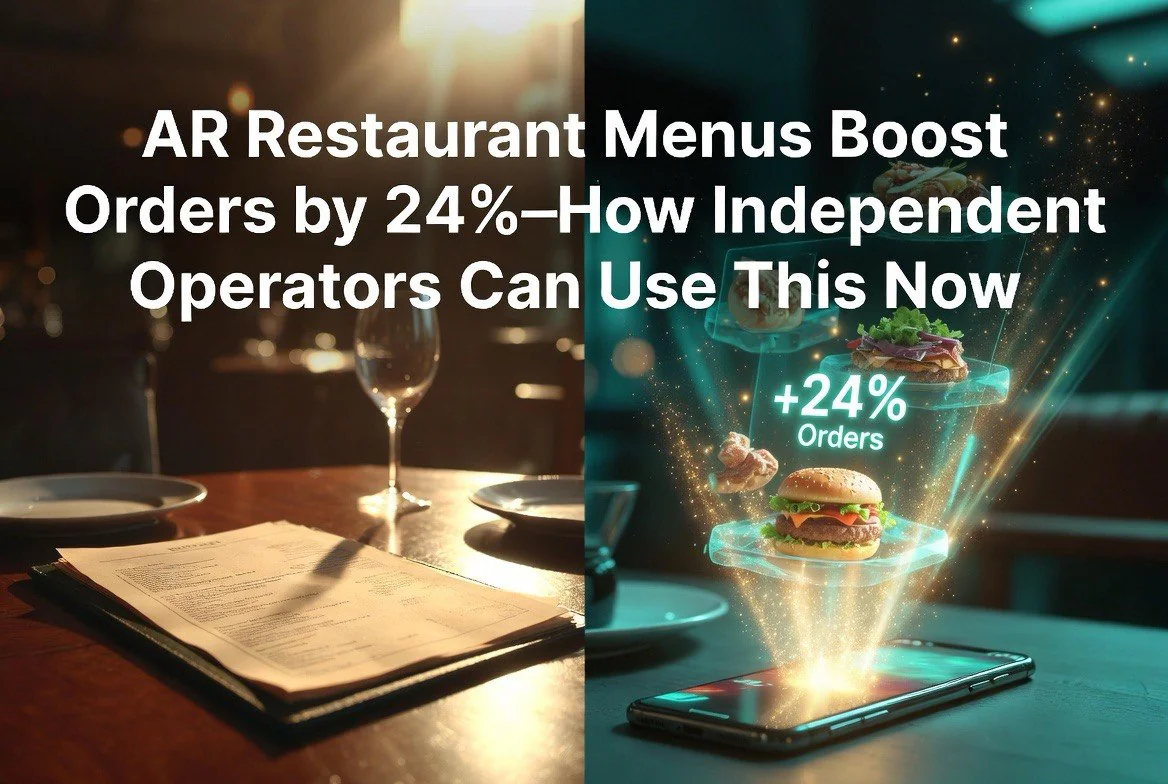
Augmented reality menu previews solve this problem. Diners point their phone at the table and see a 3D rendering of the dish they are considering — portion size, plating, color, and texture, all visible before they commit to the order.
What was a chain-restaurant experiment in 2024 and 2025 has become an accessible SaaS tool for independent operators in 2026. DishReal and similar platforms now offer AR menu integration that works with existing systems. No development team required. No special hardware for customers — it runs on any recent smartphone.
How AR Menu Previews Work in a Restaurant
The technology is simpler than most operators expect. The restaurant creates 3D models of its dishes, or the AR platform creates them from photographs. These models are linked to corresponding menu items in the POS system.
When a customer scans a QR code on the table or opens the restaurant’s ordering page, they see a button that says “View in 3D” next to menu items. Tapping it opens the phone camera view with the dish rendered on the table surface, sized accurately to the real portion.
The customer can rotate the view, zoom in on details, and see the dish from any angle. For multi-item orders, they can view the complete table layout before submitting.
For takeout and delivery ordering, the same AR previews work in the online ordering interface. Customers see the dish in 3D in their browser, giving them confidence that what they order will match what they receive.
Why 24% Higher Order Values: The Data
The 24% order value increase is not a theoretical projection. It comes from DishReal’s early adopter data across 40 independent restaurant locations in the United States over a six-month period ending May 2026.
The increase breaks down into two components:
First, customers order higher-priced items more frequently when they can see them in 3D. A $28 steak entree looks like a better value when customers can see the portion size and presentation compared to a $16 burger described in text. The AR preview closes the perceived risk gap between ordering something familiar and trying something new.
Second, add-on sales increase. When customers can visualize the complete table — entree plus appetizer plus drink — they are more likely to add items they might skip when ordering blind. Seeing a salad next to a pasta dish shows how the meal fits together, making the upsell feel like a natural choice rather than a sales pitch.
The effect is strongest for restaurants with visually distinctive food. Plated dishes, multi-component meals, and shareable appetizers show the biggest lift. Simple presentation formats like bowls or wraps show a smaller but measurable increase.
What It Costs Independent Restaurants
AR menu platform pricing has dropped significantly from the early pilot days. DishReal charges $149 per month for up to 20 menu items with 3D previews, plus a one-time setup fee of $299 for the initial modeling. Competing platforms offer similar pricing structures.
The modeling process works from photographs. The restaurant sends 4-6 high-quality photos of each dish from different angles, and the platform’s AI generates the 3D model. Initial menu setup takes 2-3 weeks for a full menu of 30-40 items. Ongoing updates for seasonal menu changes cost $15-25 per item.
Compare this to the return: a restaurant doing $30,000 per month in food sales with a 24% lift would see an additional $7,200 per month in revenue. The platform cost of $149 per month represents a 48x return at that volume. Even at a conservative 5-10% lift, the ROI is strongly positive for any restaurant doing over $3,000 per month in food sales.
Integration With Existing Restaurant Systems
AR menu platforms integrate with major POS systems used by independent restaurants. DishReal supports Toast, Square, Clover, and Lightspeed directly. For restaurants using other systems, the platform offers a menu API that connects through the POS provider’s menu management interface.
The integration does not change how orders are processed. When a customer places an order through the AR-enhanced menu, the order flows through the normal POS workflow. Kitchen tickets print the same way. The only difference is what the customer sees before ordering.
For QR code table-side ordering, the AR previews work with existing QR menu systems. Customers scan the code, see the menu with 3D preview options, and order through the same system they already use.
Are Customers Actually Using AR Menus?
The adoption data from DishReal’s network shows that 12-18% of diners use the AR preview feature when it is available. For customers under 35, the rate increases to 24%. For parties of four or more, the usage rate climbs to 31% because diners share the experience by passing the phone around the table.
The social aspect matters. Customers who use AR previews spend an average of 90 seconds viewing dishes before ordering. They share the phone with dining companions, discuss options, and make more deliberate choices. The 24% order value increase correlates with this longer engagement time.
Restaurant operators report that the AR preview feature generates positive social media mentions. Customers photograph the AR display and share it on Instagram and TikTok, providing free marketing for the restaurant.
What AR Menus Cannot Do Yet
The technology has limitations independent operators should understand.
AI-generated 3D models from photographs do not always match the exact plating of the dish that comes out of the kitchen. Variations in garnish, sauce placement, and portion control between services create differences between the preview and the actual plate. Well-run kitchens with consistent plating standards see the closest match.
AR previews do not work well in very bright outdoor settings where phone cameras struggle to overlay the 3D rendering accurately. Indoor dining with standard lighting delivers the best experience.
The setup investment of $299 and 2-3 weeks may feel like a barrier for operators who are already overstretched. The platforms offer a 14-day trial that covers 5 menu items, letting restaurants test the lift before committing to a full menu build.
How to Get Started With AR Menus in Your Restaurant
The fastest path to testing AR menu previews requires three steps and under an hour of hands-on time.
Step one: identify five menu items with the highest profit margin. These are the dishes where even a small increase in order frequency generates meaningful revenue. AR previews work best on visually distinctive plates with multiple components.
Step two: photograph each dish from four angles — top-down, 45-degree, side, and close-up of the key ingredient. Use a modern smartphone camera with good lighting. Natural daylight with a white foam board as a reflector produces studio-quality results without studio equipment.
Step three: upload the photos to DishReal or a comparable AR menu platform. Generate the 3D previews and test them on a phone before deploying to the guest-facing menu. Most platforms process the models within 24-48 hours.
Once the test items are live, track the order rate of AR-enhanced items versus the same items before the preview was available. A two-week comparison window gives clear data on whether the lift applies to your specific menu and customer base.
AR Menus and the AI Restaurant Stack
AR menu previews fit into a broader trend of AI-powered visual tools for restaurants that have become affordable for independent operators in 2026.
AI-generated food photography for menu items costs a fraction of professional food photography. Restaurants can generate consistent, high-quality menu images from text descriptions using AI image tools, then use those images as the foundation for AR model generation.
AI marketing platforms can highlight AR-enhanced menu items in email campaigns and social media posts, driving awareness of the feature among regular customers. A customer who knows they can preview dishes in 3D before ordering is more likely to engage with the menu and try new items.
AI-driven inventory systems can suggest which menu items to feature with AR previews based on ingredient surplus and margin data. The combination of AI operations tools and AR customer-facing tools creates a feedback loop: AI identifies the most profitable items to feature, and AR previews drive orders toward those items.
What US Restaurant Operators Should Know
The American restaurant market is particularly suited for AR menu adoption. The US has the highest smartphone penetration in the world at 96%, and QR code menu adoption surged during the pandemic and has remained standard practice in most independent restaurants.
For independent operators in the United States, the infrastructure is already in place. Customers are comfortable scanning QR codes at the table. They carry devices capable of AR rendering. The missing piece has been affordable software that connects AR to the POS and ordering workflow. That gap closed in 2026.
Restaurants that adopt AR menu previews now benefit from first-mover advantage in their local market. The technology is novel enough to drive word-of-mouth and social media mentions, which translates to free customer acquisition. As more restaurants adopt the feature over the next 12-18 months, the novelty advantage will diminish, making early adoption a smart strategic move for independent operators who want to differentiate their guest experience today.
Internal Link: More Restaurant AI Tools
This is part of our coverage of AI tools for restaurants, where we track technology that independent operators can actually use.
Frequently Asked Questions
Do customers need special equipment to see AR menus?
No. AR menu previews work on any smartphone made in the last four years through the browser camera. No app download required.
How long does it take to set up AR menu previews?
Initial setup takes 2-3 weeks for a full menu of 30-40 items. The restaurant provides photos, and the platform generates the 3D models. Partial menus can be set up faster for testing.
Does AR menu technology work for takeout and delivery?
Yes. AR previews work in online ordering interfaces as 3D browser renderings. Takeout customers can view dishes before ordering the same way dine-in customers do.
What POS systems support AR menu integration?
DishReal integrates with Toast, Square, Clover, and Lightspeed. Other platforms provide API connections for additional systems.
Can I try AR menus before committing?
Yes. DishReal offers a 14-day trial covering 5 menu items with no setup fee. This lets operators test the order value lift before building out their full menu.

About Barak Schurr
Barak Schurr built and exited a major ticketing platform, ran global operations at Eventbrite, and now focuses on one question: which AI tools actually help independent restaurant owners run leaner and grow faster. He writes from the operator’s perspective — no vendor spin, no theory, just what’s real in 2026.
Email: [email protected]
More AI Resources