ChatGPT Is Taking Your Order Now: Voice AI Drive-Thrus and Conversational Ordering Hit US Restaurants
u26a1 Expert Summary: Voice AI ordering has moved from pilot programs to real deployment in mid-2026. Taco Bell now handles millions of orders through voice AI at 500+ US locations. Bites launched a ChatGPT-native ordering experience. Global Payments released a handheld POS that captures orders from table-side conversation. For independent restaurant owners, the technology is finally accessible u2014 but the deployment choices matter.
The Voice AI Ordering Landscape in June 2026
Voice AI ordering went through a predictable arc over the past three years. In 2024, it was experimental u2014 a few chains testing drive-thru voice automation with mixed results. In 2025, it became operational u2014 major QSRs like Taco Bell, Wendy’s, and Pizza Hut scaling pilots to hundreds of locations. In 2026, it’s becoming competitive u2014 the question isn’t whether voice AI works, but whose voice AI your customers will use.
The June 2026 landscape reveals three distinct approaches to voice AI ordering, each with different implications for small and independent restaurants.
Approach 1: Drive-Thru Voice AI at Scale
Taco Bell has deployed voice AI ordering at over 500 US locations, handling millions of orders through automated drive-thru systems. The technology handles the full ordering conversation u2014 taking the order, suggesting upsells, confirming accuracy, and routing to the kitchen display system.
The results have been mixed enough that Taco Bell is “rethinking” aspects of its voice AI strategy after customer complaints about accuracy and a viral prank that exposed the system’s limitations. But the core metric u2014 order throughput during peak hours u2014 has improved at most locations, which is why the rollout continues despite the growing pains.
Wendy’s and Pizza Hut have followed similar paths, with voice AI handling drive-thru orders at scale. KFC is expanding its program. The common thread across all of them: voice AI handles the routine orders well, but struggles with heavy accents, unusual menu modifications, and deliberately adversarial customer interactions.
For independent restaurants without drive-thrus, this approach has limited direct relevance. But the precedent matters u2014 if chain drive-thrus can automate order taking, the technology will eventually reach counter-service and phone ordering at independents.
Approach 2: ChatGPT Native Ordering
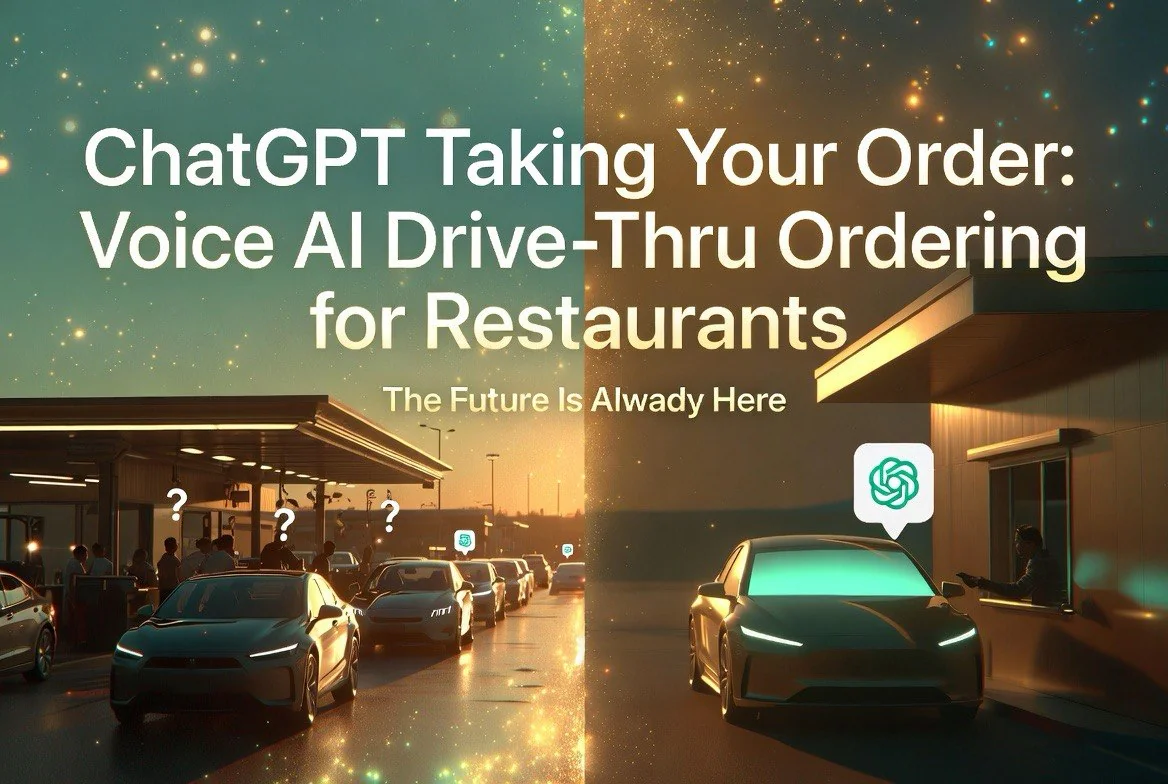
Bites launched its ordering experience directly inside ChatGPT in April 2026. Customers can say things like “find pizza near me” or “order breakfast in San Jose” through the ChatGPT interface, browse options from participating restaurants, get AI-curated recommendations, and complete the order without leaving the chat.
The key differentiator: Bites integrates directly with POS systems, offers in-store pricing (no inflated marketplace markups), and charges no commission fees. For a restaurant owner, this means the customer pays the same price as ordering direct, and the restaurant keeps the full transaction minus standard processing fees.
Little Caesars launched its own ChatGPT ordering app in mid-2026, allowing customers to order conversationally through ChatGPT across US markets. The Little Caesars implementation handles the full ordering flow u2014 menu browsing, customization, pricing, checkout u2014 all within the ChatGPT interface.
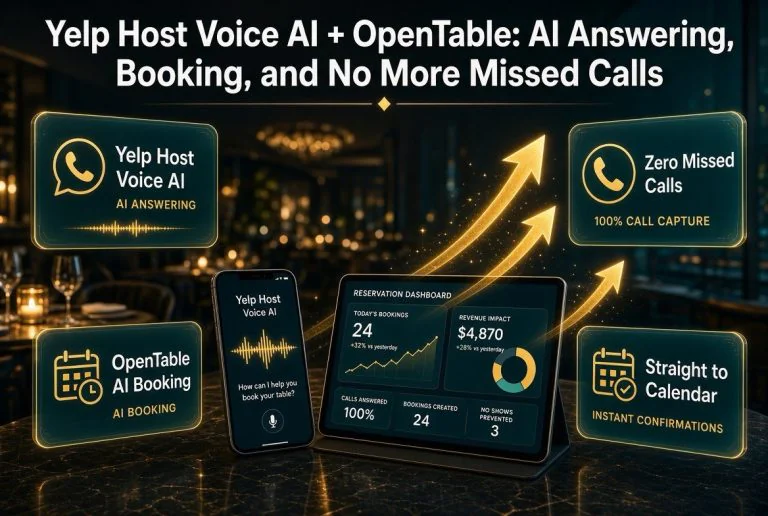
OpenTable also integrated its reservation system into ChatGPT, letting users discover restaurants, check availability, and book tables through natural conversation.
For independent restaurateurs, the ChatGPT ordering channel matters because it operates on the same principle as Google Business Profile or Apple Maps u2014 your restaurant needs to be found in whatever interface customers are using to search. If customers are saying “find Italian food near me” to ChatGPT, your restaurant needs to be listed and order-enabled in that ecosystem.
Approach 3: Table-Side AI Voice Ordering
Global Payments released a handheld POS device in June 2026 with a significant twist: an AI microphone array that listens to natural table conversation and captures orders in real time. The system doesn’t interrupt. It listens, identifies menu items as customers discuss them, and builds the order automatically.
The stated goal is to reduce ordering anxiety and let servers focus on hospitality rather than rote order-taking. Instead of standing over the table writing down orders, the server can engage naturally while the system captures the details in the background.
The implications for staffing are interesting. If the POS captures the order automatically, the server’s role shifts from order-taker to experience manager u2014 greeting, suggesting, checking in, handling issues. This doesn’t reduce head count, but it changes what the best servers do with their time.
Phone-Based AI Voice Ordering for Independents
For independent restaurants, the most immediately relevant AI voice technology is the phone-based AI ordering agent. Companies like Loman, Kea, and Sadie offer AI phone agents that handle inbound calls for ordering, reservations, menu questions, and missed-call recovery.
These systems sync directly with Toast, Square, and other common POS platforms. When a customer calls to place a takeout order, the AI handles the conversation, enters the order into the POS, and routes any exceptions to human staff.
The value proposition is straightforward. According to Loman’s customer data, independent restaurants miss 15-30% of inbound phone calls during peak hours. Each missed call is a potential order that never materializes. An AI phone agent that costs $100-200 per month per location can recover a significant portion of that lost revenue.
For a typical independent doing $500,000 in annual revenue with 20% takeout share, recovering 20% of missed calls at $15 average order value translates to approximately $15,000-20,000 in recovered revenue per year u2014 far exceeding the cost of the AI agent.
What This Means for Independent Restaurants
The voice AI ordering landscape in June 2026 offers several entry points depending on your restaurant type and goals:
Drive-thru operations: The chain-scale solutions aren’t directly available to most independents yet, but the technology providers serving QSRs will likely offer tiered versions for smaller operations within 12-18 months. Watch Presto, Valyant AI, and ConverseNow for small-restaurant versions of their drive-thru systems.
Takeout and delivery-focused: The phone-based AI agents from Loman, Kea, and Sadie are the most practical investment today. They integrate with the POS you already use, cost less than a part-time employee, and recover revenue that’s currently walking out the door unanswered.
Full-service restaurants: The table-side voice ordering approach from Global Payments is worth watching but may not justify the hardware investment for small independents yet. The ChatGPT ordering channels (Bites, OpenTable) require no upfront investment and are effectively free distribution if you already have a POS integration.
All restaurants: Get your menu listed in ChatGPT-enabled ordering platforms. As conversational search replaces browser-based search for more consumers, being findable through ChatGPT ordering will become as important as being findable through Google Maps.
The Bottom Line
Voice AI ordering has crossed from experimental to operational in US restaurants. Taco Bell’s 500+ location deployment, Bites’ ChatGPT integration, Little Caesars’ conversational ordering app, and Global Payments’ table-side voice POS all demonstrate that the technology is ready for real use.
For independent restaurant owners, the smartest near-term investment is a phone-based AI ordering agent that recovers missed calls and integrates with your existing POS. It costs less than a part-time employee, pays for itself through recovered revenue, and requires no changes to your physical setup or customer experience.
The ChatGPT-native ordering channel is a longer-term opportunity that requires zero upfront investment. Make sure your restaurant is findable through any conversational interface your customers might use.
Frequently Asked Questions
How accurate is voice AI ordering?
Drive-thru systems report 85-95% accuracy on standard orders, with lower accuracy on complex modifications, heavy accents, or adversarial interactions. Accuracy improves with each deployment as models train on more real-world data.
Can voice AI handle multiple languages?
Most systems support English and Spanish. Some providers are expanding to Mandarin, Vietnamese, and Korean for specific regional markets.
How much does a phone-based AI ordering agent cost?
Loman, Kea, and Sadie charge $100-200 per month per location for AI phone agent service. Some charge additional per-call or per-minute fees above a baseline.
Does ChatGPT ordering work with my existing POS?
Bites integrates with most major POS systems. Little Caesars’ ChatGPT app is currently proprietary to Little Caesars. OpenTable’s ChatGPT integration requires an OpenTable account.
Will voice AI replace my front-of-house staff?
Current technology augments rather than replaces staff. Drive-thru voice AI reduces the need for dedicated order-takers but creates new roles for exception handling and quality assurance. Phone AI agents handle overflow calls but can’t replace in-person service.
How do I get started with ChatGPT ordering?
For Bites: sign up at their website and connect your POS. For OpenTable: ensure your restaurant is listed and reservation-enabled. For direct ChatGPT integration: this currently requires partnership with OpenAI or a platform like Bites.

About Barak Schurr
Barak Schurr built and exited a major ticketing platform, ran global operations at Eventbrite, and now focuses on one question: which AI tools actually help independent restaurant owners run leaner and grow faster. He writes from the operator’s perspective — no vendor spin, no theory, just what’s real in 2026.
Email: [email protected]
More AI Resources