
PolyAI for Restaurants: How a Voice Agent Answers Every Call and Books the Table
⚡ Expert Summary: PolyAI is a conversational voice-AI platform that powers the “Selma” phone agent for Fogo de Chão across all 88 US locations. Named for the chain’s chief culture officer, Selma answers 100% of inbound calls in English, Spanish, and Portuguese around the clock, books and amends reservations directly into OpenTable, and enrolls callers in Fogo Rewards. Early results show a 95% guest satisfaction rating and an 88% booking-completion rate, with roughly 250,000 reservations projected over the first year. For independent owners, PolyAI is the strongest sign yet that the missed-call problem is now solvable with a tool built for it — not a generic phone menu.
If you run a restaurant, you already know the most expensive sound in the building is a phone ringing when nobody is free to answer it. Every missed call is a reservation that never happened, a pickup order that went elsewhere, or a party of ten that decided your competitor answered first. Yet for most independent owners, the phone has been a leak they have lived with for years — because the fix has always meant hiring a dedicated host or front-of-house person whose only job is to catch calls.
PolyAI enters this conversation with a different answer. Instead of another human at the host stand, it puts an AI voice agent on every call that can actually do the job — answer in the caller’s language, handle a real back-and-forth about time and party size, and drop the booking straight into OpenTable. The flagship restaurant case is Fogo de Chão’s “Selma,” which now answers 100% of the Brazilian steakhouse chain’s US calls. This review looks at how PolyAI works, what the Fogo numbers really say, and whether a system built for a 58-location chain has anything to offer the independent owner answering ten calls a night.
Who Is PolyAI and Why Restaurants Are Paying Attention
PolyAI is a voice AI company that has spent years building conversational phone agents that sound natural and, critically, can complete real transactions — booking, ordering, checking availability — rather than just answering and hanging up. It started in customer-service voice for large enterprises, and its restaurant-facing agents are the same technology pointed at a very specific, very painful job: the inbound restaurant phone call.
The company’s pitch to the industry is blunt about the stakes. Roughly 20% of restaurant calls go unanswered during busy service, and each one is a reservation or order that never closed. For chains operating across time zones and languages, that leak multiplies. PolyAI’s agents are built to eliminate it by being available around the clock, multilingual, and connected directly to the systems the restaurant already runs — most importantly the reservation platform.
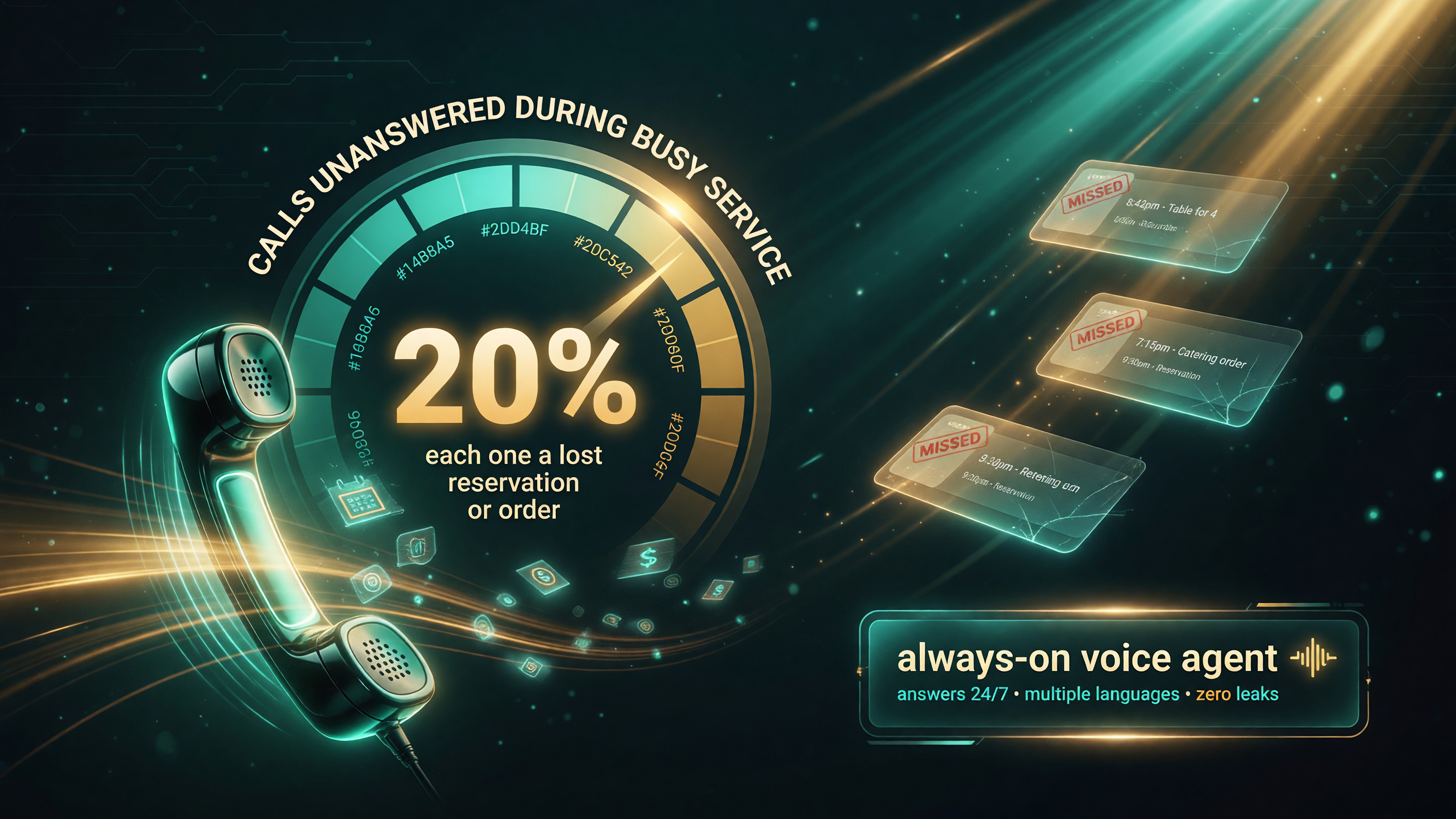
Roughly 20 percent of restaurant calls go unanswered during busy service — every one a reservation or order that never closed. That is the leak a 24/7, multilingual voice agent is built to stop.
The Fogo de Chão “Selma” Deployment
The deployment that put PolyAI on restaurant operators’ radar is Fogo de Chão’s voice agent, named “Selma” in honor of the chain’s real chief culture officer, Selma Oliveira. The agent has been rolled out across the US network and now answers the chain’s inbound calls.
Where the numbers matter is in what “answering” actually means. Selma does not just pick up and route. It handles the full natural-language conversation a human host would — checking party size and timing, confirming availability, and securing the reservation — then writes that booking straight into OpenTable without a staff member having to re-key it. It can also amend or cancel existing reservations and enroll callers into Fogo Rewards, which is exactly the kind of task a busy host usually forgets under pressure.
The language coverage is a genuine operational advantage for any restaurant serving a multilingual market: Selma converses in English, Spanish, and Portuguese. For a chain whose guest base spans those languages, that removes a real source of friction at the very first touchpoint.
What the Fogo Results Actually Show
The headline numbers PolyAI reports from the Fogo de Chão rollout are worth examining carefully, because they tell a more useful story than raw hype.
| Metric | Fogo de Chão Result | What It Means for the Operator |
|---|---|---|
| Calls answered | 100% of US inbound calls | No more lost reservation calls, even mid-service |
| Guest satisfaction | 95% satisfaction rating | Callers are satisfied with the agent experience |
| Booking completion | 88% of calls end in a completed booking | Conversations convert; guests are not hanging up |
| Projected reservations | ~250,000 in the first year | A meaningful volume of recovered demand |
Read carefully: these are vendor-reported results from a large chain deployment, not independently audited figures. But they are concrete and directional, and the booking-completion figure is the one that matters most. An AI that answers but cannot close the reservation is just an expensive voicemail. An 88% completion rate indicates callers are staying in the conversation and finishing the booking — which is the entire point.
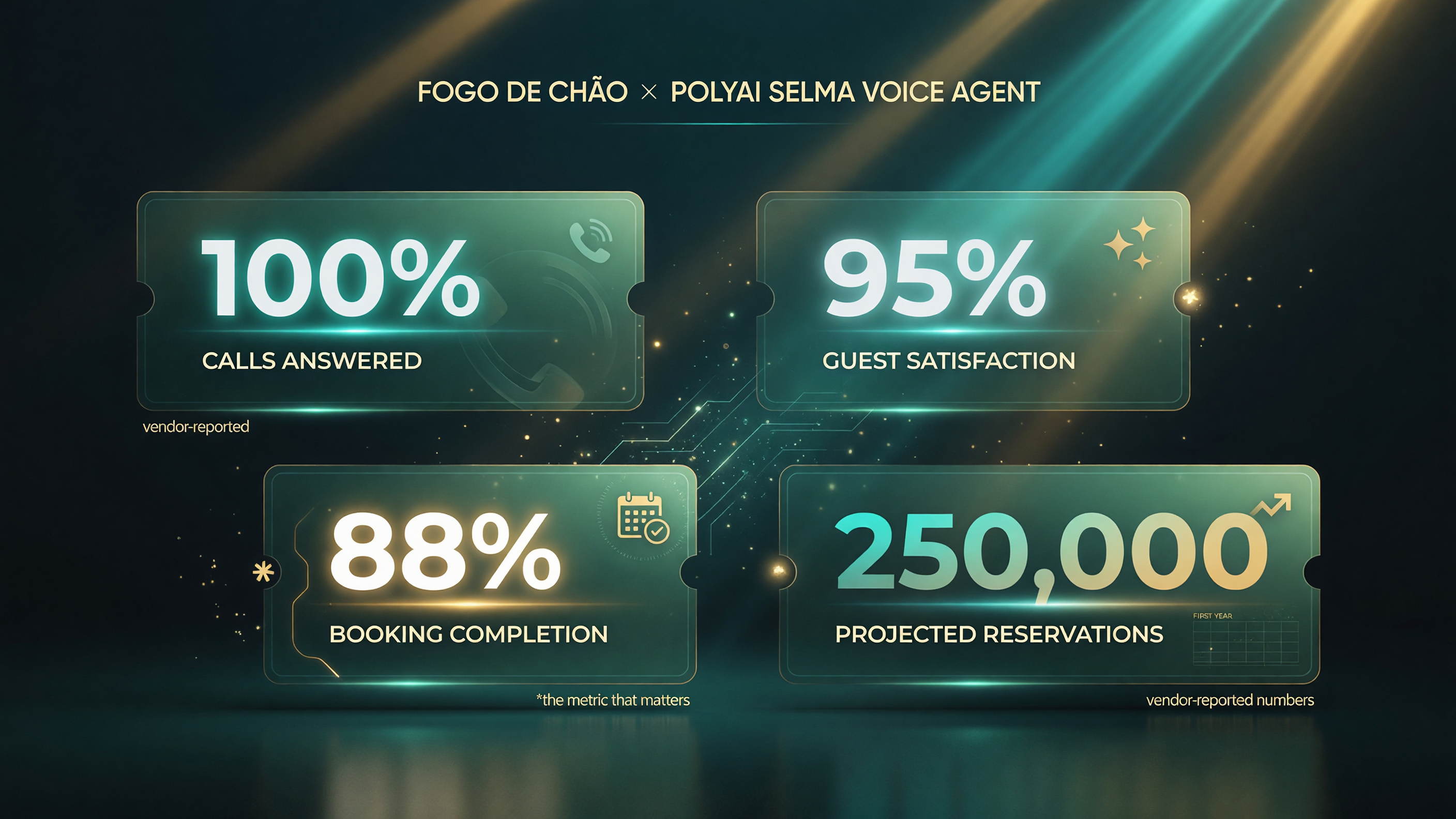
Vendor-reported numbers from the Fogo de Chão rollout: Selma answers inbound calls, books into OpenTable, and closes about 88 percent of conversions into a completed reservation — the completions figure is what matters to an operator.
How PolyAI Compares to the Phone Solution You Have Today
Most restaurants do not actually have no phone system — they have a poor one. Comparing PolyAI to the status quo clarifies the upgrade.
| Factor | Traditional Phone Greeting | PolyAI Voice Agent |
|---|---|---|
| Missed calls | Common during busy service | Every call answered, 24/7 |
| Reservation booking | Manual, re-keyed into OpenTable | Books straight into OpenTable automatically |
| Languages | Depends on whoever answers | Converses in English, Spanish, Portuguese |
| After-hours | Voicemail or unanswered | Books reservations around the clock |
The essential difference is that a traditional greeting handles the call but stops at the handoff. PolyAI’s value is that it closes the loop — the caller leaves with a reservation confirmed in the system, in their language, at any hour. That is the difference between managing phone calls and actually recovering the revenue they represent.
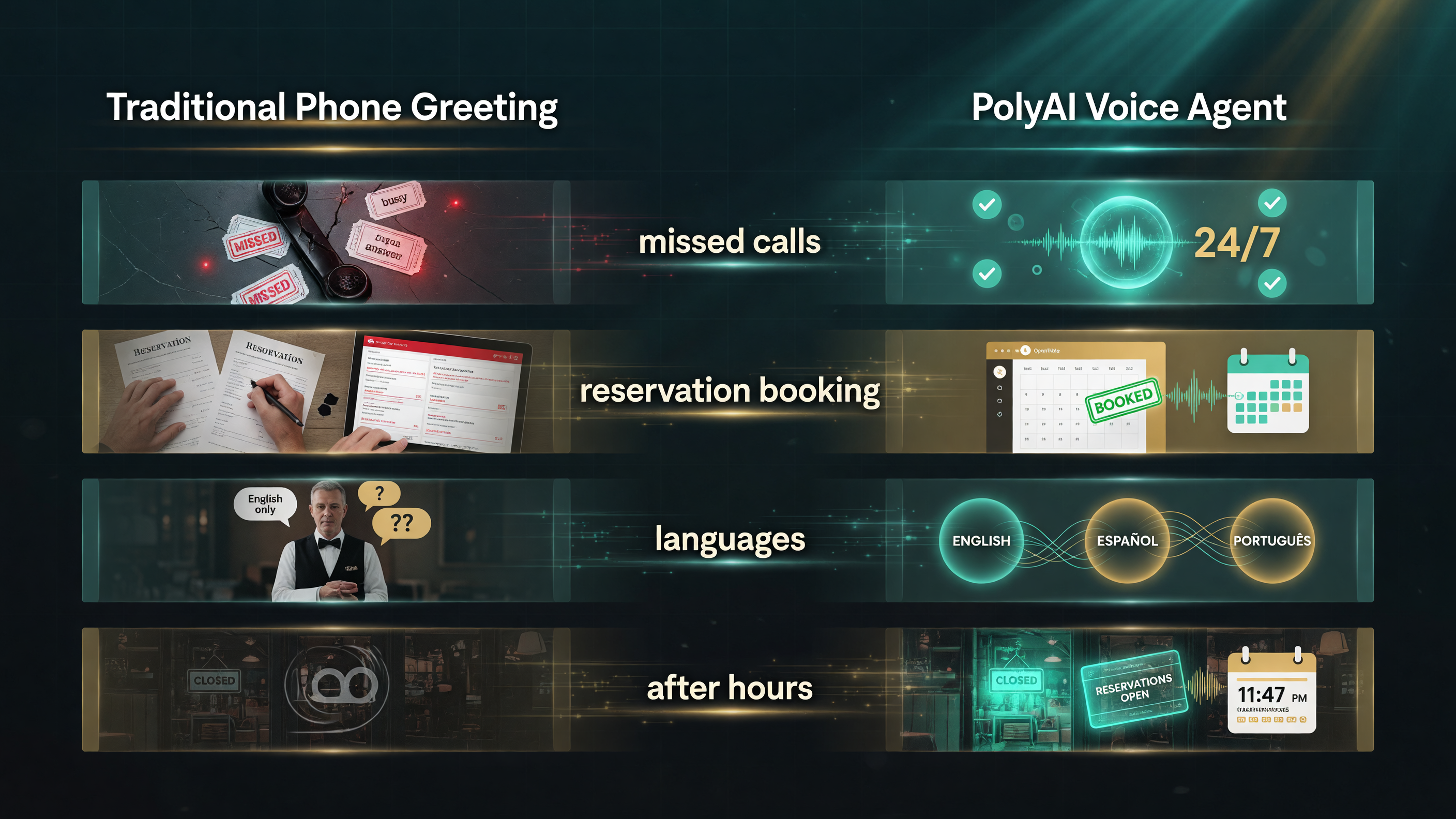
The core upgrade: a traditional greeting stops at the handoff, while a PolyAI voice agent closes the loop — the caller leaves with a reservation confirmed in the system, in their language, at any hour.
Is This Relevant to an Independent Restaurant?
The natural pushback from an independent owner is that Fogo de Chão is a large chain with dozens of locations — why would the same tool help a single dining room with a host stand?
The answer is that the core problem PolyAI solves is the same at every scale. An independent restaurant misses calls during a Friday rush just like a chain does, and those are the highest-value calls of the week. Where a chain deploys one agent across dozens of locations, an independent operator uses the same technology on a single line — which can be precisely the difference between catching that last large-party reservation or losing it to voicemail. The chain scale makes the economics obvious, but the missed-call math works for a single location too, especially one that cannot staff a dedicated phone-answerer during peak service.
The technology is offered to restaurants directly, not gated behind enterprise contracts, and it integrates with the reservation and rewards systems independents already use. That is what separates this generation of voice AI from the clunky phone trees of the past: it connects to your actual booking stack and does the job end to end.
What to Watch If You Consider PolyAI
If PolyAI is on your shortlist, there are three things to verify before you commit, because voice AI decisions live or die on implementation details.
First, test the handoff. Ask exactly what happens when the agent reaches the edge of its ability — a complex special request, a private dining inquiry, a complaint. Seamless transfer to a human, with the caller’s context intact, is the difference between a helpful assistant and a frustrating gatekeeper. Never deploy a system that traps a frustrated caller.
Second, confirm the OpenTable and loyalty integration is tight. The whole economic case rests on the agent writing the booking and enrolling the guest without duplication or data entry errors. Watch one full call end to end and verify the reservation appears correctly in your reservation platform.
Third, match the voice to your brand. The agent is the first thing many guests now hear. PolyAI’s strength with Fogo de Chão is that “Selma” reflects a real, warm company figure. Choose a voice and tone that fits your restaurant — and make sure the multilingual settings actually match the languages your market speaks.
Final Verdict
PolyAI is a serious, proven answer to a problem every restaurant owner knows: calls go unanswered, reservations slip away, and the phone is a leak that staffing alone never fully plugs. The Fogo de Chão deployment — 100% of calls answered, 95% guest satisfaction, 88% booking completion, roughly 250,000 projected first-year reservations — is the clearest demonstration yet that a voice agent can do the host’s phone job without the cost or availability limits of a human shift.
For an independent owner, the practical read is that the missed-call problem is now solvable with a tool built for it. The technology is not reserved for chains, and the integration with the reservation stack independents already use is what makes it real rather than a demo. If you have watched one too many parties book elsewhere because nobody picked up, PolyAI is worth a serious look — and a real test on a real weekend before you commit.
Frequently Asked Questions
What is PolyAI for restaurants?
PolyAI is a conversational voice-AI platform whose restaurant agents answer inbound phone calls, handle natural-language reservation conversations, and book directly into platforms like OpenTable. It powers Fogo de Chão’s “Selma” voice agent across US locations.
Is PolyAI only for large chains?
No. PolyAI is offered to restaurants directly and integrates with the reservation and loyalty systems independents already use. The missed-call problem it solves is the same for a single location as for a multi-location chain.
Does the PolyAI voice agent replace my host or front-of-house staff?
It is designed to handle the phone workload that competes with in-person service, not to replace your team. It catches and completes reservation calls so staff can focus on guests in the dining room, and it transfers complex calls to a human when needed.
What results did PolyAI show at Fogo de Chão?
PolyAI reports Selma answers 100% of Fogo de Chão’s US inbound calls with a 95% guest satisfaction rating and an 88% booking-completion rate, with roughly 250,000 reservations projected over the first year. The agent handles English, Spanish, and Portuguese.
What languages does the PolyAI voice agent support?
The Fogo de Chão “Selma” agent converses in English, Spanish, and Portuguese, making it well suited to markets with multilingual guest bases.

About Barak Schurr
Barak Schurr built and exited a major ticketing platform, ran global operations at Eventbrite, and now focuses on one question: which AI tools actually help independent restaurant owners run leaner and grow faster. He writes from the operator’s perspective — no vendor spin, no theory, just what’s real in 2026.
Email: [email protected]
More Resources for Restaurant Operators