Get the AI Restaurant Quick-Start Guide — Free
The 5 AI tools independent US restaurant owners are using right now to cut labor costs and answer every call.
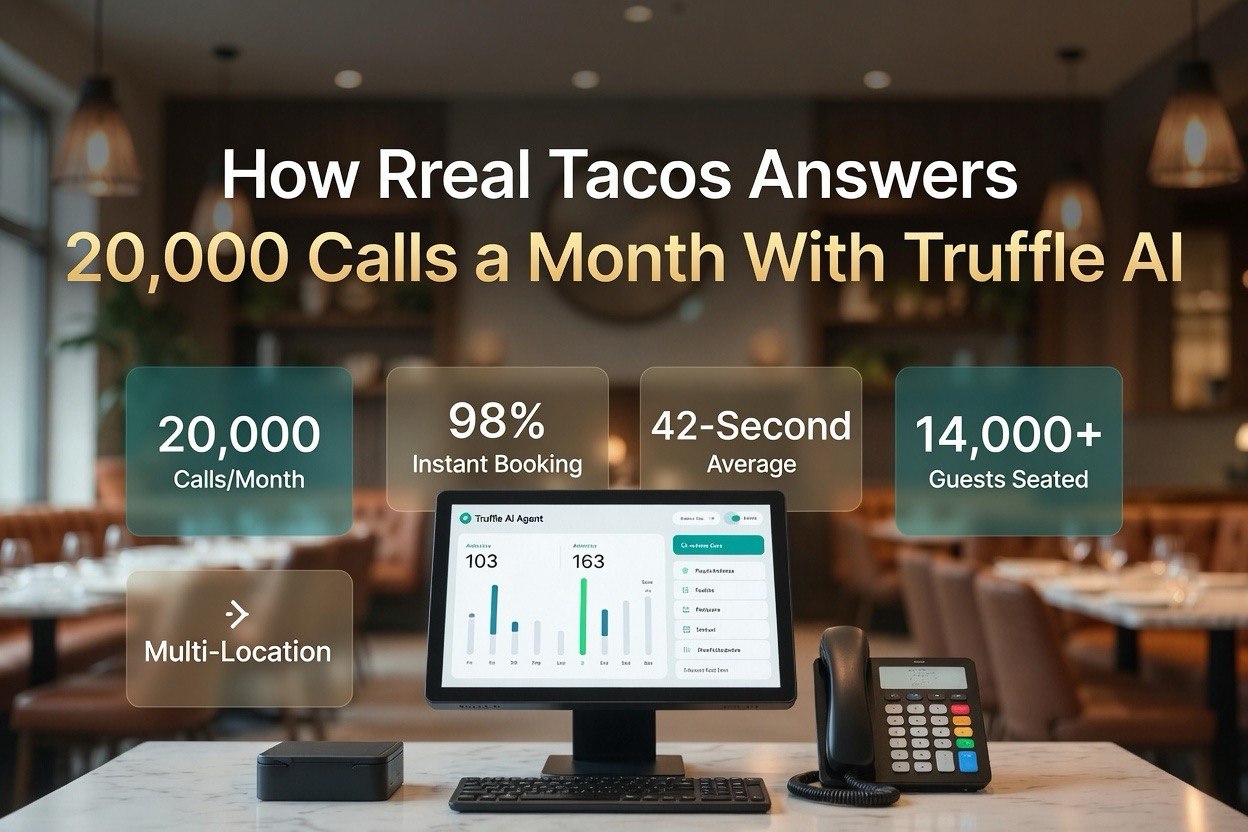
How Rreal Tacos Answers 20,000 Calls a Month With Truffle AI
⚡ Expert Summary: Rreal Tacos, a 12-location chain, routes its restaurant phone lines through Truffle, an AI that answers every call and handles reservations, and the numbers are worth restating: over 20,000 calls a month handled and more than 14,000 guests seated. The upside for a small chain is that you no longer need a human to babysit the phone during service, because the AI takes the call, reads the live calendar, books the reservation, and confirms it by text without a host ever picking up. The catch for independents is that Truffle works best once you have real call volume and a reservation system to plug into, so a single diner doing 10 calls a day gets less of a payoff than a multi-location group where every unanswered line is a table left empty. Backed by Preface Ventures, heytruffle is part of the wave of AI guest-management tools that are quietly becoming the front desk for modern restaurants.
What Truffle Does for a Restaurant
Truffle is an AI phone and SMS assistant built specifically for hospitality, and it focuses on three jobs: answering calls, taking reservations, and following up with guests by text. On the phone side, the AI picks up so a caller is never stuck listening to a ring in an empty dining room. The experience feels close to a well-trained host: the AI greets the guest by name when it can, reads the reservation calendar in real time, and confirms the booking instantly instead of making the caller hold while a human digs for a pen.
The text side is where it moves beyond an answering machine. After a reservation, Truffle sends a confirmation with the details, and it can handle common guest questions like parking, dress code, or whether a specific table is available. For the restaurant this shifts a whole category of repetitive communication off the staff and onto a system that never forgets to reply. For the guest it means a faster, clearer booking than a busy host scrambling during the dinner rush can usually deliver.
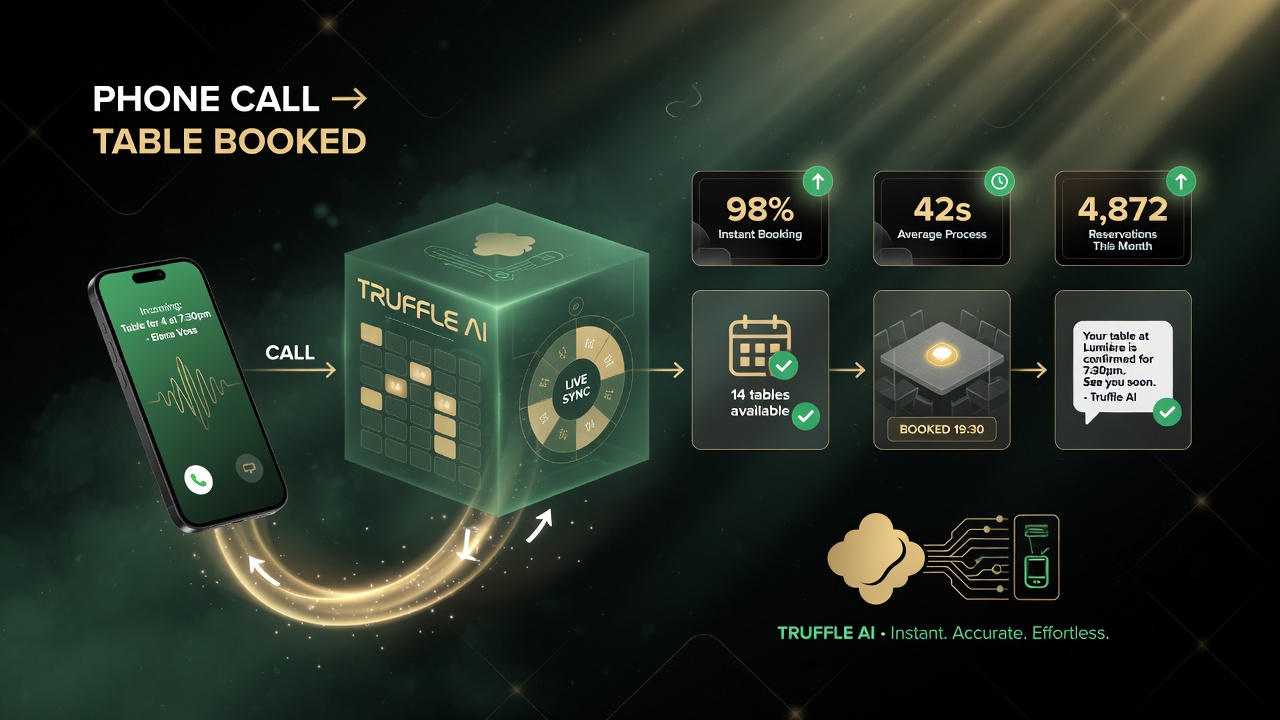
This is the whole job in one flow: a guest calls, the AI checks the live calendar, books the table, and confirms by text without a host ever touching the line. The 98% instant-booking rate and a 42-second average process are what make it feel like a real host rather than an answering machine.
The Rreal Tacos Numbers, Straight Up
The reason heytruffle lands in the news is the operating data from Rreal Tacos, and it is the kind of thing that makes an operator nod. The chain reports handling over 20,000 calls a month through the AI and seating more than 14,000 guests as a direct result. When you do the math, that is not a rounding error; it is thousands of bookings that might have gone to voicemail or to a competitor if a human had had to keep up on a Saturday night.
Those numbers matter to an independent owner for a different reason than they do to an investor. Rreal Tacos did not add AI to sound modern; it added AI because a multi-location phone strategy with human-only staffing leaks calls, and every leak is a table it cannot fill. Seating 14,000 guests you would have missed is revenue you can actually take to the bank, which is why the story gets attention.
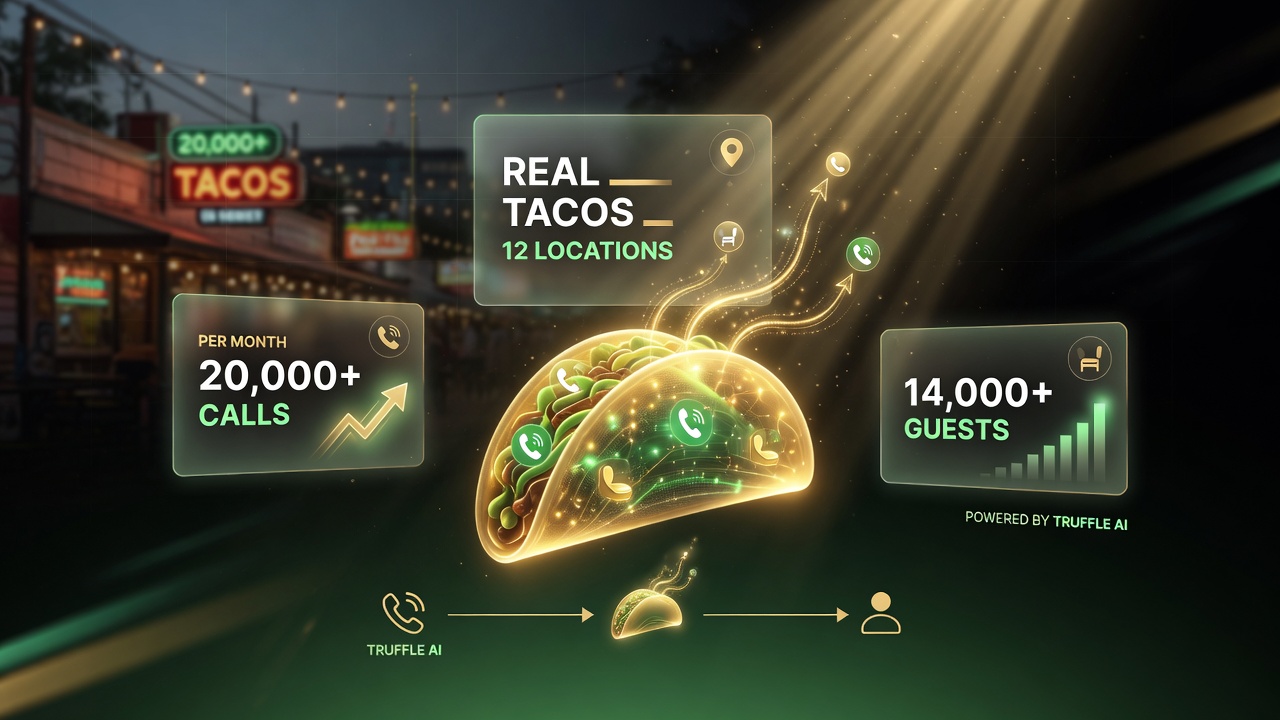
The numbers that put heytruffle in the news: Rreal Tacos runs 12 locations, handles more than 20,000 calls a month through the AI, and seats over 14,000 guests as a direct result. That scale is the difference between a demo and a production tool.
Why Call Volume Is the Real Test
The thing that separates a toy from a tool is whether the AI holds up at scale, and 20,000 calls a month is a genuinely demanding workload. That volume means the AI is hearing every accent, every background-noise-heavy call from a car, every guest who mumbles a weirdly specific allergy request, and it has to get those right enough that guests do not hang up and call the next place. Any vendor can build a demo on one easy call; holding up on the 400th call of a Friday lunch is the actual job.
For the operator the practical question is whether your own volume justifies the switch. If your spot takes 30 calls a day and most of them are “do you have a table for four,” a simple reservation widget may solve it. If you are a group with a real phone presence, multiple locations, and a shared calendar, a system that scales the phone without scaling the headcount is where the payback lives.
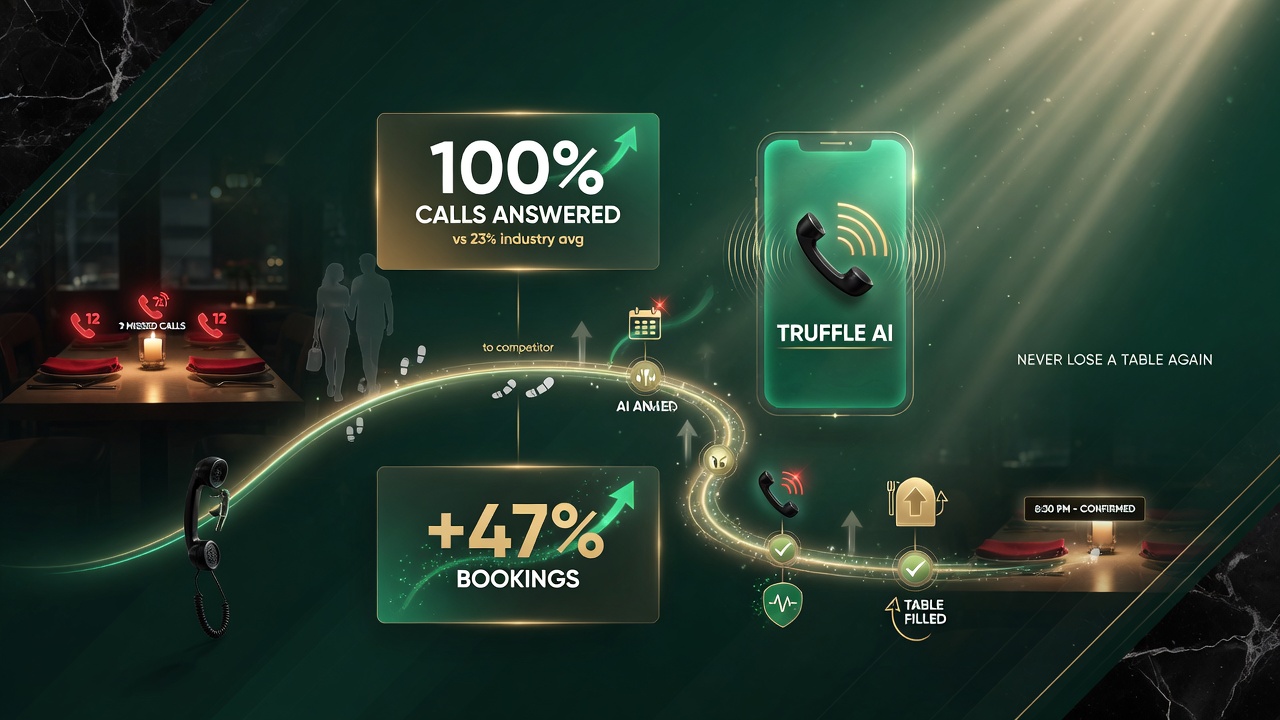
Why phone AI earns its keep: the tool answers 100% of calls against a roughly 23% industry average for missed-and-forgotten phone lines, and that recovery shows up as more bookings. Every unanswered call is a table that can walk to the restaurant down the street.
What It Plugs Into
A phone AI is only as useful as the system behind it, and Truffle’s value sits on its integrations. It connects to the restaurant’s reservation and calendar systems so the AI always sees live availability, which is the difference between booking a guest and guessing. It also ties into SMS and the guest communication flow, so a confirmation, a reminder, or a “we’ve held your table” message goes out automatically without a manager chasing follow-ups.
For a multi-location operator that integration is the real win. One calendar view across 12 stores means a guest who calls the Rreal Tacos location with no room gets told the truth about the other store’s tables, instead of being told “sorry, we’re full” and hanging up into the void. That is guest experience and revenue working from the same source of truth, which is exactly what the best restaurant tech does.
There is also the staffing angle that operators notice first. A host who can answer the phone, seat a walk-in, and check a reservation list is a hard skill to find and hold on to, and the turnover on that role is real. When the AI absorbs the repetitive part of the job, the host you do hire spends their shift on the floor with guests who are already in the building, which is both a better guest experience and a better job. That is the quiet reason phone AI tends to stick once it is in: it is not just cheaper, it changes what the front-of-house job actually is.
The Investor Signal
Backing from Preface Ventures is worth noting, not because a logo makes a product good, but because it tells you where the market is heading. Venture funding in restaurant AI has been tilted toward delivery logistics and kitchen hardware for years, and the shift toward guest communication reflects a real gap: the phone line is often the last un-automated part of the guest journey. A startup that raises specifically to solve front-of-house comms is a signal that operators are finally getting tools for the part of the business that actually talks to customers all day.
For an independent owner the takeaway is not “raise money,” it is that the category is maturing. When well-funded players start competing on phone and reservation AI, the technology gets cheaper, better, and more compatible with the POS and calendar systems you already run. That is the moment the tools stop being a novelty and start being table stakes.
What to Watch Out For
The first thing to confirm is the integration list against your own stack. If Truffle does not connect to the reservation calendar and POS you already use, the AI cannot see live availability, and you are back to an answering machine that sounds confident. Check compatibility before you commit.
The second is what happens on a reservation the AI cannot confidently complete. Complex parties, special requests, and language confusion are rare but real, and you need to know whether the AI gracefully hands off to a human, escalates, or risks double-booking. Ask to hear a real, unscripted call, not the curated highlight reel.
The third is cost vs. volume. Truffle and its peers usually price around the value they deliver, so make sure your call and reservation volume actually justify the monthly fee. A single low-volume location may get a better return from a cheaper tool or a reservation widget, whereas a chain like Rreal Tacos, with 20,000 calls a month, is exactly where the math works.
Should You Try It?
If you run one or two locations with moderate call volume, start with a free or low-cost test on your busiest shift and watch two metrics: how many calls get answered and how many of those become confirmed reservations. If both climb meaningfully across a couple of Friday nights, the tool is earning its keep. If you operate a larger group and every unanswered line is a table walking out the door, Truffle-style phone AI is worth a serious pilot, because the Rreal Tacos result is exactly the outcome the category is now built to deliver.
Frequently Asked Questions
What is heytruffle and what does it do?
Truffle is an AI phone and SMS assistant for restaurants that answers inbound calls, takes reservations against the live calendar, and follows up with guests by text. Backed by Preface Ventures, it targets the front-of-house communication that still relies on human staffing.
How many calls does Rreal Tacos handle with Truffle?
Rreal Tacos reports handling over 20,000 calls a month through Truffle across its 12 locations and seating more than 14,000 guests as a result. That volume is the core case study behind the recent coverage.
Does Truffle replace my host or front-of-house staff?
No. Truffle automates the repetitive phone and reservation work so staff can focus on guests who are in the building. It answers calls, books reservations, and sends confirmations, but it does not run the dining room or replace the people who deliver the experience. It is an extra set of hands on the phone line, not a replacement for service staff.
Does Truffle work with the POS and reservation system I already use?
Truffle’s value depends on connecting to your reservation calendar and systems so the AI sees live availability. Check the compatibility list against your stack before subscribing, because booking accuracy relies on that integration.
Is phone AI worth it for a small independent restaurant?
It depends on call volume. A chain like Rreal Tacos with 20,000 calls a month gets a clear return. A low-volume single location may do better with a cheaper reservation widget; the payback appears when there are enough calls that a human-only phone strategy is leaking real bookings.

About Barak Schurr
Barak Schurr built and exited a major ticketing platform, ran global operations at Eventbrite, and now focuses on one question: which AI tools actually help independent restaurant owners run leaner and grow faster. He writes from the operator’s perspective — no vendor spin, no theory, just what’s real in 2026.
Email: [email protected]
More Resources for Restaurant Operators